

Valencia
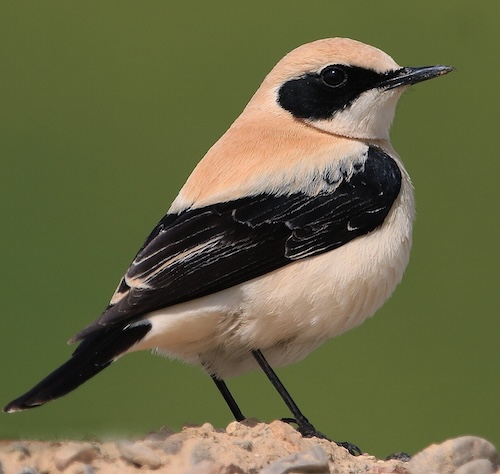
Valencia is an autonomous community and region of Spain located on the eastern side of the country on the Mediterranean Sea. It borders Catalonia to the north, Aragon and Castilla-La Mancha to the west and Murcia to the south. The Balearic Islands are located east of it in the Mediterranean. The region is divided into three provinces, Castellan, Valencia and Alicante. It covers an area of 23,265.23 km2 (8,982.76 square miles) and has a population of around five and a half million people. The administrative capital is the city of Valencia, which is the third largest city in Spain with a population close on 850,000 people.
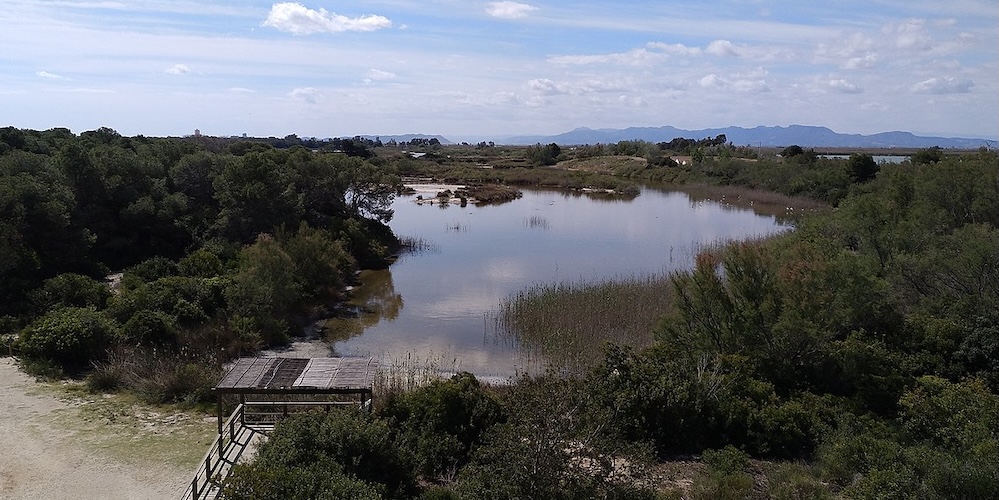
The inland part of the region is craggy, with some of the highest peaks in the Valencia and Castellón provinces forming part of the Iberian mountain range. The mountains of the province of Alicante are in turn part of the Subbaetic range. The thin coastal strip is a very fertile plain which is mostly low-lying and typical of this area are coastal wetlands and marshlands such as L’Albufera close to the city of Valencia. There are also wetlands at El Fondo, La Marge near El Pegon and Gayanes Albufera. There is also the former wetlands and salt evaporation ponds in the Santa Pola and Torraevieja area all of which are Ramsar sites making Valencia highly important for both resident and migratory seabirds and waterbirds as well as passerines.
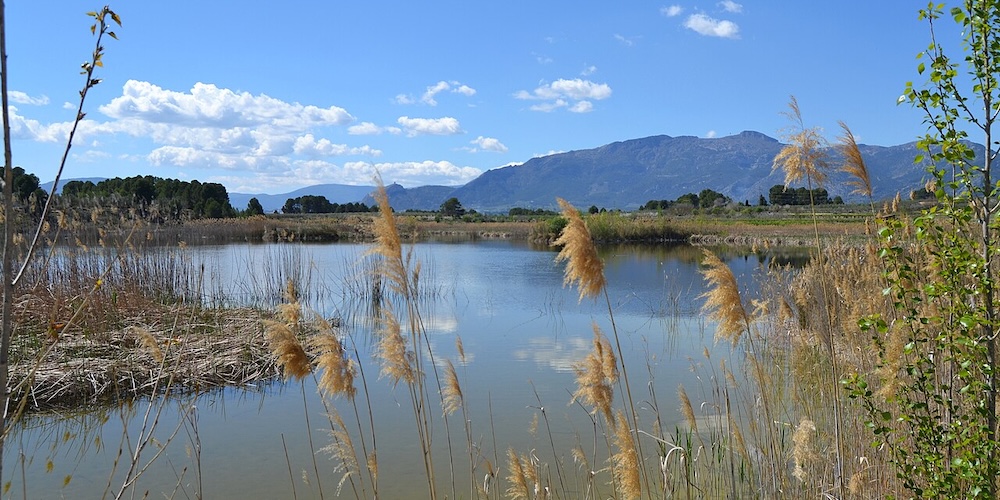
Albufera de Gaianes – ©Joanbanjo CC BY-SA 3.0 via Wikimedia Commons
There are also many important coastal dunes in the Saler area near the Albufera and in the Guardamar area, both of which were planted with thousands of trees in the 19th century in order to fix the dunes, thus now forming protected areas of remarkable ecological value.
There are only two major rivers, the Segura in the province of Alicante, whose source is in Andalusia, and the Júcar in the province of Valencia, whose source is in Castilla-La Mancha. Both are subject to very intense use for agriculture and human consumption. Most of the other rivers are short and slow running because of their agricultural use.
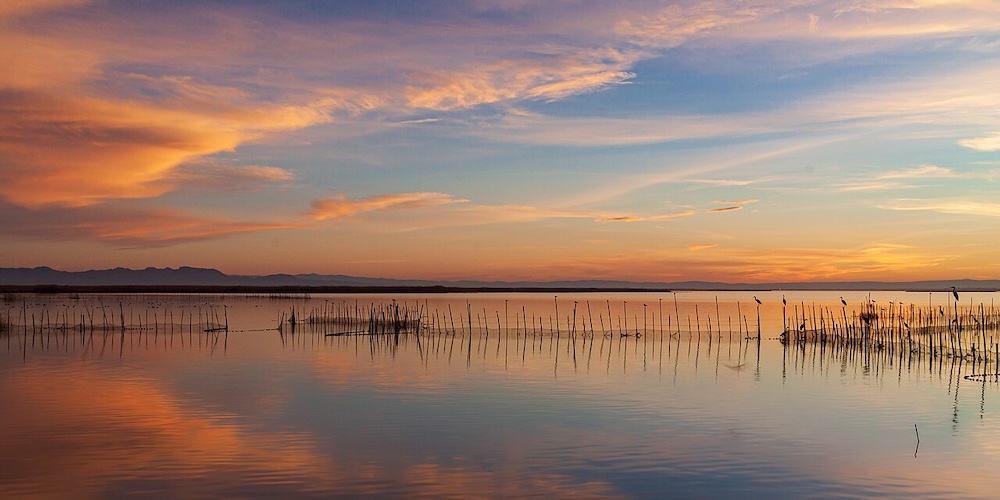
Albufera Sunset – ©Pepe Serrador CC BY-SA 4.0 via Wikimedia Commons
Valencia has a generally pleasant climate with mild winters and hot summers heavily influenced by the neighbouring Mediterranean Sea. Although there are differences between the mountains that coastal strip, the latter can have very hot periods during the summer, whereas the mountains can be cold in winter and attract more rainfall than the coast.
Birding Valencia
Valencia is a privileged place for birding. It has a long coast and, in the interior, there are still some wild and well protected steep, rocky and wooded mountains with rivers crossing the terrain creating a diverse mix of habitats. On the coastal plains is another important ecosystem with wetlands and farmland (mostly vegetables and orange groves). The mild climate, and the clear influence of the Mediterranean Sea, form a specific and diverse fauna.
The imaginary trip described below starts from the north and crosses the region to the south. We start in the mountainous northwest sector of Castellón around Morella. This site is a good area for woodland and rocky terrain birds and others species, and is very important for Griffon Vulture Gyps fulvus, being the only locality in Valencia where they breed. In the foothills of these mountains, it is possible to see one of the most typical Mediterranean raptors: Bonelli’s Eagle Hieraaetus fasciatus relatively easily. In the rockiest areas you can find breeding Rock Thrush Monticola saxatilis and the more common Blue Rock Thrush Monticola solitarius as well as Black Wheatear Oenanthe leucura. In the wooded areas live various species of tits and others beautiful birds.

Sierra d’Espadàn Natural Park – ©Pelayo2 via Wikimedia commons
The next stop comes after a drive to the Sierra d’Espadàn Natural Park. This is a well-preserved wooded mountain with Cork-oak trees among other trees and plants with very restricted ranges in the Valencian Autonomous Region. This site is the best area in the Castellón province for Bonelli’s Eagle, with other raptors easy to see such as Short-toed Eagle Circaetus gallicus, Booted Eagle Hieraaetus pennatus and Peregrine Falcon Falco peregrinus. On the hillsides, in the plains’ wasteland where trees are widely dispersed one can find European Nightjar Caprimulgus europaeus and, with luck, close to the orange farms in the fields, Red-necked Nightjar Caprimulgus ruficollis. A rarely seen bird is the European Roller Coracias garrulus, but one of the recommended sites is the Sierra d’Espadàn Natural Park.
Going South in the interior you come to one of the wildest mountain regions in all Valencia. The Rincón de Ademuz is a top site for birdwatchers to find Spanish specialities. It is still possible to enter some of the most natural areas of the region. The best places for birdwatching are to be found alongside the Turia river’s branch with its wooded banks and rocky places. Around the villages of Vallanca, Val de la Sabina, Mas del Olmo, Sesga, Puebla de San Miguel is good for some specialities: Egyptian Vulture Neophron pernocterus, Alpine Swift Apus melba, Oenanthe hispanica, Black Wheatear Oenanthe leucura, Olivaceus Warbler Hippolais pallida, Dartford Warbler Sylvia undata, Orphean Warbler Sylvia hortensis, Bonelli’s Warbler Phylloscopus bonelli, Crested Tit Parus cristatus, Short-toed Treecreeper Certhia brachydactyla, Eurasian Golden Oriole Oriolus oriolus, Common Crossbill Loxia curvirostra and Rock Bunting Emberiza cia.
In the wheat-fields of the high mountains of the region (over 1400 meters) Rock Sparrow Petronia petronia is very common and in some places with areas of low and dispersed vegetation, it’s possible to see Tawny Pipit Anthus campestris. In the sky the raptors can frequently be seen soaring (especially Short-toed and Golden Eagle, as well as Sparrowhawk, Peregrine and Hobby).
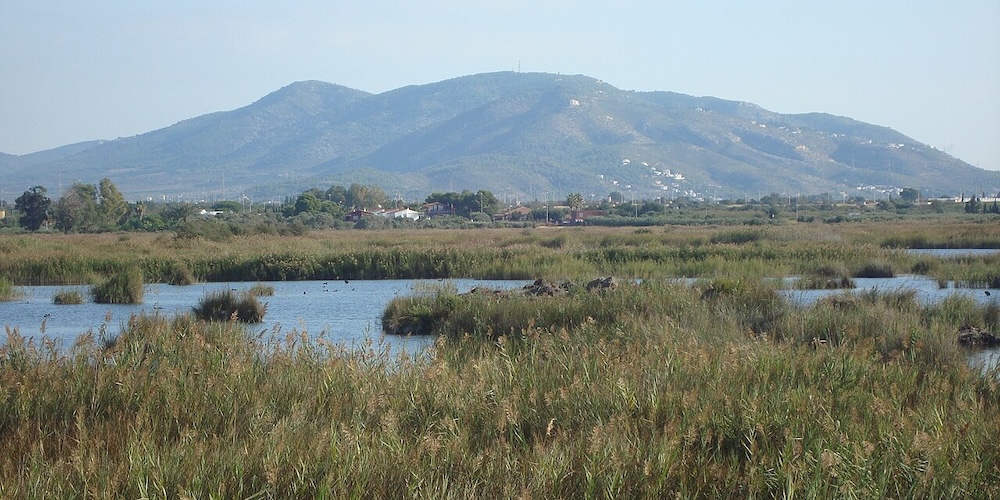
Prat de Cabanes-Torreblanca Natural Park – ©Juan Emilio Prades Bel CC BY-SA 3.0 via Wikimedia Commons
Leaving behind the Rincón de Ademuz the next area for birdwatching is to the south coast of Castellón at the Prat de Cabanes-Torreblanca Natural Park. This is a coastal wetland of flooded meadows with some areas of permanent water (peat-bog). At the Prat Montagu’s Harrier Circus pygargus, Collared Pratincole Glareola pratincola and Moustached Warbler Acrocephalus melanopogon have their most important breeding colonies in Valencia.
To the South, near Valencia’s north-eastern border is the Moro Marsh in Sagunto. This little marsh is a surprisingly important wetland for some of the most threatened waterbirds in Spain. The best period for birdwatching at the Moro is spring (April); with the migration of thousands of waders and ducks. Here breed Marbled Duck Marmaronetta angustirostris, Ferruginous Duck Aythya nyroca and Red-knobbed Coot Fulica cristata. This nature reserve is also good for Bittern Botaurus stellaris, Purple Heron Ardea purpurea, Cattle Egret Bubulcus ibis (up to 5,000 birds roost here), Little Bittern Ixobrychus minutus, Black-winged Stilt Himantopus himantopus, Kentish Plover Charadrius alexandrinus (across all of Valencia’s sandy seashores), Whiskered Tern Chlidonias hybridus (an important breeding colony]), breeding Savi’s Warbler Locustella luscinioides (one of the most common passerines in mid-spring) together with Moustached and Great Reed Warblers Acrocephalus arundinaceus. The Moro Marsh is the best place for Red-crested Pochard Netta rufina in the breeding season.
Parque Natural de la Albufera – ©Edurne Zabaleta-del-Olmo CC BY-SA 4.0 via Wikimedia Commons
Our next stop is the iconic Albufera Natural Park on the central coast of Valencia (to the south of the city). This internationally important wetland is good for herons, ducks, waders and gulls. Thousands of ducks over-winter at the Albufera, feeding by night in the rice-fields and resting by day in La Mata del Fang protected area. During migration thousands of shorebirds can be seen stopping over in the neatly arranged rice-fields. The Racó de l’Olla is another reserve, which is very important for breeding terns (Common, Sandwich, Little and Gull-billed) and some waders (such as Avocet). The heronries with Night Heron Nycticorax nycticorax, Squacco Heron Ardeola ralloides, Cattle Egret, Little Egret, Grey Heron and Purple Heron Ardea purpurea at the quietest reedbed islands are simply spectacular. On some islands it is possible to see Bearded Tit Panurus biarmicus.
A little to the south, the coast of Cullera is an interesting Mediterranean site for seabirds. The winter and migration periods are the best times to see pelagic and rare birds. In winter, it is possible to see Balearic Puffinus mauretanicus & Mediterranean Shearwater Puffinus yelkouan and some sea ducks (Common Eider and Common and Surf Scoter). In spring Cory’s Shearwater Caleonectris diomedea fly past and, throughout the year, the omnipresent Yellow-legged Gull Larus cachinnans rests on the beach or loafs on the sea.
Adjacent to the northwest of the Alicante’s province at the Carrascal de la Font Rotja are a variety of evergreen and deciduous forest species; the area is interesting for woodland birds. This Natural Park is a relatively well protected site for conserved mountain forest with typical Mediterranean plants. Warblers (specially of the genus Sylvia); Tits and Treecreepers share the habitat with some diurnal and nocturnal raptors (Golden, Short-toed, Booted and Bonelli’s Eagles and Scops, Eagle, Little, Tawny and Long-eared Owls). The area also is recommended for European Roller, Golden Oriole, Red-rumped Swallow Hirundo daurica and the secretive Rufous-tailed Scrub-robin Cercotrichas galactotes.

Penyal d’Ifac Natural Park – ©Diego Delso via Wikimedia Commons
Driving to Villena you can see Lesser Kestrel Falco naumanni, where a project to reintroduce, this falcon started in the village. On the seacliffs of the Penyal d’Ifac and in the Montgó Natural Parks in Calpe breed Pallid Swifts Apus pallidus and some pelagic species (European Storm-petrels and Shag).
On the South coast of Alicante one can find the El Hondo de Elche and the Salinas de Santa Pola Natural Parks. El Hondo reservoir is the best place for two globally threatened ducks, Marbled Duck (with 90% of the European population) and the White-headed Duck Oxyura leucocephala with recent peak counts of 4.000 birds during the breeding season. This wetland is also important for wintering ducks and other waterbirds and for breeding herons, waders and terns. Here is another place to see that elusive passerine the Bearded Tit. The neighbouring Salinas de Santa Pola (salt extraction) is best for migrating and breeding shorebirds, terns and gulls (Slender-billed Gull); with permanently high numbers of Flamingos Phoenicopterus rubber, which nest in some years.
-
Number of bird species: 425
(As at April 2026)
-
Avibase
PDF ChecklistThis checklist includes all bird species found in Valencia , based on the best information available at this time. It is based on a wide variety of sources that I collated over many years. I am pleased to offer these checklists as a service to birdwatchers. If you find any error, please do not hesitate to report them. -
eBird
PDF ChecklistThis checklist is generated with data from eBird (ebird.org), a global database of bird sightings from birders like you. If you enjoy this checklist, please consider contributing your sightings to eBird. It is 100% free to take part, and your observations will help support birders, researchers, and conservationists worldwide.

-
Where to Watch Birds in Northern & Eastern Spain
| By Ernest FJ Garcia & Michael Rebane | Bloomsbury Publishing | 2017 | Paperback | 384 pages, 30 b/w illustrations, 125 b/w maps | ISBN: 9781472936752 Buy this book from NHBS.com
-
Horta Ringing Group
WebsiteSince 1999 we have been ringing regularly in the orange groves of the term of Massamagrell (l'Horta) -
InterNatura - Anuario Ornitologico de la Comunidad Valenciana
WebsiteCon el fin de potenciar la actividad que vienen desarrollando los distintos grupos locales directamente relacionados con las aves y su entorno, la redacci -
La Safor Birders
WebsiteLa Safor Birders are a small group of Birdwatchers based in the mountain village of La Drova in the La Safor region of the Valencian Community. The key members have a long experience of birding both here in Spain, the UK and elsewhere. The purpose of the blog is to provide a forum for recording species seen throughout the year in La Drova whilst also acting as a base upon which to record specific birding trips throughout our local area. -
Valencian Society of Ornithology(SVO)
WebsiteLa Societat Valenciana d’Ornitologia(SVO) és una ONG de caràcter no lucratiu amb l’objectiu principal d’ajudar a la conservació de les aus silvestres i els seus hàbitats dins de l’àmbit geogràfic del País Valencià.
-
NP Desert de les Palmes Natural Park
InformationSatellite Viewhe name of the so-called Desert of the Palm Trees does not refer to an actual desert, but historically relates to a Carmelite monastery where a spiritual refuge was sought. The area is home to numerous pine trees, cork oaks, shrubs and aromatic plants. Les Agulles de Santa Àgueda is a site richly endowed with reddish cluster pines. -
NP WII Albafura Valencia
InformationSatellite ViewSince 1990, the Valencian Albufera Nature Reserve has been included as a Ramsar Site in the list of wetlands of international importance for birds, established in the Ramsar Convention of 1971. Since 1991 the Parc Natural de l'Albufera de València has also been included in the Special Protection Areas (Zepa in Spanish). -
NR Albufera de Gaianes
InformationSatellite ViewThe lagoon is frequented by migratory birds... -
NR Amics de la Marjal de Massamagrell-Rafalell-Vistabella
WebsiteSatellite ViewPretenem donar a conéixer esta xicoteta marjal de l'Horta Nord de València. Té, i tenen totes, una gran riquesa biològica que, possiblement, és desconeguda per molta gent. A més, volem concienciar a tots sobre la conservació d'estos espais naturals… -
NR Font Roja Natural Park
InformationSatellite ViewThis natural park is one of the best preserved natural areas of the Valencian Community. -
NR Penyal d'Ifac Natural Park
InformationSatellite ViewBehind Penyal d'Ifac is a large lagoon cut off from the sea by strips of sandy beach and extending inland to the coastal mountains. The wetland area around the lagoon is all that remains of the formerly much more extensive wetlands of the Marina Alta. he rock face provides nesting sites for birds of prey including peregrine falcons and Eleonora's falcon, seabirds including gulls and cormorants, and other birds typical of rocky habitats. -
NR Santa Pola Salt Flats Nature Park
InformationSatellite ViewSanta Pola Salt Flats lie in Alicante province. Two areas are distinguished: that of salt production and the marshy area. -
NR Serra Mariola Natural Park
InformationSatellite ViewThe Serra Mariola Natural Park is a mountain range in the Valencian Community.
-
eBird
SightingseBirding This Month
-
Albufera Natural Park
Local GuidingBoat rides and guided tours -
Asociación de Guías de Birding de la Comunitat Valenciana
Local Guides & GuidingPuedes encontrar tu excursión ideal en la zona que prefieras entre nuestras salidas organizadas o podemos prepararte un viaje a media. -
Birdwatching Spain
Tour Operator...Some of the species that could be seen in this tour are Purple Swamphen, Moustached and Savi’s Warbler, and Collared Pratincole... -
SAÓ viajes Naturales
Local GuidingDiscover the natural richness of the Albufera Natural Park, one of the best places on the Iberian Peninsula for birdwatching. -
Valencia Birding
Local Tour OperatorWe provide guided Bird Watching Tours throughout Eastern Spain, encompassing Valencia, Alicante and Castilla de la Mancha. This area is blessed with an incredibly diverse range of habitats and excellent birding sites, many of which are virtually unknown! We cater for all levels of bird enthusiasts and provide a bespoke guiding service at very reasonable cost. Our local knowledge can ensure that our clients can make the absolute most of their time in Spain by depending on us to take them to the very best sites -
Visit Natura
Local Tour OperatorBespoke Bird Watching & Photography Trips.
-
2025 [01 January] - Dave Warrington
Report...After lunch we strolled back down the mountain, enjoying views of Raven, Serin, Chiffchaff and Sardinian Warbler. Although we didn’t manage to get eyes on it, we also heard an Iberian Chiffchaff. We ended the afternoon with a walk into a huge limestone gorge, making the most of the last hour or so of sunlight. Here, amidst stunning scenery, we enjoyed yet more views of Griffon Vulture as well as Black Wheatear, Sparrowhawk and Black Redstart... -
2026 [02 February] - Dave Warrington
BLOGThis month’s multi-day birding break was for a really interesting group who elected to base themselves in the historic town of Xativa. From there we were able to visit the extensive wetlands of both Valencia and Alicante, the spectacular mountains of the interior of Alicante and the area of steppe to the south west of the region.
-
Jose Antonio Sencianes Ortega - Artist & Photographer
Instagram PageJose Antonio Sencianes nace en Madrid aunque se traslada muy joven a M