

Navarre
Navarra (alt. Navarre) is a small, landlocked, autonomous community and province in northern Spain. It borders the Spanish regions of the Basque Country, La Rioja, and Aragon and Nouvelle-Aquitaine in France. Its capital is Pamplona. It covers an area of 10,391 km2 (4,012 square miles) with a population of just under 700,000 people, over 210,000 of whom live in the capital.
The land varies from a height of nearly 8,000 feet in the Pyrenean range down to the low levels of the plains of the Ebro River in the south.
It is in the transitional zone between the green Cantabrian coast and the semi-arid interior. This makes for a highly variable climate with summers that are a mix of cooler spells and heat waves and winters that are mild for the latitude. The province is one of the historic Basque provinces. The people are a mix of Spanish speaking and Basque speaking and both cultures are represented in daily life.
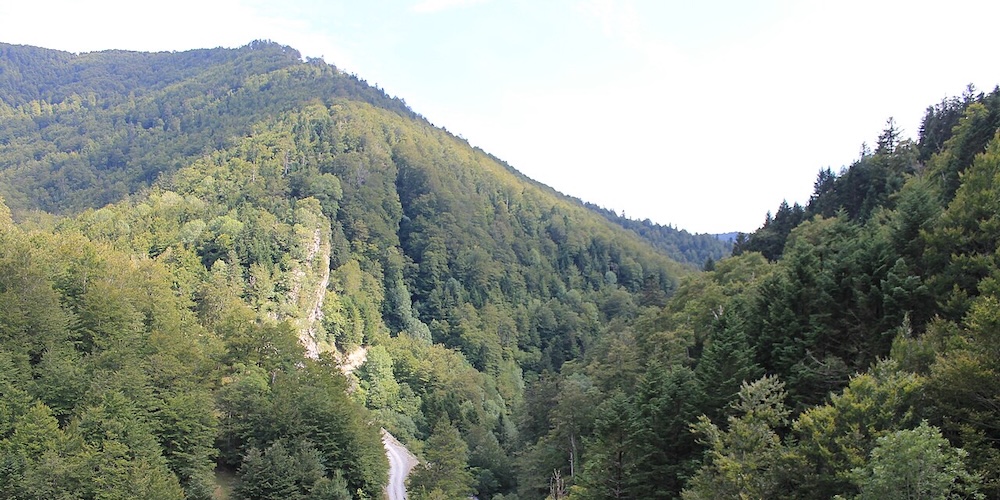
Selva Irati – ©Fernando Domínguez Cerejido CC BY-SA 4.0 via Wikimedia Commons
Birding Navarre
Navarra may be a relatively small autonomous community in the north of Spain, stretching southwards from the western edge of the Pyrenees, but it most certainly is not insignificant. It has much biodiversity to offer the travelling naturalist, with a representation of virtually all the biotopes present in the Iberian Peninsula (except coastal ones), and some surprising abrupt contrasts. The northeast corner of Navarra is the only part of the province with peaks reaching over the 2,000m mark, and this fact is reflected by its being the western limit to the ranges of several high Pyrenean species such as Wallcreeper, Ring Ouzel, Ptarmigan and Snowfinch. Follow the Roncal Valley up to and beyond the French border to try for some of these and other species like Alpine Chough, Citril Finch, Lammergeier, Black Woodpecker, Rock Thrush, and Alpine Accentor, appreciating at the same time how a valley of inspiring bucolic beauty takes on a more rugged natural demeanour once past the Rincon de Belagua.
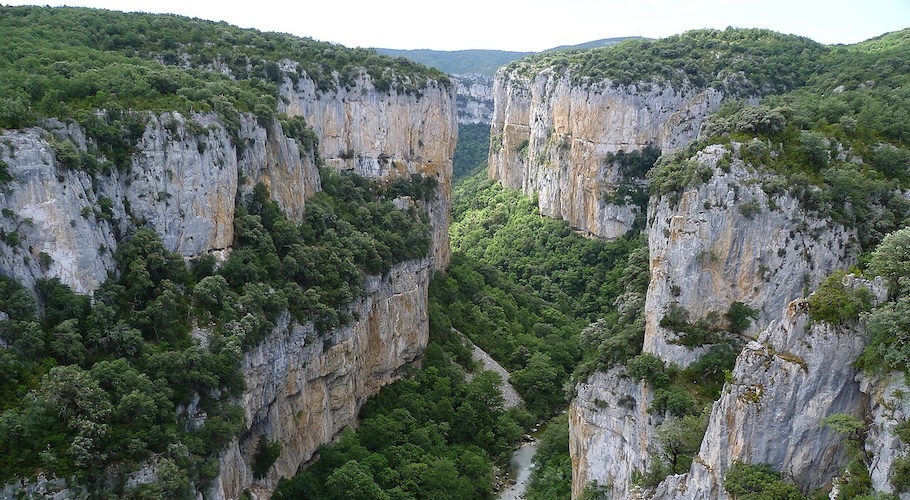
Foz de Arbayún – ©AnaisGoepner CC BY-SA 4.0 via Wikimedia Commons
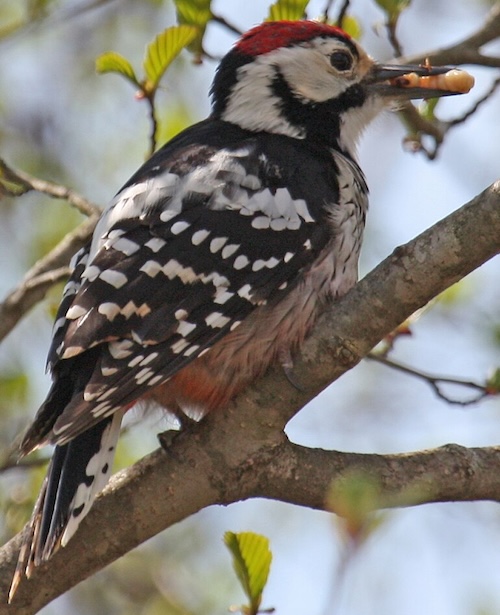
These same youthful Pyrenees lose height as they pass westwards through Navarra towards the Atlantic Ocean, which is precisely why a large number and variety of migratory birds can be seen from its mountain passes, especially those of Etxalar, Ibañeta (Lindúx), and Urkiaga. In the autumn months thousands of Cranes, Honey Buzzards and Red Kites, along with regular Ospreys, Hen Harriers, Short-toed and Booted Eagles, Black Kites, Black Storks and others are likely. Woodpeckers are another target group, bearing in mind the good number of Black Woodpeckers present in Navarra’s areas of mature deciduous and mixed forest, and above all the fact that this community also holds by far the greatest part of the Spanish population of White-backed Woodpeckers (the endemic Pyrenean race lilfordi), estimated at between 60 and 70 pairs. The forest of Irati stands out as the main destination for avid woodpecker watchers visiting the region, although the species could be seen at Quinto Real or even, with a lot of luck, in the Roncal Valley.
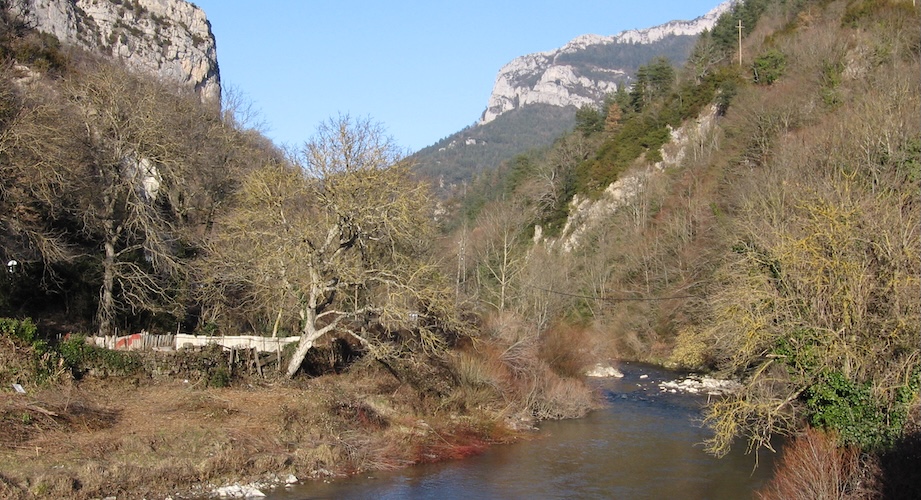
River Esca in the Roncal valley – ©Ardo Beltz CC BY-SA 3.0 via Wikimedia Commons
As one passes south through some spectacular limestone gorges (Foces), wooded hillsides and rushing rivers one should expect to encounter many of the species common to other similar areas in the autonomies of Aragón and Catalunya such as Lammergeier, Griffon Vulture, Egyptian Vulture, Dipper, Blue Rock Thrush, Alpine Swift, Red-backed Shrike, Rock Sparrow, Rock Bunting, Golden Eagle and Peregrine Falcon. In this respect the foces of Lumbier, Arbayún and Burgui certainly deserve the passing birder’s attention, equally so in the winter months when the possibility of coming across the dazzling Wallcreeper can never be discarded.
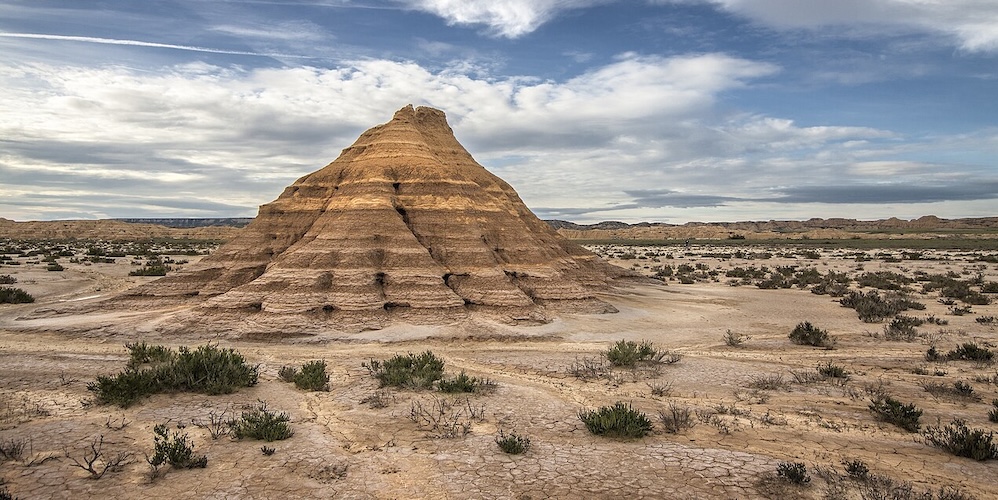
Bardenas Reales Natural Park – ©Mikipons CC BY-SA 3.0 ES via Wikimedia Commons
Before long everything seems to change as the vast expanses of the Ebro Valley open up before the traveller. The Bardenas Reales Natural Park in the southeast of the province, shared in part with Aragón, protects the most striking archetype of an Ebro Valley steppe landscape that you are likely to find anywhere. Although many of its most characteristic species have suffered important declines, the park’s almost 56,000 ha still hold varying numbers of steppe species such as Little Bustard, Pin-tailed and Black-bellied Sandgrouse, Lesser Short-toed and Dupont’s Larks, as well as Black Wheatears, Egyptian Vultures, Spectacled Warblers and Red-necked Nightjars.
Navarra’s wetlands are few, but the Lagunas of las Cañas, Pitillas and Dos Reinos are worthy of mention for their interesting breeding colonies of Purple and Night Heron, and smaller numbers of Red-crested Pochard, Black-necked Grebe, Little Bittern, the more irregular Great Bittern, Little Crake and Penduline Tit. Further birding interest is to be discovered in the Sotos of the River Ebro near Tudela. There gallery woodland along meanders and river islands support an interesting array of birds such as Kingfisher, Fan-tailed Warbler, Cirl Bunting, Booted Eagle, Wryneck, Great Reed Warbler, Penduline Tit and Golden Oriole.
-
Spanish Pyrenees
Satellite ViewThis mountainous barrier, that separates France from Spain, is made up of high mountains, extensive pine forests, streams, and green mountain meadows, and is especially recommended for its abundance of birds of prey. One can see Golden, Short-toed, Booted and Bonelli's Eagles; Montagu's Harrier; Red & Black kites, Peregrine and Hobby; and the magnificent Lammergeier, which here has one of its two last strongholds in the entire continent. Other interesting avian species are: Ptarmigan, Capercaille, Dotterel, Tengmalm's Owl, Black Woodpecker, Crag Martin, Water Pipit and Dipper. Apart from bird species, it is remarkable for the presence of Pyrenean Chamois and Red Deer. This area is probably one of the last refuges in Europe of the Boreal Linx and the Brown Bear.
-
Steve West
| westvidal@teleline.es
https://www.birdinginspain.com
-
Number of bird species: 388
(As at April 2026)
-
eBird
PDFD ChecklistThis checklist is generated with data from eBird (ebird.org), a global database of bird sightings from birders like you. If you enjoy this checklist, please consider contributing your sightings to eBird. It is 100% free to take part, and your observations will help support birders, researchers, and conservationists worldwide.

-
Where to Watch Birds in Northern & Eastern Spain
| By Ernest FJ Garcia & Michael Rebane | Bloomsbury Publishing | 2017 | Edition 3 | Paperback | 384 pages, 30 b/w illustrations, 125 b/w maps | ISBN: 9781472936752 Buy this book from NHBS.com
-
Las Cañas Reservoir Nature Reserve Bird Observatory
Observatory WebsiteSatellite Viewthe different species in this Nature Reserve. -
Observatorio de Aves Laguna de Pitillas
Observatory WebsiteSatellite ViewLa Laguna de Pitillas, con sus 206 hect
-
University of Navarra - Zoology Museum
WebsiteFaculty of zoology and a museum of natural history
-
Sociedad de Ciencias Naturales GOROSTI
WebsiteDivulgaci
-
Laguna de Pitillas
WebsiteSatellite ViewLa laguna de Pitillas tiene una extensión de unas 300 hectáreas localizadas mayoritariamente en el término municipal de Pitillas. Una pequeña extensión corresponde al municipio de Santacara…
-
eBird
SightingseBirding This Month
-
Birding Basque Country
Local Tour OperatorAt BIRDING BASQUE COUNTRY, we are passionate birdwatchers and naturalists based in the Basque Country, offering customized birdwatching day trips and holidays throughout the Basque Country and surrounding areas. We depart from San Sebastián, Bilbao, Vitoria-Gasteiz, or any other location in the region that suits you. -
Birding in Spain
Tour OperatorThe Selva de Irati is set in the western edge of the Spanish Pyrenees in the autonomous community of Navarra. Birdwise, the main reason for visiting the site is to see the White-backed Woodpecker, represented in these parts by the rare race lilfordi, and present here in greater numbers than at any other single site. -
Hides Navarra
Raptor HidesWe are located near the Lumbier and Arbayún Gorges, in the Sierra de Ibargoiti, in the small town of Izco, next to forests of pines, oaks, the southernmost beech trees in Navarra and scrubland, which are home to a multitude of sedentary birds and, during the migration seasons, a multitude of birds that also colonize the territory during this period. -
Mirua
Tour OperatorWe travel at a leisurely pace, enjoying the discovery of the small details hidden within these beautiful valleys and mountains. Our landscape changes dramatically with the seasons; let us know what you'd like to see, and we'll make some suggestions. -
Naturetrek
Tour OperatorAn 8-day holiday to sample the heady mixture of birdlife and wines found among the dense forests, uplands, steppes, canyons and wetlands of Navarra in northern Spain. -
Rene de Heern Wildlife Photography
Tour OperatorBird photography tour to El Taray Spain -
Wildside Holidays
Tour OperatorWalking and wildlife holidays in Navarra
-
2021 [11 November] - Christy Esmahan
ReportSo, this weekend we took our first trip with SEO—the Spanish Ornithological Society—and went to northeastern Spain, to Navarra. -
2022 [05 May] - Kath & Mick Claydon
PDF ReportWe stayed in three areas, south of Pamplona, Roncal Valley and Sierra de Guara. All hotels were family-run and very good with comfortable rooms, excellent food and very friendly, accommodating staff. Everything worked well and we had a thoroughly enjoyable trip - roll on the next one!
-
Paradores
AccommodationVulture Watching in the Gorges of Navarre
-
Birding Navarra
Facebook PageNos dedicamos al estudio y fotografia de las aves y otros animales, y a la observacion de la naturaleza en general aprendiendo de ella. -
Birding in NE Spain
WebsiteNortheast Spain (here meant to include Catalonia, Aragón and Navarra) holds a greater diversity of birds per square kilometre than any other part of Spain, if not Europe. Catalonia alone can boast 232 species of regularly breeding birds, a figure which obviously does not take into account its regular wintering or migrating non-breeding bird species. -
Birds of Heaven
WebsitePagina de ornitologia de aves de Navarra -
Laguna de Pitillas
InformationLa laguna de Pitillas es un humedal de origen endorreico ("sin desagüe") situada entre las localidades navarras de Pitillas y Santacara, tiene una superficie de 216 Ha localizados en su mayoría en terrenos del término municipal de Pitillas.