

Cantabria

Cantabria is an autonomous community and province in northern Spain, with Santander as its capital city. It covers an area of 5,321 km2 (2,054 square miles) and has a population of around 591,000 people. The province is bordered on the east by the Basque Country, on the south by Castile aet Léon, on the west by Asturias, and on the north by the Cantabrian Sea, which forms part of the Bay of Biscay.
Like most of the northern coast of Spain, the region is both mountainous and coastal, and divides between the two. A low coastal strip, wide with gently rolling valleys and hills, only a few miles wide, after which the altitude rises to the mountainous region, which is a long barrier made up of abruptly rising mountains parallel to the sea – the Cantabrian Mountains. This also means that the rivers are mostly fast and short. At their southern end, the mountains are rather higher and form the watershed between the drainage basins of the rivers Ebro and Duero and the rivers that flow into the Bay of Biscay. The short, rapid rivers run into the Cantabrian Sea, whereas the Duero Basin flows into the Atlantic Ocean and the Ebro Basin into the Mediterranean.

Cantabrian Sea – ©Hotelpalacion CC BY-SA 4.0 via Wikimedia Commons
The peaks can exceed 5000 feet from the pass of San Gloria in the west to the pass of Los Tornos in the eastern part. The great limestone edifices of the Picos de Europa also stand out in the southwest of the region, with most of the summits exceeding 8,200 feet, with their topography formed by glaciers.
The barrier mountains mean that they trap any precipitation coming from the north, which means that this strip is green and verdant and the interior of Spain much, much drier. This region has an oceanic climate with warm summers and mild winters, with rain as much as 47 inches per year at the coasts and even higher in the mountains. The driest months are July and August.
The topography of the region dictates the diversity of vegetation with a large number of different biomes. It has vegetation typical the Atlantic side of the Iberian Peninsula, characterised by forests of leafy deciduous trees such as oak and beech. Early human action has taken away much forest and created large areas of grassland and prairies suitable for cattle grazing that now cover parts of the region. These grasslands are mixed with plantations of eucalyptus as well as native oak. The southern part of Cantabria is characterised by drier vegetation. The foothills from 500 to 1000 metres tend to be covered with oak on the sunnier slopes and in more shaded areas, beach. The subalpine plain in this high country has birch, scrub and grasses.

Parque Natural de las Marismas de Santoña – ©Tiia Monto CC BY-SA 3.0 via Wikimedia Commons
Seven natural areas have been designated as national or natural parks. The Picos de Europa National Park and six Natural Parks: the Collados de Asón, Santoña, Victoria and Joyel Marshes, Macizo de Peña Cabarga, Oyambre, Saja-Besaya and the Dunes of Liencres.
Birding Cantabria
Although often ignored by birdwatchers rushing southwards in order to observe some of Spain’s more emblematic species, with a little effort, Cantabria can provide you with a very rewarding ornithological experience. The three outstanding ecosystems for birds are the spectacular coastline, the mountains of the Cordillera Cantábrica, which reach more than 2,600 metres in the Picos de Europa, at the western end of the region, and the high limestone plateaux, locally known as ‘páramos’, to the south of the mountains, in Valderredible.
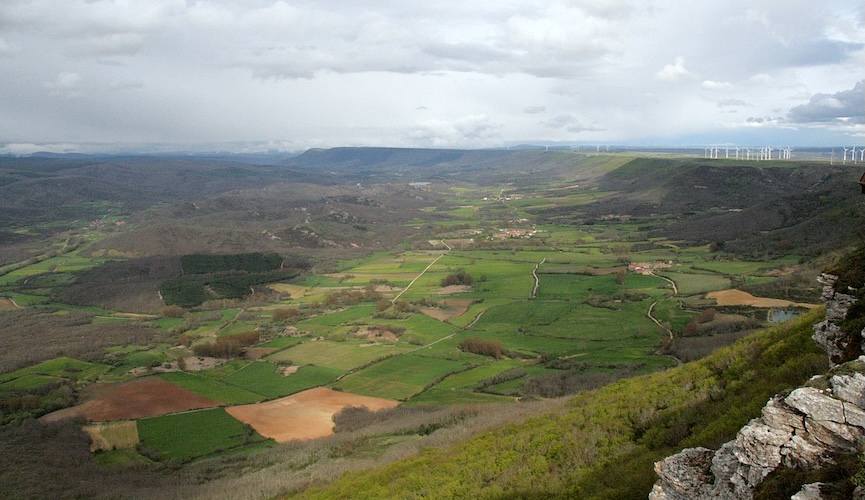
Valderredible Valley – ©Discasto CC BY-SA 4.0 via Wikimedia Commons
For the most part, Cantabria lies within the region commonly referred to as Green Spain dominated by Atlantic weather systems bringing high levels of precipitation and for this reason, many of the birds found in the wider countryside between the coast and the mountains will be familiar to northern European birdwatchers. Grasslands and forests dominate the lower and middle altitudes, the latter home to one of the healthiest populations of Middle Spotted Woodpecker in Spain, while above the tree-line, notably in the Cordillera Cantábrica and the Picos de Europa, barren, rocky landscapes prevail, occupied by a suite of typically alpine birds such as Wallcreeper, Snowfinch and Alpine Accentor. The coast is largely unspoilt, boasting long stretches of cliffs decorated with a rash of offshore islets and sweeping sandy beaches interspersed with numerous estuaries where the rivers rising in the Cordillera Cantábrica meet the sea, the most significant of which, birdwise, is that of Santoña.
By contrast, Valderredible, which lies in the rain shadow of the Cordillera Cantábrica, has a much more Mediterranean climate and, as such, is home to a range of species with essentially southerly distributions, such as Montagu’s Harrier, Great Spotted Cuckoo, Red-necked Nightjar, European Bee-eater, Crested Lark, Subalpine Warbler, Southern Grey Shrike and Golden Oriole.
-
Alto Campóo.
Satellite ViewAt the head of the Híjar valley, west of Reinosa, lies the 2175m peak known as Tres Mares, whose melting snows eventually flow into three different seas: the Mediterranean via the Ebro, the Atlantic via the Duero and the Bay of Biscay via the Nansa. The Collado de la Fuente del Chivo at 2,008m affords superb views of the Picos de Europa and should turn up high-level species such as Water Pipit, Alpine Accentor, Dunnock, Wheatear, Rock Thrush and Alpine Chough, with Ring Ouzel on passage; in May 1999 we were left speechless as a mature adult Lammergeier cruised past at a distance of only 20 metres or so. Further down the valley towards Reinosa lies Fontibre, the official birthplace of the Río Ebro, where the planted poplars around the resurgence harbour Goldcrest: a species whose Iberian distribution is limited to the northern and central mountains. -
Bahía de Santander
Satellite ViewThe bahía (bay), only the upper reaches of which are exposed at low tide, is a deep basin sheltered from the northwesterly winds by the headland of Cabo Mayor and almost closed to the open sea by the sandspit of El Puntal which juts westwards from the small resort Somo. Looking seawards from the top of the sandspit, the diminutive Isla de Mouro, garnished with a lighthouse, lie slap-bang in the middle of the entrance to the harbour, its sheer sides home to breeding Storm Petrels (20 40 pairs): the only surviving colony on the Cantabrian coast. The view to the south takes in the intertidal sand- and mudflats at the mouth of the Río Miera, haunt of Little Egrets and many waders particularly Bar-tailed Godwit, Dunlin, Knot, Grey and Golden Plovers and Oystercatcher (the latter also breeds in small numbers) in winter, as well as turning up the odd rarity such as Spoonbill, Mute Swan and Brent Goose on migration. The Bahía de Santander is also a noted stopover point for Aquatic Warbler on autumn passage and is the only place on the Cantabrican coast where Common Terns breed (since 1989). Although most of the once extensive marshes on the western side of the bay have long-since disappeared, enclaves of more natural habitat remain, such as the Marismas Blancas, which lies at the confluence of the Solía and Boo rivers. The interior of this small wetland harbours a large expanse of reedbed and two permanent, slightly brackish lagoons. The open water is populated by Gadwall, Shoveler, Teal, Pochard (the largest wintering population in Cantabria, at around 260 individuals, with a few pairs staying on to breed) and Tufted Duck in winter, while a circular walk around the reedbed and sallow thickets should turn up Little Egret, Cetti's Warbler and, with luck, Water Rail. Purple Heron, Little Bittern, Marsh Harrier and, occasionally, Whiskered Terns frequent the Marismas Blancas in summer, although they probably do not breed, but the 22 species known to nest here include Reed and Great Reed Warblers, Zitting Cisticola, Yellow Wagtail and Reed Bunting, as well as Gadwall, Little Grebe and Water Rail. The intertidal mudflats surrounding the reserve are occupied in winter by typical estuarine birds such as Avocet, Ringed plover, Dunlin, Curlew and Redshank at low tide.Nearby, the Marismas de Parayas lie within the Santander airport boundary. In winter, small pools here attract Little Grebe, the usual duck and Little Egret plus a range of waders that typically includes both godwits, Snipe and Jack Snipe. Spoonbills often occur here on passage, while a band of 20-30 Stone Curlews regularly winters in the rocky grassland and gorse scrub surrounding the runway. The small harbour at the end of the adjacent road to the Puerto Deportivo is worth checking out for Great Northern Diver, Black-necked Grebe, Common Scoter, Red-breasted Merganser, Razorbill and Guillemot during bad weather. -
Cliffs of the Cantabrian Coast
Satellite ViewHeading east from Liencres, a spectacular cliff-top path leads to the Isla de la Virgen del Mar (about 10km). The cliffs and stacks along this stretch of coast support some 7-8 pairs of Shag, a couple of pairs of Peregrine and a handful of Blue rock Thrush, although these are increasingly compromised by the thousand or so pairs of Yellow-legged Gulls which also nest here; sadly the colony of Storm Petrels (some 80 pairs) which formerly bred on Isla Conejera has been annihilated by rats. -
Dunas de Liencres Natural Park
Satellite ViewThe Liencres natural park, located to the southwest of the village of the same name, encompasses the largest and best-preserved dune system on Spain's Cantabrican coast. Today the area of open dunes is limited to only about 60ha, as part of the secondary and all of the tertiary dunes were stabilised in 1949 by the planting of maritime pines, attracting Sparrowhawk, Melodious and Sardinian Warblers, Crested Tit and Cirl Bunting. The dunes themselves harbour a small breeding population of Tawny Pipit and are a noted haunt of Snow Bunting in winter. The flower-rich pastures and meadows behind the dunes are home to Zitting Cisticola, Corn Bunting, Stonechat and, rarely, Whinchat, as well as providing hunting grounds for Short-toed Eagle, Hobby and Red-backed Shrike.To the west, the inter-tidal mudflats of the Pas estuary attract Cormorant, Grey Heron, Water Rail, Knot and Whimbrel in winter, while the protected waters provide refuge for Great Northern Diver, Eider, Common and Velvet Scoters and Red-breasted Merganser during inclement weather at this time of year. Common Sandpiper and Kingfisher can be seen all year round, while Black Kite and Little Ringed and Kentish Plovers are habitual summer visitors. Interesting passage migrants include Little Bittern, Spoonbill, Osprey, Grey Phalarope, Sandwich Tern, Short-eared Owl and Grasshopper, Moustached and Wood Warblers. -
Embalse del Ebro
Satellite ViewBuilt in 1945, more than 20km long, with a perimeter of 90km and covering some 5,000ha, the Ebro reservoir was one of the first hyper-reservoirs in the world. Breeding birds include a few pairs of Little Bittern (2-4), White Stork (some 40 pairs), Great Crested Grebe (maximum 187 pairs), Gadwall (some 100 pairs in 1997, but declining), Little Ringed and Kentish Plovers, Common Sandpiper and Yellow Wagtail. The reservoir is better known, however, for its wintering concentrations of Wigeon, Teal, Mallard, Pintail, Shoveler, Pochard, Tufted Duck and Coot, but look out too for less commonplace species such as Black-necked Grebe and Ferruginous Duck.Perhaps more significantly, the Embalse del Ebro is a major post-breeding congregation point for several thousand Red-crested Pochard in July, with numbers increasing annually. Greylag Geese (450 in February 2001), Garganey and Spoonbills are often seen on passage, with migratory waders including Avocet, Little Stint, Ruff and both godwits. The surrounding habitats harbour many raptors, notably Honey Buzzard, Black Kite, Egyptian Vulture, Short-toed and Booted Eagles, Marsh and Hen Harriers and Hobby in summer, with Red Kite and Griffon Vulture present all year round. -
Liébana and the Picos de Europa
Satellite ViewLiébana is the name given to the whole western end of the region of Cantabria, corresponding roughly to the watershed of the river Deva to the south of the La Hermida gorge (about 50,000ha), and hemmed in by the Picos de Europa, to the north and west, Peña Labra, to the east, and the bulk of the Cordillera Cantábrica to the south. As such, Liébana includes part of the Picos de Europa national park: essentially the whole of the eastern massif (Ándara) as well as part of the central massif, culminating in the Cantabria's highest peak: Peña Vieja (2613m).The higher reaches of this national park are undoubtedly the best place to encounter alpine birds in Cantabria, with the Fuente Dé cable car providing easy access to altitudes in excess of 1,800 metres. Wallcreepers can often be encountered on the main track up towards Cabaña Verónica in April and May, while the other high-altitude bird specialities of the Picos seem to be less wary of man, such within a few hundred metres of the honey-pot at the top of the cable car you should come across Snowfinch, Alpine Accentor, Chough and Alpine Chough, plus the occasional Rock Thrush, as well as an abundance of Water Pipits, Wheatears and Black Redstarts. Alpine Swifts, Crag Martins and Blue Rock Thrushes are a feature of the many limestone gorges (for example, that of the river Urdón), while Dippers and Grey Wagtails breed along almost all the watercourses of Liébana.The lower slopes and valleys of Liébana are clothed mainly in a diverse mosaic of haymeadows and forest, the latter both deciduous and evergreen. Around the edges of the grasslands you should encounter Red-backed Shrike, Tree Pipit and Rock Bunting, while Wryneck, Cirl Bunting, Serin, Spotted Flycatcher, Redstart and Black Redstart occur in many of the villages. The deciduous forests harbour Western Bonelli's Warbler, Iberian Chiffchaff, Marsh Tit, Short-toed Treecreeper, Pied Flycatcher and both Great and Middle Spotted Woodpeckers, while the evergreen enclaves dominated by western holm oak are also favoured by Western Bonelli's warbler and Cirl Bunting, as well as providing suitable habitat for Firecrest. In addition, the more remote beechwoods are a good bet for Black Woodpecker, Treecreeper and Crested Tit, although the region's Capercaillie are on the verge of extinction.Liébana and the Picos de Europa also support healthy raptor populations, particularly of Griffon Vulture, as well as several pairs of Egyptian Vulture (often seen around the villages of Brez and Beges), while several Black Vultures and at least two Lammergeiers (which last bred in the Picos in the 1960s) and have been cited in recent years. The eagles are represented by Golden, Short-toed and Booted, the latter two in fair numbers throughout, while Honey Buzzard, Goshawk and Sparrowhawk are all common in forested areas. Hobbies occur in the drier habitats around Potes and Peregrines are regularly seen preying on the Choughs which nest near Fuente Dé. Of the owls, Tawny, Little, Long-eared and Barn are all reasonably commonplace, but there have been few sightings of Eagle Owl in recent years. -
Marismas de Santoña
Satellite ViewA coastal wetland of such significance for waterbirds that it is sometimes referred to as the Doñana of the north, this natural reserve is divided into three distinct parcels: the Marismas (marshes) de Santoña, covering some 3,000ha and centred on the tidal reaches of the Asón; the impressive limestone outcrop of Monte Buciero (peaking at 376m) with its well-developed evergreen forest; and the much smaller, predominantly freshwater Marismas de Victoria (150ha) and Joyel (250ha), which lie either side of the resort of Noja to the northwest.Around 144 species of aquatic bird have been recorded in the reserve, with the marshes regularly housing concentrations of 20,000 individuals in winter, mainly Wigeon, Dunlin, Curlew and hoards of Black-headed Gulls, as well as significant numbers of Black-necked Grebe, Little Egret, Greylag Goose, Oystercatcher, Grey Plover, Whimbrel and both Black-tailed and Bar-tailed Godwits. Look out too for unusual species such as Great White Egret, Brent and Pink-footed Geese, Shelduck, Guillemot and Razorbill at this time of year. During periods of severe weather, the Santoña estuary is one of the best places in Iberia to encounter some of the rarer visitors from northern Europe, including Great Northern, Black-throated and Red-throated Divers, Red-necked and Slavonian Grebes, Scaup, Eider, Long-tailed Duck, Velvet Scoter, Goldeneye and even White-tailed Eagle and Glaucous Gull.Santoña is far better known, however, for its migratory and wintering Spoonbills. It is estimated that over 50% of the Dutch population of Spoonbill uses the marshes as a refuelling point during the autumn migration, with no less than 687 individuals censused in September 2000 (accompanied by a solitary African Spoonbill!). At least 15 species of waterbird have bred in the reserve since 1987, with the Victoria marshes the most notable locality, harbouring nesting Little Bittern, Purple Heron (five pairs reared at least eight chicks in 2000), Gadwall, Shoveler, Pochard, Water Rail, Black-winged Stilt, Yellow Wagtail and Reed and Great Reed Warblers. The low sand-dune systems which back the beaches of Ris, Helgueras and Berria, on the coast to the west of the estuary, provide habitat for nesting Little Ringed Plover and Tawny Pipit, also attracting large numbers of migrating passerinesSardinian Warblers have recently colonised the evergreen forest at Monte Buciero, with breeding first confirmed in 1986, with other birds to look out for here including Honey Buzzard, Black and Red Kites, Sparrowhawk, Hobby, Firecrest and Cirl Bunting. A cliff-top path circumnavigates the whole massif, taking in two lighthouses which are good vantage points for observing Gannets, shearwaters and skuas during the autumn migration, as well as for encounters with the breeding birds of the Buciero cliffs and offshore islets: Shag, Yellow-legged Gull, Chough and Peregrine. -
Marismas de Santoña Marsh Natural Park
WebpageSatellite ViewThe Cantabrian coast is one of the most amazing Spanish birdwatching places to visit from September to March, when most of the migratory birds, journey from the nesting homes to their wintering grounds and vice versa. -
Monte Candina
Satellite ViewAbout 10km to the east of Santoña lies the limestone headland of Monte Candina (472m), which houses the only coastal colony of Griffon Vultures in Spain (87 pairs in 2000), as well as other cliff-nesting birds such as Shag, Egyptian Vulture, Blue Rock Thrush, Yellow-legged Gull, Peregrine and Chough. The stunted holm oak and beech forests harbour Honey Buzzard, Black Kite and Short-toed Eagle in summer, while hard winters often find birds more typical of montane ecosystems here, including Alpine Accentor, Alpine Chough and Wallcreeper. -
Oyambre Natural Park
Satellite ViewThe Oyambre natural park, centred on San Vicente de la Barquera, encompasses the sand-dunes at Oyambre and the intertidal estuaries of San Vicente and La Rabia, backed by a rolling landscape of semi-natural grasslands interspersed with patches of deciduous forest. Although the estuaries have been little studied to date, birds which have been observed on passage and during the winter in recent years include Black-necked Grebe, Little and Cattle Egrets (plus a Great White Egret in autumn 2000), Spoonbill, Gadwall, Wigeon, Teal, Shoveler, Pintail, Tufted Duck, Red-crested Pochard, Pochard, Red-breasted Merganser, Osprey, a wealth of waders (notably Oystercatcher, Avocet, Ringed, Grey and Golden Plovers, Knot, Sanderling, Ruff, Bar-tailed Godwit, Whimbrel, Curlew and Greenshank) and Common, Little and Black terns. The summer avifauna of the marshes is of lesser interest, with nesting only confirmed for Little Grebe, Mallard, Coot, Moorhen, Water Rail, Common Sandpiper and Kingfisher, although Little Bittern, Purple Heron, Curlew and Marsh Harrier are all suspected breeders.The coastal cliffs and offshore islets to the west of San Vicente and around Cabo Oyambre and Punta Lumbreras to the east, support important breeding populations of Yellow-legged Gull (500-odd pairs), plus nesting Shag and Peregrine. The Bay of Biscay migration route produces a spectacular autumn passage of Gannets just offshore, as well as the occasional presence of Great Northern Diver, Cory's Shearwater, Great Skua, Guillemot, Razorbill and even Puffin in coastal waters in winter; the headland of Cabo Oyambre, the most northerly point in the park, is an ideal sea-watching locality. The meadows and small plots of cultivated land behind the coast are habitually frequented by Red-backed Shrike, Serin and Cirl Bunting in summer, and provide feeding grounds for numerous small passerines during the winter. Raptors are abundant in summer, particularly Black Kite, Booted and Short-toed Eagles, Egyptian Vulture and Hobby. -
Páramo de La Lora
Satellite ViewThis fabulous limestone plateau drops sheer to the Río Ebro on the southern edge of Cantabria, flanked by some 30km of almost sheer buttresses rising to a height of 1,200m. The plateau is characterised by a harsh climate, with low winter temperatures (often below freezing), a pronounced summer drought and relatively low precipitation, as well as almost perpetual winds, for which reason its birdlife is very similar to that of the high steppes of central Spain. Among the scattered cereal fields you might encounter Quail, Skylark, Short-toed Lark and Tawny Pipit, with low scrub and rock outcrops harbouring Wheatear, Rock Thrush and Rock Sparrow; there are even records for Little Bustard and Dupont's Lark from the area. Black Kites and Hen and Montagu's Harriers can be see quartering the plateau in spring, while the buttresses overlooking the Ebro are occupied by nesting Kestrel and Chough, as well as being used as a vantage point by large congregations of Griffon Vultures. -
Saja Besaya
Satellite ViewUntil recently the Saja beechwoods, on the northern flanks of the Cordillera Cantábrica, were home to the easternmost nucleus of Capercaillie in the Cordillera Cantábrica, although a 1997 census of lekking males failed to locate any birds. Other forest birds have fared rather better, however: the Saja Besaya park is as good a place as any in Spain to search for Middle Spotted and Black Woodpeckers, with forest birds of prey such as Goshawk, Sparrowhawk, Honey Buzzard and Tawny Owl also fairly abundant. Among the smaller birds, keep an eye out for those which reach their southern limit in Iberia`s northern forests, notably Treecreeper, Goldcrest, Marsh Tit and Bullfinch, along with more widespread species such as Wryneck, Tree Pipit, Western Bonelli's Warbler and Pied Flycatcher.Above the tree-line, the limestone outcrops near the Puerto de Palombera are home to Chough, Alpine Chough, Crag Martin, Wheatear, Rock Thrush and Black Redstart, but keep an eye on the skies too, as Golden and Short-toed Eagles and Griffon and Egyptian Vultures are often seen from here: in May 1999, we also spotted a couple of Black Vultures gliding over the pass. From just north of Palombera, a well-marked track leads westwards along the Sierra del Cordel to the Puertos de Sejos (10km). Most of this trail lies above the tree-line, taking you across springy pastures frequented by Skylark, Water Pipit and Wheatear and through low scrub, home to Partridge (one pair per hectare above 1,300m in a recent study), Whinchat and Red-backed Shrike. Hen Harriers also breed here, while Bluethroat is a distinct possibility.
-
Teresa Farino
| teresa@iberianwildlife.com
http://www.iberianwildlife.com/
-
Number of bird species: 394
(As at April 2026)
-
Avibase
PDF ChecklistThis checklist includes all bird species found in Cantabria , based on the best information available at this time. It is based on a wide variety of sources that I collated over many years. I am pleased to offer these checklists as a service to birdwatchers. If you find any error, please do not hesitate to report them. -
eBird
PDF ChecklistThis checklist is generated with data from eBird (ebird.org), a global database of bird sightings from birders like you. If you enjoy this checklist, please consider contributing your sightings to eBird. It is 100% free to take part, and your observations will help support birders, researchers, and conservationists worldwide.

-
Where to Watch Birds in Northern & Eastern Spain
| By Ernest FJ Garcia & Michael Rebane | Bloomsbury Publishing | Edition 3 | 2017 | Paperback | 384 pages, 30 b/w illustrations, 125 b/w maps | ISBN: 9781472936752 Buy this book from NHBS.com
-
BirdLife Cantabria
Facebook PagePerfil de la delegación territorial de SEO/BirdLife en Cantabria dedicada a difundir sus actividades de voluntariado, noticias y actividades. -
SEOBirdLife en Cantabria
WebsiteToda la información sobre la actividad de SEO/BirdLife en Cantabria
-
Cantabrias Reserves
WebsiteSatellite ViewCantabria is a region that is rich in beautiful scenery. The wild and craggy coast leads to a lush mountainous terrain. Amongst the natural protected areas of Cantabria, the Picos de Europa National Park, that it shares with Asturias, Castile and Leon, is without doubt the most emblematic. Although there are other less familiar reserves, these too can still boast a high level of conservation and provide essential shelter for numerous birds and mammals -
NP BR Marismas de Santoña
WebsiteSatellite View…En las Marismas de Santoña desemboca el río Asón, uno de los 4 principales ríos salmoneros de Cantabria. En las piscifactorías se producen millares de alevines de salmón, con un coste económico muy importante (infraestructuras, personal, alimento, tratamientos sanitarios, transporte)… -
NP BR Marismas de Santoña
WebsiteSatellite ViewComprehensive series of pages about the Santoña marshes, with a wealth of detail about species seen here, spoonbill censuses and birdwatching itineraries. In Spanish. -
NP Parque Nacional de Picos de Europa
WebsiteSatellite ViewLots of info and links… -
NP Picos de Europa
WebsiteSatellite ViewThis region of north or green Spain has truly magnificent and varied scenery. Asturias known as 'natural paradise' is for the discerning tourist who loves wildlife and walking, and for those who want to relax or tour in a land seemingly by-passed by the twentieth century… -
Picos de Europa: a naturalists paradise
WebpageSatellite ViewDetailed account of the wildlife of the Picos de Europa, including some peripheral areas such as San Glorio. In English.
-
eBird
SightingseBirding This Month
-
Adouin BirdingnTours
Tour OperatorIt's a journey of around 150 miles, which will take 4 hours plus birding and comfort stops... -
Anear
Local Tour OperatorCantabria and the north of Spain offer many activities for enjoying direct contact with nature. -
Aves Cantabricas
Local Tour OperatorPersonalised birdwatching and photography -
Aves Cantábricas
Local Tour OperatorPersonalised guided walking tours to observe whichever species of birds the customer wishes to see (mountain or forest birds, birds of prey, water birds, etc.). -
Birdwatching Spain
Local Tour OperatorDuring our wildlife trips to the Cantabrian Mountains, we will look for a wonderful variety of wildlife, including mammals like the Iberian Wolf, Wildcat, and Brown Bear. Moreover, we will scan the alpine meadows for butterflies and birds like the Wallcreeper. -
Birdwatching Trips
Tour OperatorWe will visit some of the best preserved habitats in the Cantabrian Mountains of Northern Spain. -
Honeyguide
Tour OperatorHoneyguide Wildlife Holidays. If you are looking for a quality natural history holiday, this is a great place to start. The Honeyguide programme offers a mix of the very best of birds and other wildlife in fascinating parts of Europe, suitable both for beginners and more experienced naturalists. All holidays contribute to a local conservation project -
Iberian Wildlife Tours
Tour OperatorDaily wildlife walks with British naturalist Teresa Farino, author of this section and Sunflowers Landscapes of the Picos de Europa and OUPs Travellers Nature Guide: Spain, who has been living in the Cantabrian sector of the Picos de Europa since 1986 -
Jayhill Travel
Tour OperatorOur visit to Cantabria offers some excellent birdwatching in Spain and a chance to witness the bird migration as we cross the ocean. -
Naturetrek
Tour OperatorA 10-day tour in search of whales, dolphins and seabirds in the Bay of Biscay and the special birds of the Picos de Europa mountains and the Zamoran plains. -
Northern Exposure Spain
Tour OperatorNorthern Spain has a wealth of natural environments for your to get out into, ranging from coast, wetlands, rivers, forests, uplands, mountains and alpine. -
Saga
Tour OperatorHead to the stunning Cantabria region – an area so lush it is known as ‘Green Spain’ – for spectacular scenery and incredible birdlife. Visit the rocky cliffs of Monte Candina to see the largest marine colony of griffon vultures in Europe. -
Soy Ecoturista
Local GuidingExperience dedicated to these two great birds of prey: osprey and bearded vulture, which fly again in the Bay of Santander (Cantabria) and in the Picos de Europa (Asturias), respectively. -
Spainbirds Nature Tours
Local Tour OperatorThis is a wildlife holiday designed to have a relaxing week exploring the mountains of Picos de Europa in Northern Spain. -
Wildmoral
Tour OperatorThe Santoña, Victoria & Joyel Marshes Natural Park is classed as one of the best places to watch wintering birds and catch sight of species that are unique to this area, such as the red-breasted merganser, red-necked grebe, long-tailed duck, velvet scoter and common eider. -
Wildside Holidays
Tour OperatorJoin Mike and Sarah on Discovering Spain: Wildlife, Culture, and Travel Insights as they explore the breathtaking region of Cantabria on Spain's northern coast -
WilexTours
Tour OperatorWildlife Experience Tours - WILEX Tours organizes for you an incomparable weeklong tour in the North of Spain, one of the last wild places in Europe. An astonish scenery fulfill with delightful natural figures, and genuine heritage values will be the selected playground, to develop the trip. Bird and wildlife watching, cultural sitting, and leisure sports, such as mountain biking or horse riding are the main activities of the tour, whereas it will be complimented with the delicious local gastronomy and the rural ambient accommodation
-
2012 [06 June] – Teresa Farino – Picos de Europa
PDF Report" … botanical gems along the way included a couple of Provence Orchids, many delicate Fragrant Orchids, Greater Yellow Rattle, Bloody Crane’s-bill, Spreading Bellflower, and pink-flowered clumps of Blue-leaved Petrocoptis and Fairy Foxglove on a damp, shady limestone cliff …" -
2017 [09 September] - Kath & Mick Claydon - Mammals, birds and butterflies of Asturias & Cantabria
PDF ReportA 10 - day tailor - made trip arranged for us by Steve West of Birding in Spain ( www.BirdingInSpain.com ) to look for wildlife in Somiedo Natural Park (Asturias) and around Ria ñ o south of the Picos de Europa . On this trip we were not concentrating on birds, we hoped to see a bear (reasonable chance) and perhaps a wolf (much more difficult) but our interests are varied and we look at everything .
-
Picos de Europa
AccommodationHoliday Apartments in Cantabria.
-
Avesanturtzi
BLOGAves de la zona cantabrico oriental de la peninsula iberica… -
Bicherio Xtremo
BLOGLast updated 2015 -
El Oteadero de Javi
BLOGLast Updated September 2021 -
Javier Cañadas - Aves del Cantabrico Oriental
BLOGLast Updated September 2015 -
Ángel Ruiz Elizalde - Aves de la R
BLOGLast Updated September 2012