

Canary Islands
The Canary Islands or Canaries are an archipelago in the Atlantic Ocean and the southernmost autonomous community of Spain. They’re located about 100 kilometres, 60 miles off the northwest coast of Africa and are a major tourist destination dueto their tropical climate and natural attractions. The archipelago covers an area of 7,445.58 km2 (2,874.75 square miles) and currently has a population of around 2.3 million people. The largest city is Las Palmas on Gran Canaria.
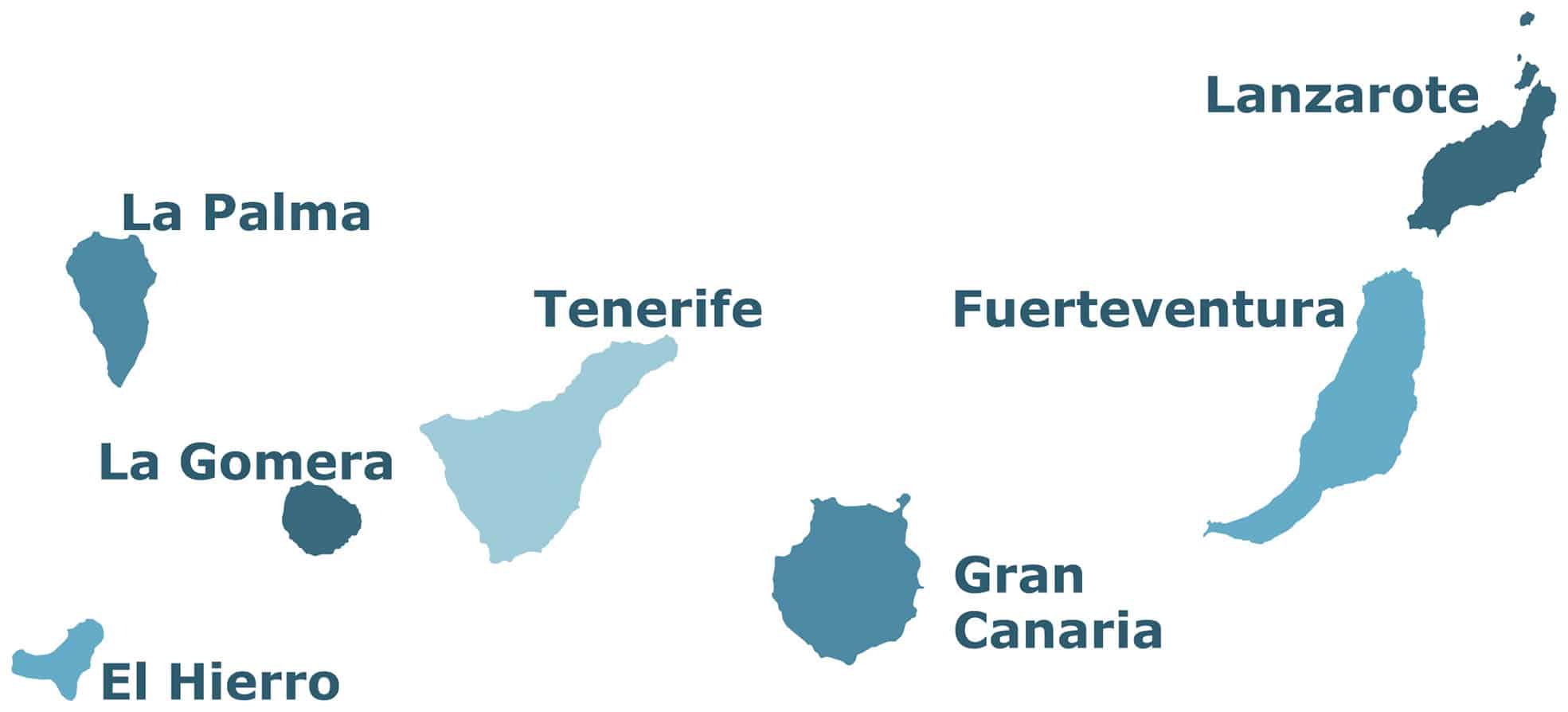
There are seven main islands. Running from the largest to smallest by area, they are Tenerife, Fuerteventura, Gran Canaria, Lanzarote, La Palma, La Gomera, and El Hierro. The only other inhabited island is La Graciosa, which administratively is part of Lanzarote. But the archipelago also includes numerous small islands such as Alegranza, Isla de Lobos, Montaña Clara, Roque del Oeste and Roque del Este, as well as various rocks.
The archipelago includes green areas as well as semi-desert as each island has its own microclimate. They also have high mountains, which are ideal for astronomical observation, because they lie above the temperature inversion layer, and as a result, there are two astronomical observatories, one on Tenerife and one on La Palma.

Caldera Taburiente National Park – ©Tanja Freibott CC BY-SA 3.0 ES via Wikimedia Commons
Four of Spain’s 13 national parks are located in the Canary Islands, more than any other autonomous community. Two of them have been declared World Heritage Sites, and the other are part of Biosphere Reserves. They are the Caldera Taburiente National Park, Garajonay National Park, Teide National Park, and Timanfaya National Park. more information on the individual Ireland pages.
Birding the Canary Islands
The Canary Islands have a lot more to offer the visitor than you might guess from their reputation as a boozy holiday destination. The islands boast over 650 endemic plant species, 6 endemic birds, 3 near endemics plus dozens of endemic subspecies, a few unique reptiles, and about 15,000 species in total. However, it is not only the species count that makes the islands special, but their huge range of habitats, ranging from costal sand dunes to alpine scrub. From the arid semi desert of Fuerteventura to the lush, subtropical laurel forests of La Gomera and the Blue Chaffinch studded pine forests of Tenerife; each island has its own character and unique set of creatures. Add to this mean temperatures ranging between 18 and 26 degrees Celsius, a laid back approach to life and great local cuisine and the growing popularity of rural tourism in the islands becomes obvious. Another advantage is that of accessibility, both via flights from Europe and once on the islands. A thorough, if often windy and sometimes plain hair-raising road system means most habitats and their associated beasties are within easy range of day-trippers and drivers alike.
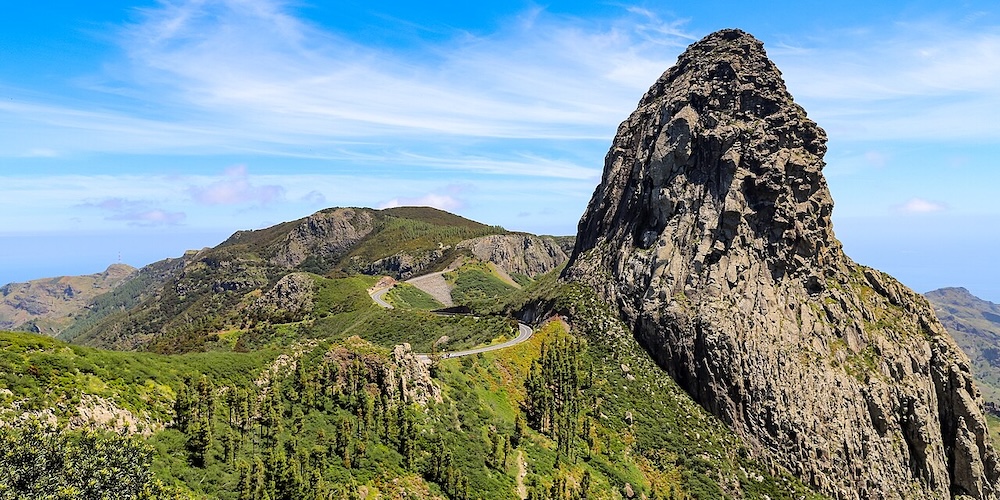
Garajonay National Park – ©dronepicr CC BY 2.0 via Wikimedia Commons
Among the mouth-watering bird species unique to the islands, the two endemic laurel pigeons, Bolle’s Pigeon Columba bolli and Laurel Pigeon Columba junoniae, the Tenerife Blue Chaffinch Fringilla teydea and the sub-species Tenerife Kinglet Regulus regulus teneriffae are best seen during a visit to Tenerife. A day trip to the Las Lajas picnic site is probably the best place to see the Blue Chaffinch as well as the distinctive local race of the Great Spotted Woodpecker.
La Gomera is also more than worth a day trip if you are on Tenerife. The ferry trip is a good experience in itself, with Petrels and Shearwaters often in evidence along with Dolphins and Pilot Whales. La Gomera boasts large populations of the two laurel pigeons, plus the Kinglet and local race of the Sparrowhawk.
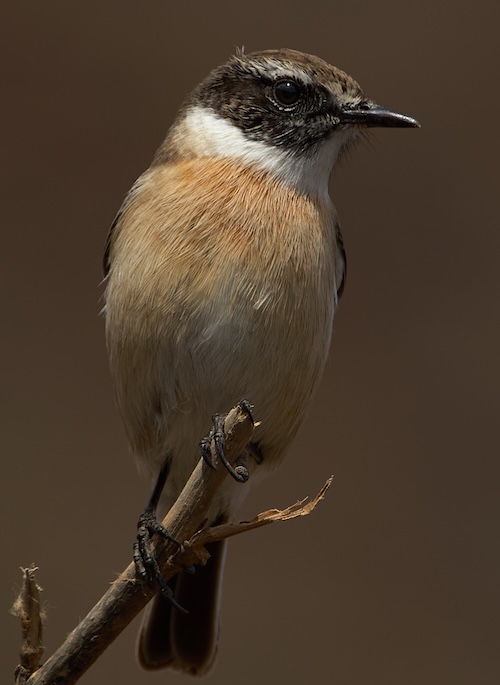
A trip to Fuerteventura is essential as it is the only place in the world that the Canary Island Chat is found (a separate subspecies on the islets of Allegranza and Montaña Clara to the north of Lanzarote is now unfortunately extinct). Other interesting species best seen on Fuerteventura include the Egyptian Vulture, Barbary Partridge, Cream-Coloured Courser, Lesser Short-toed Lark, Spectacled Warbler, Common Raven, Southern Grey Shrike and Trumpeter Finch. A good tip for birding in the Canaries is to head for fresh water, as birds tend to congregate around it, especially on the very dry Eastern islands.
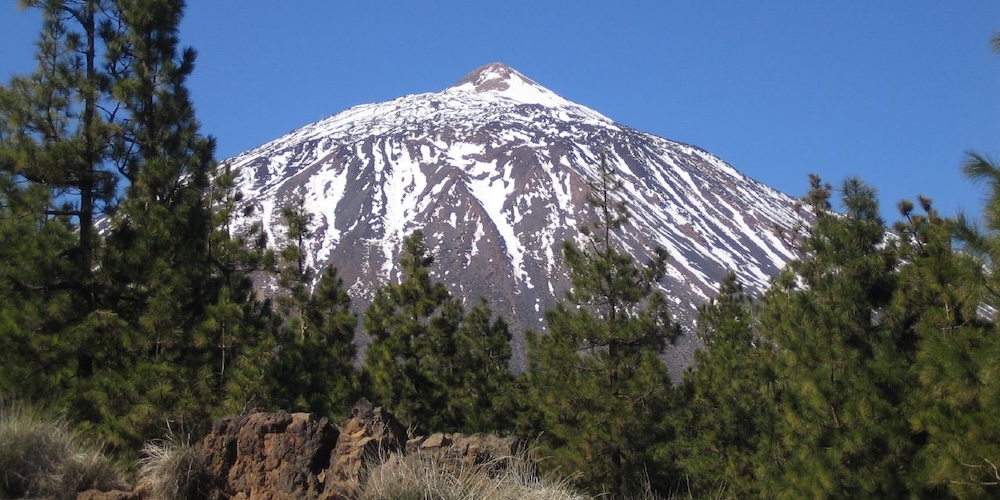
Teide National Park – ©Public Domain via Wikipedia Commons
Gran Canaria, perhaps the most interesting island from an overall ecological point of view, does now boast an endemics of its own since Gran Canaria Blue Chaffinch Fringilla polatzeki was split and it is a good place for the semi-endemic Berthelot’s Pipit, Canary and the ever-present Canary Island Chiffchaff. Its most spectacular inhabitant is the Gran Canary Lizard, actually the largest of the 6 endemic Gallotia lizards on the islands. It is exceptionally common almost everywhere and is particularly fond of tomatoes. The endemic skink is also well worth watching out for, especially in the south of Gran Canaria where it sports a bright, electric-blue tail.
Lanzarote and the Chinijo Archipelago to its North are the place to go for the Eleonora’s Falcon, and Barbary Falcon, as well as recent colonisers such as Cattle Egret and Little Egret. It is also the island to dream of rediscovering the extinct Black Oystercatcher. It is also great for Houbara Bustard and Cream-coloured Courser in the Desert of Soo.

Timanfaya National Park – ©MiljenkoSuljic CC BY-SA 4.0 via Wikimedia Commons
La Palma is the only island in the archipelago where the Red-billed Chough breeds and also hosts its own endemic subspecies of Common Chaffinch and Blue Tit. El Hierro also has an endemic subspecies of Common Chaffinch and Blue Tit.
All the islands boast an impressive range of migrants and stragglers, with shorebirds, African and European species predominant on the Eastern islands and American stragglers making it to the Western ones. A growing number of exotics, including seven parrot species now breed on the islands, along with Common Myna, Common and Orange-cheeked Waxbills and Sacred Ibis. Recent colonisers and accidental breeders include the House Sparrow, Eurasian Tree Sparrow, Black Winged Stilt, Little Bittern and Barn Swallow.
-
Number of bird species: 418
(As at May 2026)
Number of endemics: 6
Bolle's Pigeon Columba bollii Laurel Pigeon Columba junoniae Canary Islands Chat Saxicola dacotiae Canary Islands Chiffchaff Phylloscopus canariensis Tenerife Blue Chaffinch Fringilla teydea Gran Canaria Blue Chaffinch Fringilla polatzeki
-
Avibase
PDF ChecklistThis checklist includes all bird species found in Canary Islands , based on the best information available at this time. It is based on a wide variety of sources that I collated over many years. I am pleased to offer these checklists as a service to birdwatchers. If you find any error, please do not hesitate to report them. -
eBVird
PDF ChecklistThis checklist is generated with data from eBird (ebird.org), a global database of bird sightings from birders like you. If you enjoy this checklist, please consider contributing your sightings to eBird. It is 100% free to take part, and your observations will help support birders, researchers, and conservationists worldwide.

-
A Birdwatchers' Guide To The Canary Islands
| By Tony Clarke & Dave Collins | Prion Ltd | 1996 | Paperback | 110 pages, figures, maps | ISBN: 9781871104066 Buy this book from NHBS.com -
Birds of the Atlantic Islands
| By Tony Clarke, Chris Orgill & Tony Disley | Christopher Helm | 2006 | Paperback | 368 pages, 56 colour plates, b/w photos, b/w maps | ISBN: 9780713660234 Buy this book from NHBS.com -
Birds of the Canary Islands
| By Eduardo Garcia-del-Rey | Helm | 2018 | Paperback | 192 pages, 73 plates with colour illustrations; colour photos | ISBN: 9781472941558 Buy this book from NHBS.com -
Checklist of the Birds of the Canary Islands
| By Eduardo Garcia-del-Rey | Turquesa Publicaciones | 2001 | Paperback | 30 pages, tables | ISBN: 9788495412140 Buy this book from NHBS.com -
Field Guide to the Birds of Macaronesia
| (Azores, Madeira, Canary Islands, Cape Verde) | By Eduardo Garcia-del-Rey | Lynx Edicions | 2011 | Hardback | 341 pages, 150 colour plates, 230 distribution maps | ISBN: 9788496553705 Buy this book from NHBS.com -
Finding Birds in the Canaries - DVD & Booklet
| By Dave Gosney | Easybirder | 2013 | Paperback | 40 pages, 19 b/w maps | ISBN: 9781907316449 Buy this book from NHBS.com -
Rare Birds of the Canary Islands
| (Aves Raras de las Islas Canarias) | by Eduardo García-del-Rey & Francisco Javier García Vargas | Lynx Edicions | 2013 | Hardback | 328 pages, colour photos, colour illustrations, colour distribution maps | English & Spanish | ISBN: 9788496553910 Buy this book from NHBS.com -
Wildlife of Madeira and the Canary Islands
| (A Photographic Field Guide to Birds, Mammals, Reptiles, Amphibians, Dragonflies and Butterflies) | by John Bowler | WILDGuides | 2018 | Paperback | 224 pages, colour photos, colour distribution maps | ISBN: 9780691170763 Buy this book from NHBS.com
-
African Bird Club
WebpageThe Canary Islands are an archipelago of seven main islands – Tenerife (T), Fuerteventura (F), Gran Canaria (GC), Lanzarote (L), La Palma (P), La Gomera (G) and El Hierro (H) – and six islets in the North Atlantic Ocean, together covering 7,493 km² -
Birds of the Canary Islands
Facebook PageThis is a public space for the observers to share their sightings and photos of wild birds on the Canary Islands, focused on both common and rare species. -
Sociedad Ornitologica Canaria
Facebook PageA NGO with the single aim to improve the knowledge, through research, and conservation of Canary Islands...
-
Protected areas of the Canary Islands
InformationSatellite View
-
eBird
SightingseBirding This Month
-
Almodôvar Birding Center and Observatory
Tour OperatorJoin our Canaries Island Tour for an unforgettable birding experience! This tour may include a pelagic day or days. -
BirdQuest
Tour OperatorCANARY ISLANDS – Endemics and the rare African Houbara -
Birding the Strait
Tour OperatorThe Canary Islands are a volcanic archipelago with a subtropical climate and unique avifauna. -
Birdwatching Spain
Tour OperatorA birding trip to the Canary Islands is a must for any keen birder in the Western Paleartic -
HeatherLea
Tour OperatorCanaries – Tenerife, La Gomera & Fuerteventura -
NatureTrek
Tour OperatorAn 8-day tour to Fuerteventura, Tenerife and Gomera in search of the endemic plants, birds, butterflies and cetaceans of the Canary Islands. -
Oriole Birding
Tour OperatorCanary Islands – Birding on the Edge of Europe -
Rockjumper
Tour OperatorThese sun-drenched islands, belonging to Spain, lie just north of the African coastline and the Tropic of Cancer and were known by the Greeks as the remnants of the lost Kingdom of Atlantis. -
The Travelling Naturalist
Tour OperatorThe Canary Islands are often overlooked in terms of wildlife, but venture beyond the holiday resorts and you will find an astonishing wealth of birdlife... -
WINGS
Tour OperatorThe Spanish Canary Islands are remarkable in terms of biodiversity.
-
2018 [04 April] - Pau Lucio
PDF ReportAmong the avocados, Atlantic Canaries build their nests and the endemic Canary Islands chiffchaffs sing and flick their wings displaying. After a nice breakfast, we are off to the Canary pine forest near the Orotava to look for some endemic forest birds. Soon, we bump into a distinctive local form of Common Chaffinch F. c. tintillon. We continue walking for 10-15 minutes to get away from the crowds who are enjoying barbecues, a popular pastime in Easter. Near a stream, we find two Tenerife (African) Blue Tit C. t. teneriffae, a Tenerife Kinglet and a Common darter dragonfly. -
2018 [09 September] - Jesse Fagan
ReportWe visited four islands in 6 days, which included a couple of ferry rides and one small hop from Gran Canaria to Fuerteventura by plane. Overall, it was a relaxed and fun island adventure in which we recorded all the endemic species and a bunch of interesting subspecies. -
2019 [03 March] - Sam Bosanquet
PDF ReportBlue Chaffinch has been one of my dream birds for nearly 20 years, and a trip to Tenerife allowed me to combine paying my respects to this species with seeing two new pigeons and a host of interesting subspecies... -
2019 [09 September] - Chris Barfield
PDF ReportThis short trip was mainly to get to see the specialities and endemics of the islands and nudge my WP list a little bit nearer to 500, so I make no apologies for not spending a lot of time doing general birding or visiting sites not likely to produce anything new! Other times of year will likely produce quite different results. -
2021 [12 December] - Simon Pearce
PDF ReportWe knew that the two islands that offered the most birding interest were Tenerife for its 2 endemic Laurel forest Pigeons, Blue Chaffinch and Chiffchaff, and Fuerteventura for its endemic Stonechat, as well as a number of range restricted species like Houbara Bustard, Plain Swift and Berthelot’s Pipit, plus future potential splits like Canary Islands Kingletet and Tenerife Robin. So we booked a week on each island, sorted flights and car hire and off we went... -
2022 [03 March] - Ian Merrill - Gran Canaria
PDF Report...Our February/March 2022 trip to Gran Canaria was a rather focused visit, specifically planned around what is now the single-island endemic, Gran Canaria Blue Chaffinch. Following it's split from Tenerife Blue Chaffinch, this high altitude Canarian Pine specialist carriesthe unenviable accolade of being one of the rarest birds in the Western Palearctic, with a global range of just 40 km2 and a population little higher than four hundred birds... -
2024 [02 February] - Godfried Schreur
PDF ReportDe heenreis verliep voospoedig en relaxed. We hoefden gelukkig niet zo vroeg op te staan want onze vlucht naar Tenerife vertrok pas in de voormiddag. -
2024 [03 March] n- Volker Hesse
PDF ReportFinding all the endemics of the Canary Islands -
2025 [05 May] - Mark Lopez
PDF Report...with all the endemic species (and endemic subspecies on GC and Fuerteventura) proving relatively easy to see, whilst I also got lucky with the seabirds with two of my three wanted species seen from the ferry...
-
Canary Islands
WebpageWhere and when to watch birds in the Canary Islands
-
Naturfotografie Kanarische Inseln
WebsiteNature photography of the Canary Islands. German and Spanish language