

Madeira
Madeira is an archipelago and region of Portugal, roughly 805 kilometres (500 miles), southwest of mainland Portugal. Together with the Azores, it is one of two autonomous regions of Portugal outside of Europe. It’s an archipelago in the North Atlantic Ocean and part of Macronesia, 250 miles north of the Canary Islands and 320 miles west of Morocco. It covers an area of 801 km2 (309 square miles). It has a population of just over a quarter of a million people.
The archipelago includes the main island of Madeira which constitutes well over 90% of the land and then island of Porto Santo, which makes up around 5% and the small Desertas islands as well as a small separate uninhabited archipelago of the three tiny Savage Islands and sixteen islets. The main island is some 35 miles long and up to 14 miles wide.
Roughly half the population lives in Funchal; the administrative capital. It generally has a mild to moderate subtropical climate with the Mediterranean summer drought and winter rain. but many microclimates are found at different elevations.
The main island is mountainous with several peaks over 6,000 feet high and ten over 4,500 feet running down the centre of the island, making it somewhat inaccessible, although deep ravines often separate the peaks. Some of the coast has steep cliffs.
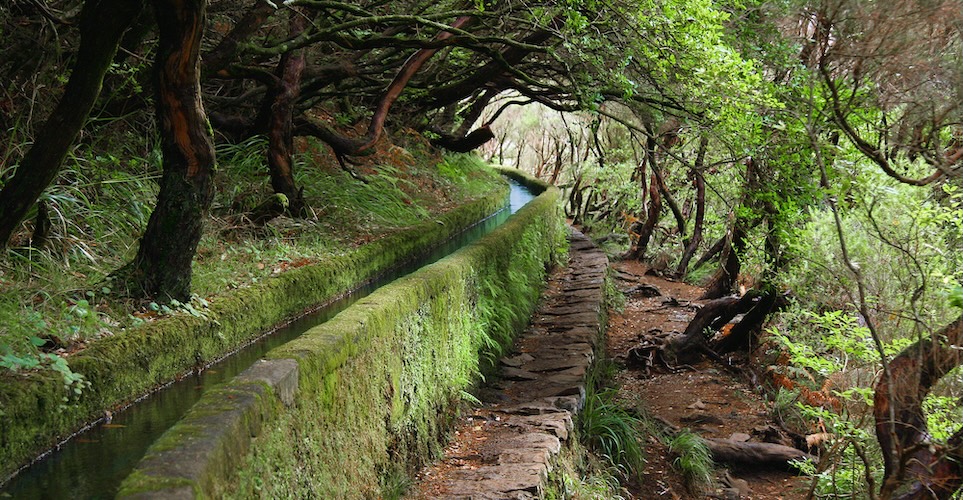
A Levada near Rabaçal – ©JOEXX CC BY-SA 3.0 via Wikimedia Commons
The south has largely been cleared of forest and is farmed with viticulture prominent. The north still holds forest dominated by laurels. Being wet in the northwest, but dry in the southeast, many ‘levadas’ or aqueducts were constructed to bring water to the people and agriculture. Much of this was done some centuries ago by convicts imported from mainland Portugal.
Birding Madeira
Madeira, as an island with temperate climate and dense vegetation is an ideal habitat for birds. Moreover, when it was discovered (1419), the only animals found there were birds and the endemic Wall Lizard Lacerta dugesii. As an island habitat, species which live here have adapted themselves to the geographical conditions; over time this caused endemism; 21% of Madeira bird species and sub-species can only be seen in the Madeira Archipelago whilst 33% are species and sub-species endemic to the Macaronesia region (this is the geographical region which comprises the archipelagos of Madeira, Azores, Canary islands and Cape Verde and also part of Northwest of Africa).

Levada do Caldeirão Verde – ©Günter Seggebäing CC BY-SA 3.0 via Wikimedia Commons
So, for those of you who thought that Madeira was only a trekking and beach holiday destination, be aware that there is birdlife here that makes the island worth a visit. Zino’s Petrels Pterodroma Madeira, Trocaz Pigeon Columba trocaz and Madeira Firecrest Regullus madeirensis are the exclusively Madeiran species, but there are also some interesting sub-species such as the Madeira Chaffinch Fringilla coelebs madeirensis, a race of Berthelot’s Pipit Anthus bertheloti madeirensis, and Madeira Rock Sparrow Petronia petronia madeirensis among others. As part of Macaronesia, Madeira also has Fea’s Petrel Pterodrom fea, Plain Swift Apus unicolor and Canary Serinus canaria canaria as well as 13 other sub-species including Little Shearwater Puffinus assimilis baroli, White-face Storm Petrel Pelagodroma marina hypoleuca, Kestrel Falco tinnunculus canariensis, Sparrowhawk Accipiter nisus granti and Yellow-legged Gulls Larus cachinans atlantis to name but a few.
In general, the Madeira Archipelago has 43 breeding species, but beyond that it has some regular visitors such as Little and Cattle Egrets, Whimbrel, Dunlin, Turnstone and sometimes very interesting accidental vagrants like Laughing Gulls, Spoonbills etc.

Ponta de São Lourenço, Cais do Sardinha, Desertas Islands – ©Ввласенко CC BY-SA 3.0 via Wikimedia Commons
If you want some birdwatching hot spots in Madeira then there is nothing like going to its IBAs (Important Bird Areas). In Madeira Island there are 4 IBAs all being situated in areas where human occupation is reduced or in difficult to access sites. Three of these are integrated into Madeira’s Natural Park, so are protected areas. This is the case for the Laurel Forest, the Central Mountainous Massif and Ponta de São Lourenço. The other IBA is in Ponta do Pargo – see these hotspots described below.
-
Central Mountainous Massif
Satellite ViewThis is a Mountainous area with deep escarpments and valleys, situated on the eastern/central region of Madeira. Here, where the highest of Madeira’s peaks are, is one of the most visited areas during summer that is why it is not permitted to go there (without a special permit from the Natural Park) between sunset and sunrise, to protect Zino’s Petrel. Beyond the high-altitude vegetation one can find transitional areas of forest and some spots of Laurel Forest in lower altitudes. Bird species include: Zino’s Petrel Pterodroma madeira, Trocaz Pigeon, Madeira Firecrest, Manx Shearwater, Sparrowhawk, Berthelot’s Pipit, Plain Swift, and Madeira Rock Sparrow. -
Laurel Forest
The Laurel Forest is a vast forest area, with its origin in the Tertiary, which comprises about 25% of Madeira Island. It is situated in the north on mountainsides with the majority of its vegetation made up of indigenous flora species, especially from the Laurus family. Deep water streams, steep valleys and abrupt cliffs are distributed all around the area and associated with the dense vegetation, making most places inaccessible. Bird species that may be observed here are: Trocaz Pigeon, Madeira Firecrest, Manx Shearwater Puffinus puffinus puffinus, Sparrowhawk, Woodcock Scolopax rusticola, Cory Shearwater Calonectris diomedea borealis, Plain Swift, Canary, Madeira Chaffinch, Robin Erithacus rubecula microrynchus, etc. -
Ponta de São Lourenço
Satellite ViewThis is a rocky peninsula with a set of cliffs and small islets which form the most eastern point of the Island. All the area is mainly covered by shrubs and herbaceous vegetation. -
Ponta do Pargo
Satellite ViewThis is the extreme west of Madeira Island, which covers a series of different habitats, and its diversity is what confers it importance in terms of avifauna. The coast is rocky with steep cliffs and terraces created by landfalls. In the higher areas, there are small agricultural plots and areas where herbaceous vegetation exists. There are also some Pine trees, Eucalyptus and pastures. Although it is not on Madeira Island, it belongs to the Archipelago, and one should not miss the opportunity to make a sea trip to the Desertas Islands, which are another IBA. They are made up of three islands of volcanic origin that are very barren and inhospitable, with high escarpments. During such a boat trip it is possible to see: Madeira Storm Petrel Oceanodroma castro, Bulwer’s Petrel Bulweria bulwerii, Little Shearwater Puffinus assimilis baroli, Fea’s Petrel, Common Terns and Cory Shearwaters etc.
-
Catarina Fagundes
Madeira | info@madeirabirds.com
https://www.madeirabirds.com/
-
Number of bird species: 363
(As at May 2026)
Number of endemics: 2
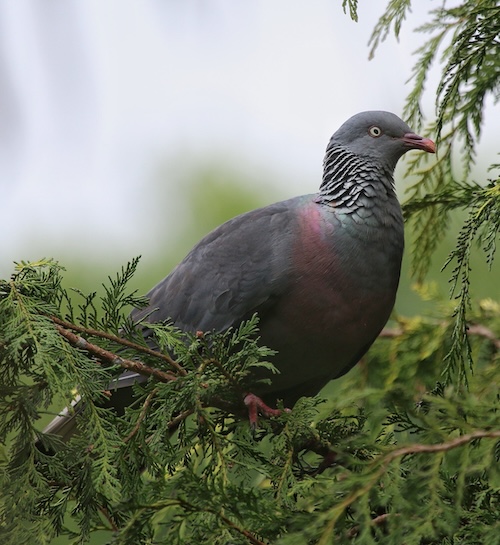
Trocaz (Madeira Laurel) Pigeon Columba trocaz
Madeira Firecrest Regulus madeirensisNumber of endemics: 1 Breeding endemic
Madeira Petrel Pterodroma madeira
-
Avibase
PDF ChecklistThis checklist includes all bird species found in Madeira , based on the best information available at this time. It is based on a wide variety of sources that I collated over many years. I am pleased to offer these checklists as a service to birdwatchers. If you find any error, please do not hesitate to report them.

-
Birds of the Atlantic Islands
| (Canary Islands, Madeira, Azores, Cape Verde) | by Tony Clarke Illustrated by Chris Orgill & Tony Disley | Christopher Helm | 2006 | Paperback | 368 pages, 56 colour plates, b/w photos, b/w maps | ISBN: 9780713660234 Buy this book from NHBS.com -
Field Guide to the Birds of Macaronesia
| (Azores, Madeira, Canary Islands, Cape Verde) | by Eduardo Garcia-del-Rey | Lynx Edicions | 2011 | Hardback | 342 pages, 150 colour plates, 230 distribution maps | ISBN: 9788496553705 Buy this book from NHBS.com -
Where to Watch Birds in Portugal, the Azores & Madeira Archipelagos
| By Colm Moore, Gonçalo Elias & Helder Costa | Pelagic | 2020 | Edition 2 | Paperback | 212 pages, b/w illustrations, b/w maps | ISBN: 9781784272234 Buy this book from NHBS.com -
Wildlife of Madeira and the Canary Islands
| (A Photographic Field Guide to Birds, Mammals, Reptiles, Amphibians, Dragonflies and Butterflies) | By John Bowler | WILDGuides | 2018 | Paperback | 224 pages, colour photos, colour distribution maps | ISBN: 9780691170763 Buy this book from NHBS.com
-
Sociedade Portuguesa para o Estudo das Aves
WebsiteHelp us create safe havens for birds...
-
NP Parque Natural da Madeira
InformationSatellite ViewThe Madeira Natural Park is a large biological reserve in Madeira with a unique endemic flora and fauna. It was created in 1982 to safeguard the natural heritage of the archipelago, and contains a number of endangered species including global rarities such as Zino's petrel. This national park encompasses nearly two-thirds of the territory of the island of Madeira, and within it are nature reserves, protected landscapes and leisure zones. Its key habitat is the laurel forest.
-
Madeira Birdwatching
SightingsBirding in Madeira
-
BirdFinders
Tour OperatorThis single-centre tour takes us into spectacular scenery to search for the endemic Trocaz Pigeon and Madeira Firecrest plus the Micronesian endemics of Plain Swift, Island Canary and Berthelot’s Pipit. Chumming during our three long pelagic trips... -
BirdQuest
Tour OperatorMADEIRA & THE AZORES – Macaronesian endemics and seabirds in a beautiful part of the world... -
Birding Africa
Tour OperatorCape Verde, Azores, Madeira, Canary Is. -
Cycling Madeira
Local Half Day Cycling TourA unique birding tour combining three land sites on São Lourenço Important Bird Area and one rib boat birdwatching trip. Record your bird sightings for the Portuguese Bird Conservation Society – SPEA. -
Madeira Wind Birds
Local Tour OperatorDespite Madeira not having a great variety of breeding species and lying off the main migration route for passerines, this group of islands offers excellent conditions to birdwatchers, not only in terms of breeding birds but also vagrants… They also run regular pelagics… -
MadeiraBest
Local Day TourAn exceptional birding tour to observe many of the Island endemic birds whilst exploring the Important Bird Area of the Laurel forest of Madeira with an excellent value for money. -
Oriole Birding
Tour OperatorMadeira – Searching for Europe’s Rarest Seabirds
-
2007 [05 May] - Ashley Beolens
PDF Report…Another morning searching the gardens, this time in the sunshine, gave us exquisite views of the stunning Madeira Firecrest, and allowed me the opportunity to get some fantastic photos of this energetic sprite. We also had our first meeting with the island’s only lizard Lacerta Dugesii the Madeira Wall Lizard, whose colour ranges from a striped brown in the youngsters to a deep green/blue in full adults, and contrary to its name was first seen by us on a tree! We also had a brief view of the Three-toed or Trocaz Pigeon - well the underside of one sat in the top of a tree! The other new trip bird was a distant circling Sparrowhawk. As well as some Clouded Yellow butterflies… -
2019 [03 March] - Mark Graham - Cruise
ReportWe went on the P&O ship, the Oriana, on a cruise to La Coruna [Spain], Madeira, La Palma, La Gomera, Tenerife, Lanzarote, Cadiz and then up the Spanish and Portuguese coast back to Southampton. -
2020 [10 October] - Birding Dad
ReportThe following is a brief report on our sightings of birds during our five and a bit days on Madeira last week. For some notes on our itinerary, check out the first post by scrolling down. I will follow this blog up with some of the more notable wildlife sightings... -
2021 [06 June] - Pete Morris
PDF ReportThis was our first attempt at a heavily pelagic-orientated trip to Madeira, and I am quite sure it will not be our last! If you want to see the rare Pterodroma petrels that breed around Madeira, this is the way to do it! We enjoyed spectacular views of both Desertas and Zino’s Petrel at sea, and were even able to appreciate their subtle differences! -
2022 [05 May] -
PDF ReportArriving in Madeira Airport after a 4 hour-flight, we only ticked Atlantic Yellow-legged Gull (Larus michahellis atlantis). We then took a taxi to our accommodation, the quiet and green Cantinho Rural in Camacha. Atlantic (Island) Canaries were singing in the garden and Robin, Blackbird, Goldfinch and Blackcap were common... -
2022 [06 June] - Nick Moss
Report... walked away from the crowds and plonked myself in the shade underneath the concrete helicopter pad, where I notched up lifer number Two - a Bulwer's Petrel (in fact I had 2 of them), as well as 40 Cory's, but the winds were wrong directionally for productive sea-watching, and most of the time Sandwich and Common Terns were the only birds on view... -
2024 [05 May] - Diedert Koppenol
ReportOur second tour to Madeira was another great visit to this Portuguese island in the Atlantic Ocean. We enjoyed three very successful pelagics, with great views of both Pterodroma species, several storm petrels including Band-rumped [Madeiran] Storm Petrels and plenty of Cory’s Shearwaters and Bulwer’s Petrels! On the island itself it was very easy birding and we had lovely encounters with Madeira Firecrest, Trocaz Pigeon, Spectacled Warbler, Madeira Chaffinch and Rock Sparrow. Combined with the pleasant weather, great scenery and food, it is a very welcome break! -
2026 [02 February] - Brian Carruthers
ReportThis was a 12 day breakaway trip for my wife that she had chosen with my daughter. -
2026 [04 April] - Madeira Birdwatching
ReportApril's a good month for migration! Let's see which species are blown out of their migratory route into this small piece of land and concrete, called Madeira...
-
Birding Madeira
WebsiteThe numbers of European birdwatchers that visit the Madeira archipelago have increased dramaticly in recent years. The reasons for this are many and varied. The main reason to visit Madeira has always been the endemic bird species and races. The second reason, and probably the most important one, is the excellent opportunity to seawatch from the mainland or boat crossings between the nearby islands. The hot spot Porto Moniz, which is the number one site for seawatching, is certainly the good reason for many birders to visit Madeira. However, Madeira offers easy birding and is a perfect destination for a combined holiday. Every birding site or boat trip has something for everyone! -
Madeira Birding
WebpageMadeira has the reputation of having the best pelalgic birding in the Western Palearctic. The island boasts a couple of endemic species and plenty of endemic subspecies. Although I visited the island on a family holiday I did do the three day pelalgic trip run by Madeira Wind Birds - a trip for hard-core birders if there ever was one. The remainder of the time I did virtually no birding at all -
Madeira Seawatching
WebsiteBoth the gallery and the website will continue to grow and new photographs are always welcome. The criteria for any photo we publish on this site is that it has to be photographed in the Madeiran archipelago (Madeira, Porto Santo and Desertas). If you have any suitable photographs that would warrant publication then please don't hesitate to contact me for further details or e-mail me at Birding Madeira.
-
Aves at Ilha da Madeira
BLOGNot updated for years - Photo BLOG contributed to by a Group of amateur photographers in Madeira Island...