

lithuania
Lithuania is a country in the Baltic region of Europe. It is one of three Baltic states and lies on the eastern shore of the Baltic Sea, bordered by Latvia to the north, Belarus to the east and south, Poland to the south, and the Russian semi-exclave of Kaliningrad Oblast to the southwest, with a maritime border with Sweden to the west. Lithuania covers an area of 65,300 km2 (25,200 square miles), with a population of over 2.8 million. Its capital and largest city, with about half a million inhabitants, is Vilnius; other major cities include Kaunas, Klaipėda, Šiauliai and Panevėžys. Lithuanians who are the titular nation and form the majority of the country’s population, belong to the ethnolinguistic group of Balts and speak Lithuanian.
It has around 99 kilometres (61.5 miles) of sandy coastline, only about 38 kilometres (24 miles) of which face the open Baltic Sea, rather less than the other two Baltic states. The rest of the coast is sheltered by the Curonian sand peninsula. Lithuania’s major warm-water port, Klaipėda, lies at the narrow mouth of the Curonian Lagoon, a shallow lagoon extending south to Kaliningrad. The country’s main and largest river, the Nemunas River, and some of its tributaries carry international shipping.
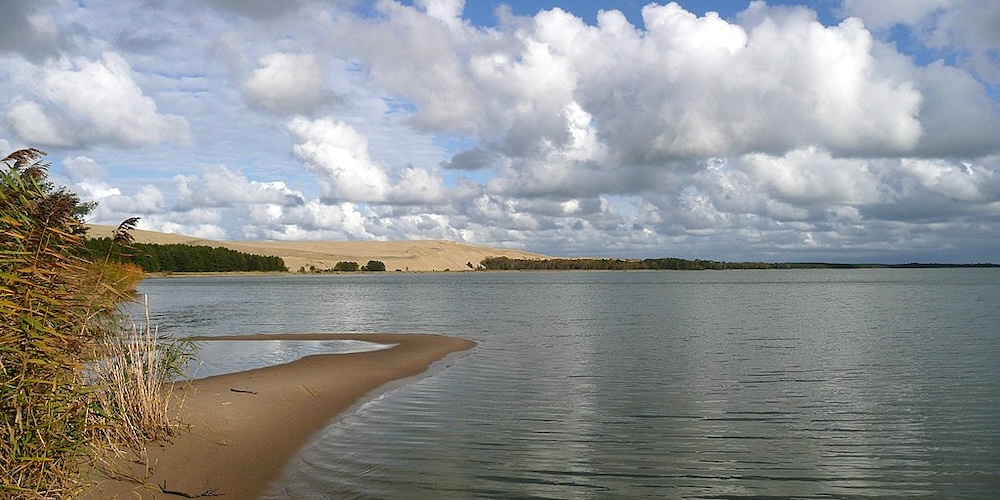
Curonian Spit National Park – ©Amorozov77 CC BY-SA 3.0 via Wikimedia Commons
Lithuania lies at the edge of the North European Plain. Its landscape was smoothed by the glaciers of the last ice age, and is a combination of moderate lowlands and highlands. Its highest point is Aukštojas Hill at 965 feet in the eastern part of the country. The terrain features numerous lakes and wetlands, and a mixed forest zone that covers over 33% of the country. Drūkšiai is the largest, Tauragnas is the deepest and Asveja is the longest lake in Lithuania and there are 29,000 rivers.

Žadvainiai Lake – ©Mindaugas Macaitis CC BY-SA 4.0 via Wikimedia Commons
Lithuania has a temperate climate with both maritime and continental influences. It is defined as humid continental, but is close to oceanic in a narrow coastal zone. Average temperatures on the coast are −2.5 °C in January and 16 °C in July. During the summer, 20 °C is common during the day, while 14 °C is common at night. Some winters can be very cold. −20 °C occurs almost every winter. Winter extremes are −34 °C in coastal areas and −43 °C in the east of Lithuania. The average annual precipitation is less than 32 inches on the coast, about 34 inches in the Samogitia highlands, and 24 inches in the eastern part of the country. Snow occurs every year, and it can snow from October to April. In some years, sleet can fall in September or May. The growing season lasts 202 days in the western part of the country and 169 days in the eastern part. Severe storms are rare in the eastern part of Lithuania but common in the coastal areas.
Lithuania does not have high mountains and its landscape is dominated by blooming meadows, dense forests and fertile fields of cereals. It is a particularly watered region with more than 3,000 lakes, mostly in the northeast. The country is also drained by numerous rive. It has two terrestrial ecoregions: Central European mixed forests and Sarmatic mixed forests. Forest has long been one of the most important natural resources in Lithuania. Forests occupy one-third of the country’s territory and timber-related industrial production accounts for almost 11% of industrial production in the country.
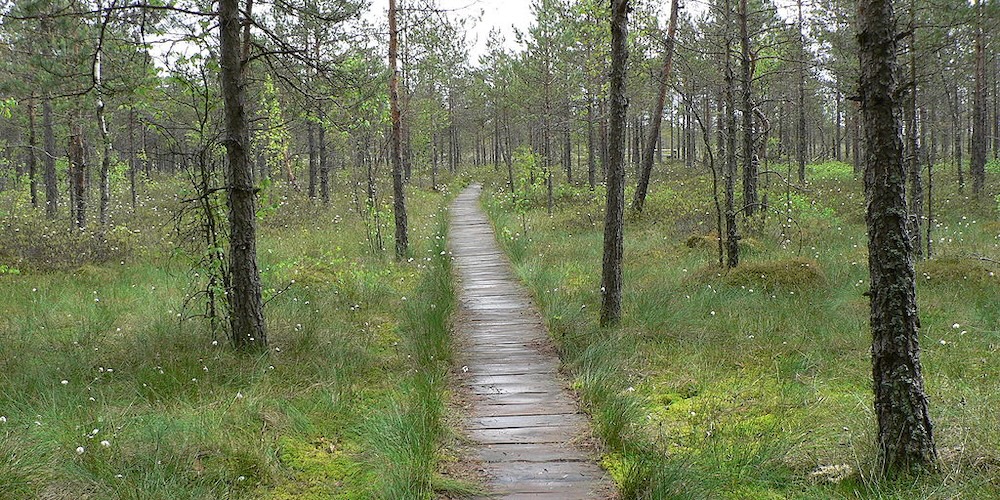
Cepkeliu Swamp Dzūkija National Park – ©Wojsyl CC BY-SA 3.0 via Wikimedia Commons
Lithuania has five national parks, 30 regional parks, 402 nature reserves, and 6 strict nature reserves. The ecosystems include natural and semi-natural (forests, bogs, wetlands and meadows), and anthropogenic (agrarian and urban) ecosystems. Among natural ecosystems, forests are particularly important. Wetlands (raised bogs, fens, transitional mires, etc.) cover 7.9% of the country, with 70% of wetlands having been lost due to drainage and peat extraction. Changes in wetland plant communities resulted in the replacement of moss and grass communities by trees and shrubs, and fens not directly affected by land reclamation have become drier as a result of a drop in the water table. Agricultural land comprises 54% of Lithuania’s territory (roughly 70% of that is arable land and 30% meadows and pastures).
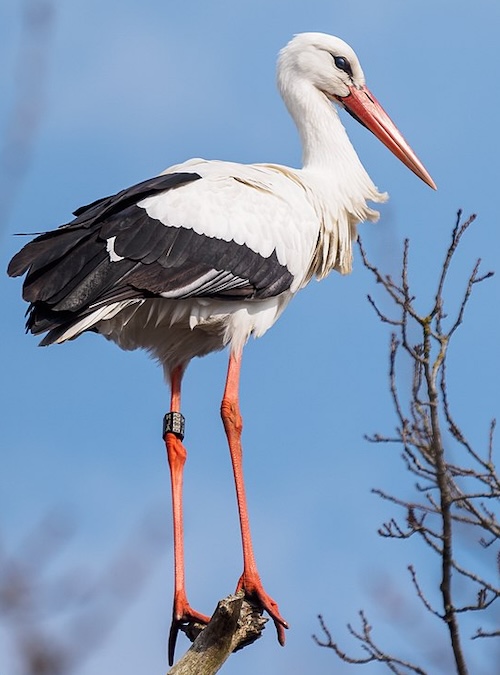
The wildlife populations have rebounded as the hunting became more restricted and urbanisation allowed replanting forests (forests already tripled in size since their lows). The most prolific large wild animal in every part of Lithuania is the roe deer, with 120,000 of them. They are followed by boars (55,000). Other ungulates are the deer (~22,000), fallow-deer (~21,000) and the largest one: moose (~7,000). Among the Lithuanian predators, foxes are the most common (~27,000). Wolves are, however, more ingrained into the mythology as there are just 800 in Lithuania. Even rarer are the lynxes (~200). Lithuania has the highest-density stork population in Europe.
Birding Lithuania
Lithuania is rich with diverse landscapes, unique works of nature and a variety of habitats – a lot of marshes, meadows, old and wet forests, lakes and fishponds all of which are suitable for birdwatching. Lithuania’s amber coast – Curonian Spit with rolling sand dunes – make an indelible impression on many visitors. Also, there are a lot of marshes and wet forest with old trees, suitable for rare species of woodpeckers.
Until recently, Lithuania was unknown territory to most Europeans. Before the 1990s, most ornithologists and conservationists certainly knew very little about it. They have only just begun to realize that Lithuania is wonderfully rich in bird fauna, including internationally significant populations of many species. Extensive areas of important wildlife habitats of outstanding importance in a European context are scattered throughout the country.
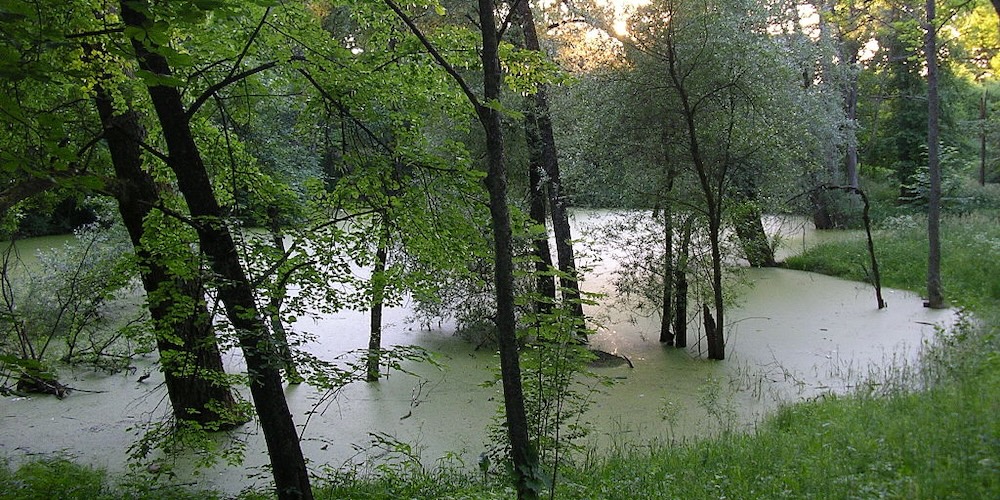
Wet Woodland – ©darius_saulenas CC BY 2.0 via Wikimedia Commons
Over half of the forests contain middle-aged to old, mature timber. There are large tracts of wet forest, one of Europe’s scarcest habitats. With pine, birch and spruce being the dominant species, these mixed and coniferous forests hold a wonderful variety of birds. Well over 500 pairs of Black Storks nest in them and similar numbers of Lesser-Spotted Eagles. Black Grouse, Hazel Hens, Black and Three-toed Woodpeckers are common in the appropriate habitat. The White-backed Woodpecker, which is declining over much of its European range, is still quite numerous. Northern forests are famous for their owls and those in Lithuania are no exception. Ural, Tengmalm’s and Pygmy Owls all breed.
A big part of Lithuania is farmed, but generally not in the intensive, highly mechanised way that is familiar to most of Western Europe. This means, for example that a third of the agricultural landscape consists of meadows and pastures; prime habitat for several thousand pairs of Corncrakes. White Storks are also a familiar sight in the countryside. They survive in areas of traditional farming, especially where these are close to wetlands. A recent estimate puts their population at 12,000 nesting pairs (some even breed in small colonies).
Two very rare European birds breed in the open sedge fens, these are the Aquatic Warbler (250-300 pairs) and the Great Snipe (200-300 pairs). Open fens and bogs are also home to the spectacular Crane, whose wild trumpeting calls are a prominent feature of this landscape. Lithuania has several hundred breeding pairs, and in autumn migrating flocks up to 3,000 cranes are regularly observed in some places. Plenty of old and wet forests create suitable conditions for rare species of woodpeckers (Three-toed, White-backed, Middle Spotted, Grey-headed and others – 9 species altogether). Birds such as Bittern (800-1,000 pairs); Marsh Harrier (2,500-3,500 pairs); and Black Terns (2,000-4,000) are abundant in more open marshland. Ospreys fish many lakes (30-40). White-tailed Eagle is increasing at 40-50 breeding pairs and up to 12 seen at one moment in winter.
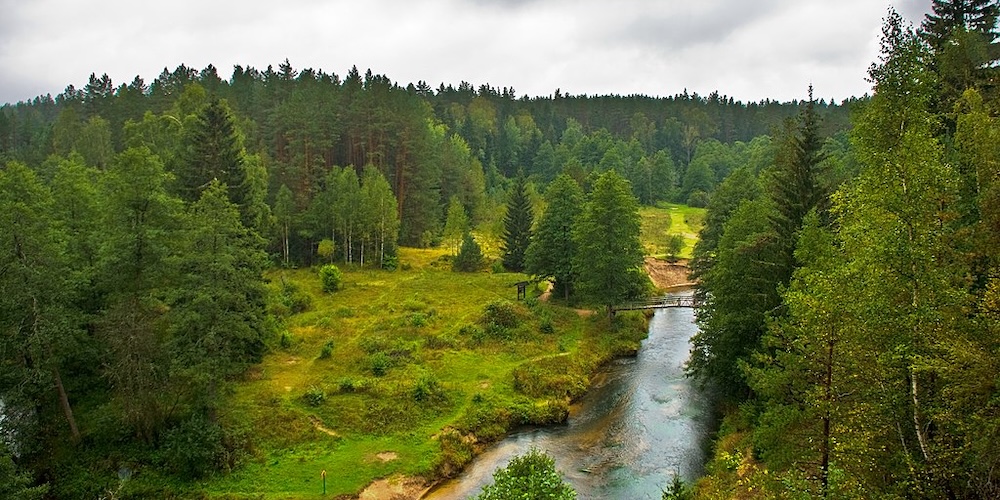
Ūla River – ©Phillip Capper CC BY 2.0 via Wikimedia Commons
Thirteen globally threatened bird species are found in Lithuania, five of them breed – Ferruginous Duck, White-tailed Eagle, Corncrake, Great Snipe and Aquatic Warbler. Regular flocks of Steller’s Eider over-winter in the Baltic Sea.
The White Stork truly deserves its place as Lithuanian’s national bird. Whilst it has been declining rapidly in Western Europe during this century, the 5th European White Stork survey revealed that approximately 13,000 pairs bred in Lithuania. This is the highest known density of the species in the world.
The best periods for observations are: Early spring (March, April) which is good for Steller’s Eider, Long-tailed Duck and other seabirds, as well as for owls, woodpeckers and grouse. The Breeding season (May, June) which has the highest number (150-200) of species – at the end of May all the songbirds arrive.
In autumn (September, October) and spring (March, April) migration brings huge concentrations of geese, swans, ducks, cranes and other waterfowl, waders and passerines. Especially strong autumn migration is on the seacoast of Lithuania which forms a bottle-neck.
-
Baltoji Voke
InformationSatellite ViewBaltoji Voke is the special birdwatching area very close to the capital of Lithuania - Vilnius. It is just 30km to the south, or 30 minutes by car from Vilnius airport. This place contains big complexes of good habitats concentrated in one place. Best of all are Baltoji Voke fishponds, there ecological farming goes together with some bird protection and birdwatching activities (in 2002 Lithuanian ornithological Society started here a special project for the development of birdwatching). -
Curonian Spit
InformationSatellite ViewThe Lithuanian seacoast area and Curonian spit - is a bottle-neck where the migration of wildfowl along the Baltic is impressive with huge flocks of migrant geese, swans, ducks and passerines. -
Middle Lithuania
In middle Lithuania there are large tracts of wet forest and marches with species such as Black Stork, Lesser-Spotted Eagles, Black Grouse, & Hazel Hens, nearly all (9, except Syrian) species of the European woodpeckers - Black, Grey, Three-toed, White-backed, Middle-spotted Woodpecker and other. -
Nemunas River Delta area
InformationSatellite View(it is also protected area as Nemunas delta regional park) - is known as Lithuanian bird paradise, where large number of water and marsh birds breed and hundreds of thousands of migrating birds stop en route. More than 300 species have been observed here, and nearly 200 species breed. -
Southern & Eastern Lithuania
In Southern/Eastern Lithuania the pure sandy soils produce a landscape with pine forests and small villages with such species as Capercaillie, European Roller, Hoopoe, Tengmalm's Owl, European Nightjar and others. Large numbers of nice clean lakes are home to such breeding species as Osprey and Black-throated Diver.
-
Egidijus Adomaitis
Vilnius | info@birdlife.lt
https://www.birdlife.lt
-
Number of bird species: 397
(As at April 2025)National Bird - White Stork Ciconia ciconia
-
Avibase
PDF ChecklistThis checklist includes all bird species found in Lithuania , based on the best information available at this time. It is based on a wide variety of sources that I collated over many years. I am pleased to offer these checklists as a service to birdwatchers. If you find any error, please do not hesitate to report them. -
E-Bird
PDF ChecklistThis checklist is generated with data from eBird (ebird.org), a global database of bird sightings from birders like you. If you enjoy this checklist, please consider contributing your sightings to eBird. It is 100% free to take part, and your observations will help support birders, researchers, and conservationists worldwide. -
Wikipedia
Annotated Listhis is a list of the bird species recorded in Lithuania. The avifauna of Lithuania include a total of 396 species, of which 5 have been introduced by human. 21 species are globally threatened.

-
Birds of Europe, North Africa, and the Middle East
| Photographic Guide | By Frédéric Jiguet & Aurélien Audevard | PUP | 2017 | Paperback | 447 pages, 2200 colour photos, colour distribution maps | ISBN: 9780691172439 Buy this book from NHBS.com -
Collins Bird Guide
| By Lars Svensson | Harper Collins | Edition 3 | 2023 | Paperback | 478 pages, 4000+ colour illustrations, 700 colour distribution maps | ISBN: 9780008547462 Buy this book from NHBS.com -
Lietuvos Paukščių: Pažinimo Vadovas (Lithuanian Birds)
| By Vytautas Jusys, Saulius Karalius & Liutauras Raudonikis | Publishing House Lututė | 2020 | Edition 2 | Hardback | 288 pages, 128 plates with colour photos and colour illustrations; colour distribution maps | Lithuanian with trilingual bird list in English, German, and Lithuanian | ISBN: 9786099581682 Buy this book from NHBS.com

Collins Bird Guide
AndroidThe Collins Bird Guide App provides everything you need to identify a species quickly and learn about it thoroughly.
Collins Bird Guide
Apple iOS |Collins Bird Guide 4+ A field guide to Europe NatureGuides Ltd. Designed for iPadUseful Information-
Bird watching places Klaipeda region
InformationNature along the Baltic Sea coast is incredibly diverse – featuring wide beaches, tall sandy clay cliffs, forests, bogs, lakes, and rivers, providing favorable living conditions for various bird species.
Organisations-
Klaipeda Region Ornithological Society
WebsiteThis Society is an independent organisation thought it is a branch of the Lithuanian Ornithological Society. Its members are the citizens of the Republic of Lithuania who are interested in wild birds and their protection in the Klaipeda Region. Society`s emblem is the corncrake. -
Lithuanian Ornithological Society [Lietuvos Ornitologø Draugija (LOD)]
WebpageLithuanian Ornithological Society seeks to conserve all bird species in Lithuania by protecting their habitats and, through this, to work for the world's biological diversity and the sustainability of human use of natural resources. - Naugarduko St. 47-3, Vilnius, LT, LT-03208 - Tel.+Fax +370 5 213 04 98
Reserves-
*List of protected areas of Lithuania
InformationSatellite ViewInteractive links to nature reserves, national parks etc. -
BR Lake Žuvintas WII
InformationSatellite ViewLake Zuvintas is a typical overgrowing lake. The site contains a rich diversity of bogs, fens and aquatic communities and rich flora of vascular plants - about 600 species. It has the status of Important Bird Area (IBA) -
NP Aukštaitija
InformationSatellite ViewAukštaitija National Park is a national park in north-eastern Lithuania, about 100 km north of Vilnius. Sixty-four species of plant, eight species of fungus and 48 species of bird found in the park are included in Lithuania's Red book. The park is famous for its biodiversity: 59% of all plant species in Lithuania can be found in the park, which covers less than 1% of Lithuania. -
NP Curonian Spit (Kuršių Nerija)
InformationSatellite ViewCovering an area of 18 thousand hectares, the Kursiu Nerija National Park was designated to protect the unique scenic beauty of the Kursiu Nerija, a narrow peninsula separating the Kursiu Marios (Curonian Lagoon) from the Baltic Sea. -
NP Dzūkija
InformationSatellite ViewDzukija National Park was designated in 1991 in the region of Varena. Its aim is to protect the landscape, the old villages, historical and cultural monuments, and forests of south-eastern Lithuania. The park's territory is 55 thousand hectares, 85 per cent of which is covered by woods. -
NP Žemaitija
InformationSatellite ViewSamogitia National Park or Žemaitija National Park is is situated on the Samogitian Highlands, 45 km from the Baltic Sea. Lakes cover more than 7% of its territory. Lake Plateliai (12.05 km², 47 m depth) is the largest lake. -
NR Kamanos Strict Reserve
InformationSatellite ViewThe largest mire complex in the northern Lithuania region, including raised bogs, fens, transitional bogs with numerous small lakes, pools, canals and surrounding wet forests. A great diversity of habitats provides excellent conditions for numerous species of rare and threatened plants and animals. 180 - birds (87 species breed in the territory) -
NR Praviršulio tyrelis
InformationSatellite ViewPraviršulio tyrelis, also known as the Pravirsulio Tyrelis State Nature Reserve, is a nature reserve outside Šiauliai in Lithuania with many rare examples of flora and fauna. The reserve is home to at least 100 different bird species, 14 of which appear in Lithuania's Red Book. -
NR Čepkeliai Marsh
InformationSatellite ViewCepkeliai is the habitat of a great variety of birds. It has one of the largest populations of Grus grus and Tetrao urogalus in Lithuania. It is also the domain of Circaetus gallicus, Pandion haliaetus, Haliaetus albicilla, Bubo bubo, Picus canus, etc. Of birds characteristic of marshlands, mentioned shuld be made of Crex crex, Pluvialis apricaria, Tringa glareola and Tringa tatanus. -
Regional Parks of Lithuania
WebsiteSatellite ViewA typical entry -
WII Nemunas Delta
InformationSatellite ViewThe area of the park stretches for more than 29,000 ha. It covers part of the delta of the Nemunas with the Ventë Cape, the island of Rusnë, the islands of Ragininkø and Galzdonø, Krokø Lankos Lake, the Aukstumalës, Rupkalviø and Medzioklës raised bogs. The territory of the regional park also encompasses Berstø, Zalgiriø and Leitgiriø forests. The eastern edge of the park comes close to the city of Silutë, the water territory of the Curonian Lagoon, 8-12km in width, separates it from the Curonian Spit. The southern edge of the park runs along the Rusnë - thus the Nemunas is called down Pagëgiai from the Gilija branch. Still lower, at the island of Rusnë, it splits into two major branches-the Atmata and the Skirvytë.
Sightings, News & Forums-
Birding Lithuania
Facebook PageLatest observations, birdwatching hot-spot reviews, ornithological achievements and more related to birding in Lithuania! -
eBird
SightingseBirding This Month
Guides & Tour Operators-
Alcedo Wildlife
Local Tour OperatorGuided tours, hide photography, nature education workshops... -
Lithuanian Tours
Local Tour OperatorOrnithology tour in Lithuania. Observe many various species of birds and dive into the calming and relaxing time at the Baltic Sea while getting to know Lithuanian nature. This bird watching tour includes visit to one of the best bird watching places in East Europe - Vente cape where migrating birds stop before departure to North in spring and South in autumn. -
NatureTrek
Tour OperatorThe southernmost of the “Baltic States”, Lithuania is becoming an increasingly popular birding destination... -
Via Pontica Tours
Tour OperatorThis tour is specially prepared for woodpeckers and owls in Lithuania under an optimal time schedule. -
WetWeim
Local GuidingBirdwatching Safari offers nature lovers a unique opportunity to explore one of the most ecologically diverse and exciting areas in Europe.
Trip Reports-
2018 [04 April] - Ian Merrill
PDF ReportThis short Easter trip was instigated by the desire to see Grey-headed Woodpecker which, at the time of our visit, was the only bird in the whole of Europe to have eluded me. It is apparent that this species is becoming increasingly difficult to find further to the west of its range, and is now considered to be extinct in the Fontainbleau Forest of Central France, once a breeding stronghold. Narrowing down the options, Lithuania was soon identified as the most reliable and cost-effective location in which to hunt for this charismatic bird, supported by a rich backup of northern forest species including White-backed and Middle-spotted Woodpeckers. -
2024 [10 October] - David Lindo
ReportDue to being located on the Baltic flyway Lithuania is blessed with a large array of migratory birds passing through during spring and autumn migration seasons. Also, because of the presence of so many bodies of standing water, it is a highly prized stopover point for a multitude of waterbird species.
Places to Stay-
One Hundred Birds House
Facebook PageThis homestead-grange is situated in the picturesque Kurtuvėnai regional park. The cottage has a guest house, which has three bedrooms, a kitchen, a dining room and a bathroom with shower.
Other Links-
Birding Lithuania
Facebook PageBirding Lithuania is a non-commercial page about latest observations, birdwatching hot-spots & ornithological adventures in Lithuania. -
Orni - Lithuanian Birders Community
WebsiteWebsite for the lithuanian birders community
Fatbirder - linking birders worldwide...
Skip to content