

Sardinia
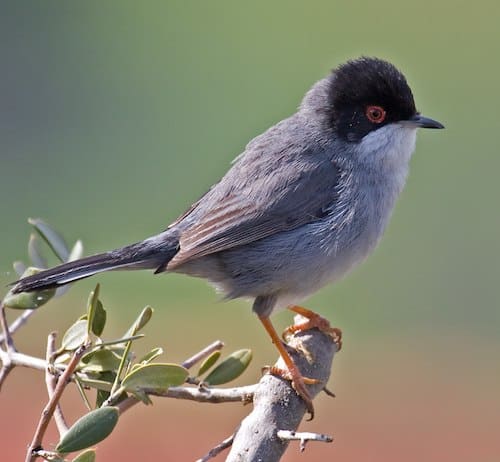
Sardinia is a region of Italy. It is the second-largest island in the Mediterranean Sea (after Sicily and before Cyprus). It is located west of the Italian Peninsula and to the immediate south of the French island of Corsica. It has an area of a little over 24,000 square kilometres (9,300 square miles); situated between 38° 51′ and 41° 18′ latitude north and 8° 8′ and 9° 50′ east longitude. To the west of Sardinia is the Sea of Sardinia, a unit of the Mediterranean Sea; to Sardinia’s east is the Tyrrhenian Sea, which is also part of the Mediterranean Sea.
Due to the variety of its ecosystems, which include mountains, woods, plains, largely uninhabited areas, streams, rocky coasts and long sandy beaches, the island has been defined metaphorically as a micro-continent. Sardinia has few major rivers, the largest being the Tirso, 151 km (94 miles) long, which flows into the Sea of Sardinia, the Coghinas (115 km) and the Flumendosa (127 km). There are 54 artificial lakes and dams that supply water and electricity. The main ones are Lake Omodeo and Lake Coghinas. The only natural freshwater lake is Lago di Baratz. A number of large, shallow, salt-water lagoons and pools are located along the 1,850 km (1,150 miles) of the coastline.
Over 600,000 hectares of Sardinia is environmentally preserved (about 25% of the island’s territory). There are three national parks: Asinara National Park, Arcipelago di La Maddalena National Park and Gennargentu National Park in addition to which there are ten regional parks and 60 wildlife reserves.

Gennargentu National Park – ©Thorkild C Bøg-Hansen CC BY-SA 3.0 via Wikimedia Commons
Birding Sardinia
Sardinia, as an island has a lot to offer birdwatchers. It is home to the largest tracts of pristine Mediterranean Holm oak forests (around Monte Arcosu WWF reserve) in the Mediterranean basin. It has significant wetlands around Oristano and Cagliari, where Flamingo breed in good numbers, and extensive areas of ‘macchia’ scrub (Mediterranean Scrub), with breeding populations of several specialist Sylvia warbler species (Marmora’s, Dartford, Spectacled and Subalpine Warbler).
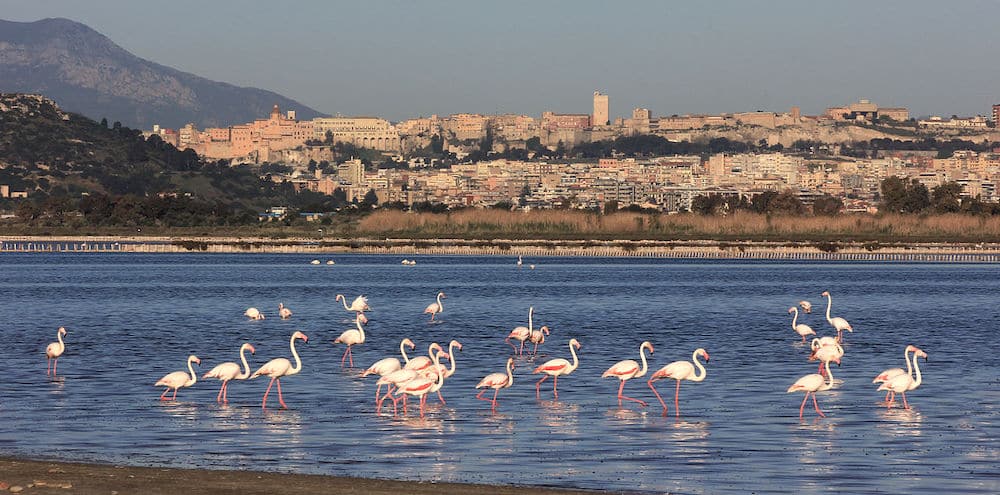
Cagliari Wetland – ©Stefano Marrocu, CC BY-SA 3.0 via Wikimedia Commons
Its low and declining human population (a little over 1.6 million) and its traditional farming methods means it has preserved some species that have declined seriously or become extinct in other parts of Europe, such as Griffon Vulture and Little Bustard. Its nearness to Africa means it supports species that are rare or non-existent in other parts of Europe, such as Barbary Partridge, Purple Gallinule and Glossy Ibis. Also, being an island it has healthy colonies of some Mediterranean specialists, such as Eleonora’s Falcon, Audouin’s Gull, Mediterranean and Cory’s Shearwater and Slender-billed Gull. The road system is good, and there are plenty of beautiful beaches as well as great food and wine to keep any non-birdwatching relatives happy. The locals are friendly, but are not used to birdwatchers, so don’t be surprised if you get a few inquisitive stares!
Little Bustard is still fairly common on upland arable farms above 200m in the north. Try near the villages of Ploaghe or Tula. Such sites are also good for Calandra Lark and Stone Curlew.
There are many other birdwatching sites around the island. Wherever you are, with suitable habitat and patience you should see the all the special birds.
-
Gennargentu National Park
InformationSatellite ViewThis is the highest mountain range in Sardinia, just south of Nuoro. This area includes lots of Holm oak forest and rare upland macchia scrub. The ‘Corsican’ subspecies of Citril Finch is common here, as are Marmora’s Warbler, Hawfinch, Golden Eagle, Goshawk, Crag Martin, Alpine Swift Woodlark, Hoopoe, Scops Owl and Firecrest. Also Mouflon Sheep, Sardinian Red Deer and Sardinian Wild Cat all live here. Choosing places to stop and birdwatch can be tricky. I’d recommend the Parco Nazionale del Golfo di Orosei, for example at Funtana Bona or along the road from Dorgali to Urzulei. See also official website: http://www.parcogennargentu.it/index.htm -
Isola di San Pietro
InformationSatellite ViewYou need to take a 30 minute ferry to get here, but it’s worth it. The LIPU (the Italian equivalent of the RSPB) reserve on the west coast has one of Europe’s best colonies of Eleonora’s Falcon, where you can get close-up views of this species any time between June and October. The surrounding ‘macchia’ scrub is excellent for Sylvia warblers such as Dartford Warbler, Spectacled Warbler and Marmora’s Warbler. Audouin’s Gull and Shag are common on the island. Mediterranean and Cory’s Shearwater can be seen offshore. There are some good stagni near the only town of Carloforte, with Avocet, Flamingo, Black-winged Stilt and Slender-billed Gull in good numbers, and plenty of migrants. Lower numbers of Eleonora’s can be seen along the mainland coast just north of the island if you don’t have time to catch the ferry. -
Lago di Baratz (Lake Baratz)
InformationSatellite ViewIn the North West of the island, this is the only natural freshwater lake in Sardinia. It’s small but it always has a good variety of species. Breeding birds include Little Bittern, Little Grebe, Hoopoe, Woodlark, Cirl Bunting, Alpine Swift, Marsh Harrier, Peregrine Falcon, Dartford Warbler, Cetti’s Warbler, Reed Warbler, Zitting Cisticola, Firecrest. Spring and autumn bring Garganey, Osprey, Pied Flycatcher, Whinchat, Great Reed Warbler, Black-winged Stilt. In winter there are plenty of duck species as well as Black-necked Grebe. The hills to the north west of the lake, towards Argentiera are good for Marmora’s Warbler, Bee-eater, Pallid Swift, Alpine Swift, Crag Martin, Blue Rock Thrush, Tawny Pipit and Barbary Partridge. There are plenty of well-signposted paths and a visitor centre, open in summer. -
Laguna di Nora
WebpageSatellite ViewA hidden gem, also near Cagliari, the Laguna di Nora has Italy’s largest breeding colony of Audouin’s Gull. By prior arrangement you can go on a canoeing trip amongst the river delta islands where the gull nests during the summer. The Laguna also has a sea turtle recuperation centre, excellent sea snorkelling and an aquarium showing all the local marine species. The nearby archaeological site of the Roman town of Nora is also worth a visit. -
Molentargius and Stagni di Quartu
WebsiteSatellite ViewLocated right next to Cagliari, this area of wetlands combines fresh and saltwater and has a high concentration of key species. Breeding birds include Purple Gallinule (or Purple Swamp Hen) in good numbers, Glossy Ibis, Greater Flamingo, Gull-billed Tern, Slender-billed Gull in good numbers, Squacco Heron, Night Heron, Cattle Egret, Purple Heron, Black-winged Stilt, Ferruginous Duck. In spring and autumn it is also excellent for migrants. If you have time you should also visit the Stagni di Capoterra to the west of Cagliari, more extensive but v. productive during spring and autumn. As a Ramsar protected wetland Molentargius is currently undergoing development. Access permits are (usually) needed. -
Monte Arcosu
InformationSatellite ViewThis WWF reserve near Cagliari comprises only a small part of a massive forest of mainly Holm and cork oak. The low human population means that several pairs of Golden Eagles nest in the area, along with a good population of the indigenous Sardinian Red Deer and Pine Martin. Other species include Goshawk, Buzzard, Woodchat Shrike, Raven, Bee-eater, Scops Owl, Nightjar, Cirl Bunting, Dartford Warbler. The reserve itself has some excellent hiking trails, but is only staffed at weekends. You can also birdwatch from the non-tarmac road that leads from Capoterra to Santardi. Alas, Bonelli’s Eagle is no longer present here. -
Oristano
WebpageSatellite ViewOristano is home to the most extensive wetlands in Sardinia. Numerous stagni, rivers and canals surround the town. I’d recommend visiting the S’ena Arrubia Stagno, the smaller pools to the east of the Stagno di Cabras (access is via a dirt track running from the village of Cabras), and the Stagno di Mistras. In spring, the Stagno di Sale Porcus is also good. Breeding species include Collared Pratincole, Night Heron, Flamingo, Spoonbill, Cattle Egret, Black-winged Stilt, Montagu’s Harrier, Purple Heron, Avocet, Common Tern, Little Ringed Plover, Kentish Plover, Common Tern and Purple Gallinule. For Purple Gallinule, check any freshwater irrigation canals rich in vegetation all around the towns of Oristano and Cabras. There are plenty of migrants in spring and autumn. The area is also productive in winter, with Great White Egret, plenty of wintering raptors (Hen Harrier, Merlin, Marsh Harrier), waders (Little Stint, Black-Tailed Godwit, Spotted Redshank, Golden Plover) and ducks (Ferruginous Duck, Wigeon, Pintail, Teal, etc.). -
Stintino
WebpageSatellite ViewThere are several stagni just south of the village. A nearby marsh and plenty of macchia scrub on the west coast and arable land all around provide a good variety of birdwatching here. Accessibility is usually easy, with plenty of roads, tracks and paths. The best stagni are just next to the famous ‘Spiaggia delle Saline’ beach, where Flamingo, Slender-billed Gull and Spoonbill can be seen for most of the year. Breeding species include Black-winged Stilt, Little Tern, Common Tern, Kentish Plover, Quail, Woodlark, Short-toed Lark, Calandra Lark, Tawny Pipit, Stone Curlew, Zitting Cisticola, Barbary Partridge, Shag, Blue Rock Thrush, Alpine and Pallid Swift, Dartford and Spectacled Warbler, Nightjar, Hoopoe, Woodchat Shrike, Nightingale, Turtle Dove, Bee-eater and Cirl Bunting. Migrants and wintering species include Curlew Sandpiper, Little Ringed and Ringed Plover, Grey Plover, Common and Green Sandpiper, Greenshank, Black Redstart, Hen Harrier, Peregrine and Merlin. Occasional Audouin’s Gull can be seen (from the small colony at Asinara). The nearby island of Asinara, now a nature reserve, can be visited on ferries from Porto Torres during the summer months for Audouin’s Gulls and Rock Sparrow. However, visitors aren’t free to wander the island. You will be taken on a bus tour, or (for more money) a Landrover tour of the island. This severely limits birdwatching opportunities. -
The Griffon colony at Bosa
WebpageSatellite ViewThis is the only healthy colony of Griffon Vultures on the island. They are resident and nest on cliffs just to the north of the town. Take the coastal road to Alghero from Bosa, and look to the right just after the road turns west, but before you get to the coast. The first rocky crag harbours the main colony. A smaller colony can be found another 6-8km along the coastal road, and a few pairs still nest at Capo Caccia, just north of Alghero. The Bosa area has lots of open Holm oak forest and Macchia scrub, good for Red Kite, Sylvia warblers, Barbary Partridge, Golden Eagle, Red-backed Shrike, Crag Martin and Lesser Kestrel.
-
Jason Anderson
| jasonanderson1@gmail.com
http://ibis.atwebpages.com/birdwatching_in_sardinia/griffon_vultures_at_bosa.htm
-
Number of bird species: 383
(As at July 2024)
-
Avibase
PDF ChecklistThis checklist includes all bird species found in Sardegna , based on the best information available at this time. It is based on a wide variety of sources that I collated over many years. I am pleased to offer these checklists as a service to birdwatchers. If you find any error, please do not hesitate to report them. -
eBird
PDF ChecklistThis checklist is generated with data from eBird (ebird.org), a global database of bird sightings from birders like you. If you enjoy this checklist, please consider contributing your sightings to eBird. It is 100% free to take part, and your observations will help support birders, researchers, and conservationists worldwide.

-
Where to Watch Birds in Sardinia
| By Ilaria Fozzi & Davide De Rosa | Pelagic Publishing | 2018 | Paperback | 140 pages, 57 colour photos, 52 b/w maps | ISBN: 9781784271794 Buy this book from NHBS.com
-
Siddi, Ornithological Museum of Sardinia
WebsiteThe Ornithological Museum of Sardinia is located in Siddi, a small rural village located among soft hills in the heart of the Marmilla.
-
NP Arcipelago di La Maddalena
InformationSatellite ViewArcipelago di La Maddalena National Park is a geomarine national park on the coast of Sardinia. The park was established on 1 April 1994, followed by the change of DPR on 17 May 1996. It covers an area on land and sea of over 12,000 hectares and 180 kilometers of coasts. This region includes all the islands and islets within the territory of the Municipality of La Maddalena, Italy. The territory of the National Park will also represent an important part of the Bocche di Bonifacio international marine park which will soon be established. -
NP Asinara
InformationSatellite ViewAsinara is the third largest island of Sardinia after Sant'Antioco. It houses a great variety of habitats. -
NP Gennargentu
InformationSatellite ViewWildlife in the park includes the Felis lybica sarda (also known as Sardinian wildcat), the mouflon, the marten, the weasel, the edible dormouse, the garden dormouse, the Sardinian fox, the griffon vulture, the golden eagle, the Bonelli's eagle, the peregrine falcon, the great spotted woodpecker, the butterfly Corsican swallowtail. Marine mammals include the Mediterranean monk seal, the fin whale,sperm whale, and various smaller whales and dolphins
-
Sardegna Rare Bird Alert
SightingsThe report below shows observations of rare birds in Sardegna. Includes both unreviewed and reviewed/approved observations.
-
K' Nature
GuideSardinia, with its location on the Mediterranean flyway, is an important stop over site for migratory birdlife. The island, with its many natural and rural environments, boasts an exceptional biodiversity and is home to about 300 species of birds -
NatureTrek
Tour OperatorSardinia is the second largest island in the Mediterranean and lies in the Tyrrhenian Sea, south of Corsica.
-
2018 [08 August] - Hans Matheve
ReportThis was a combination of family holiday and getting a short list of targets. Sardinia is a great destination for this combo. It is very straightforward to bird - the butterflies and dragonflies required a bit more effort to find. A good part of the time was spent relaxing, visiting charmful villages and some beach/water activities. Great place for children! -
2019 [04 April] - Jessica Turner
PDF ReportOur week in Sardinia this year, included some great ‘falls’ of migrant birds, with large numbers of Bonelli’s Warblers and Pied Flycatchers plus other species, in the Dorgali area, brought down or held up by the weather at the start of our visit... -
2022 [03 March] - Lorenzo Prada
PDF ReportIn Italian -
2023 [10 October] - Willem Proesmans
PDF ReportMostly Herps & Mammals