County Cork
County Cork is the most southerly and the largest of the modern counties of Ireland covering 7,508 km2 (2,899 square miles) and with a population of over 584,000 people. It is bordered by four other counties; Kerry to the west, Limerick to the north, Tipperary to the northeast and Waterford to the east. It is nicknamed ‘The Rebel County’. Attractions include the Blarney Stone and Cobh (formerly Queenstown), the port where many Irish emigrants boarded for their voyage to the United States, Australia, Canada, New Zealand, or South Africa and also the last stop of the Titanic, before departing on its doomed journey. The county town is the city of Cork; the second largest city in the Republic of Ireland and largest city in the province of Munster. The metropolitan area is home to the majority of the county’s people at around 328,000.
County Cork contains part of the Golden Vale pastureland that extends into the Blackwater valley. By the border with Kerry, Cork shares part of MacGillycuddy’s Reeks a siltstone mountain range. The Ballyhoura Mountains are shared with Limerick. The highest point in County Cork is Knockboy, at 703m. The Shehy Mountains on the border with Kerry may be accessed from the area known as Priests Leap, near the village of Coomhola. The remote western area of the county, known as West Cork, is a popular destination for tourists, who visit the small villages and islands including Sherkin Island, Oileán Chléire or Cape Clear Island and Dursey Island. Mizen Head, the southwesternmost point in Ireland, is also in West Cork, as is Sheep’s Head. West Cork is noted for its rugged natural beauty and fine beaches. The upland areas of the Boggeragh, Derrynasaggart, and Mullaghareirk Mountain ranges also add to the range of habitats found in the county. Important habitats in the uplands include blanket bog, heath, glacial lakes, and upland grasslands.
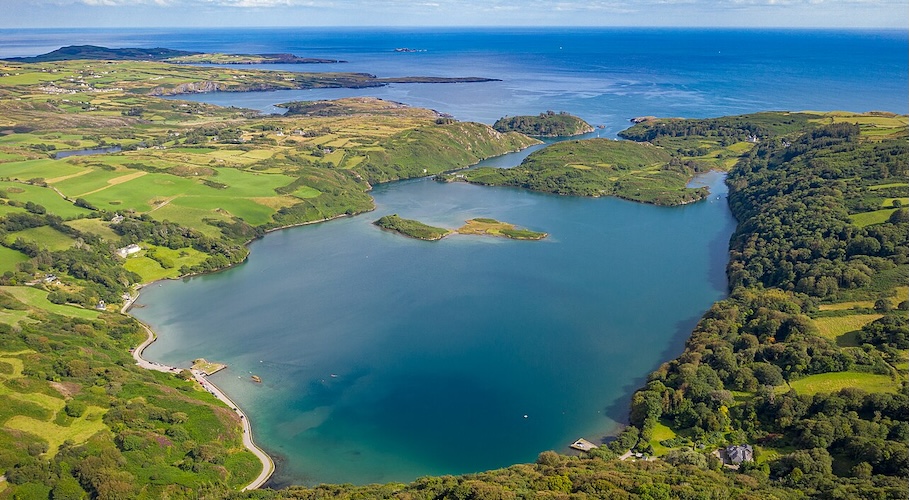
Lough Hyne – ©Superbass CC BY-SA 4.0 via Wikimedia Commons
Three rivers, the Bandon, Blackwater and Lee and their valleys dominate central Cork. Habitats of these valleys and floodplains include woodlands, marshes, fens, and species-rich limestone grasslands. The River Bandon flows into Kinsale Harbour on the south coast. Cork’s sea loughs include Lough Hyne and Lough Mahon, and the county also has many small lakes. An area has formed where the River Lee breaks into a network of channels weaving through a series of wooded islands, forming 85 hectares of swampland around Cork’s wooded area.
Cork has fertile agricultural land and many bog and peatlands constituting around 74,000 hectares, which amount to nearly 10% of the county’s total land area. Cork also has the highest share of the national forest area, with around 90,020 ha (222,400 acres) of forest and woodland area, making up approximately 12% of Cork’s land area. It is home to one of the last remaining pieces of native woodland in Ireland and Europe.
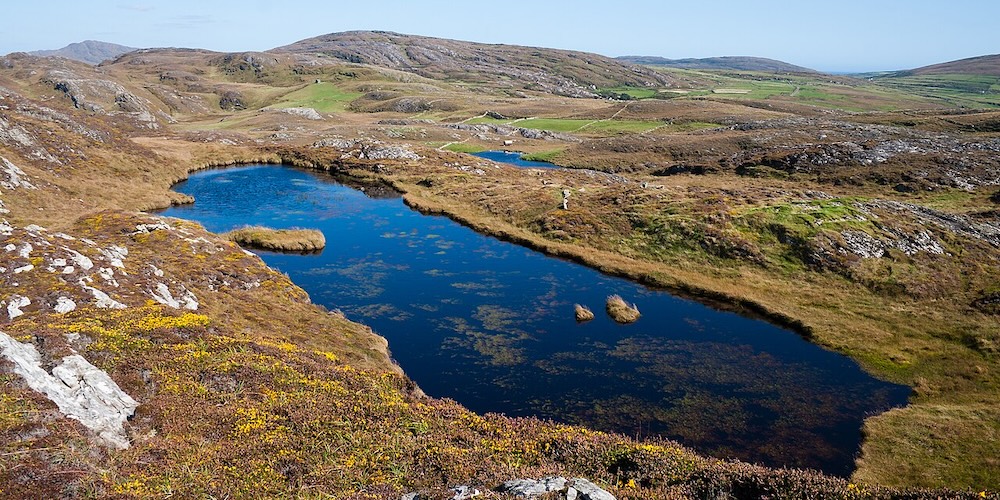
Three Castle Head – ©Andreas F Borchert CC BY-SA 3.0 DE via Wikimedia Commons
The rugged coastline of cliffs and beaches is very scenic with views of the many offshore islands with the Celtic Sea to the south and the Atlantic Ocean to the west.
Birding County Cork
Parts of the South West coastline are hotspots for sightings of rare birds, with Cape Clear being a prime location for bird watching. The island is also home to one of the few gannet colonies around Ireland.
Cape Clear Island & Observatory was set up because Cape Clear is one of the best places to watch seabird migration in Europe, especially during the late summer months. Spring and autumn bring large numbers of passerines moving to and from their breeding grounds, amongst which there are usually one or two strays from North America and Siberia. The Observatory building is situated right beside north harbour and therefore in an idyllic spot with easy access to the main facilities and centre of the island. It’s also a great place to stay as its an easy walk to a number of the main birdwatching hot spots.
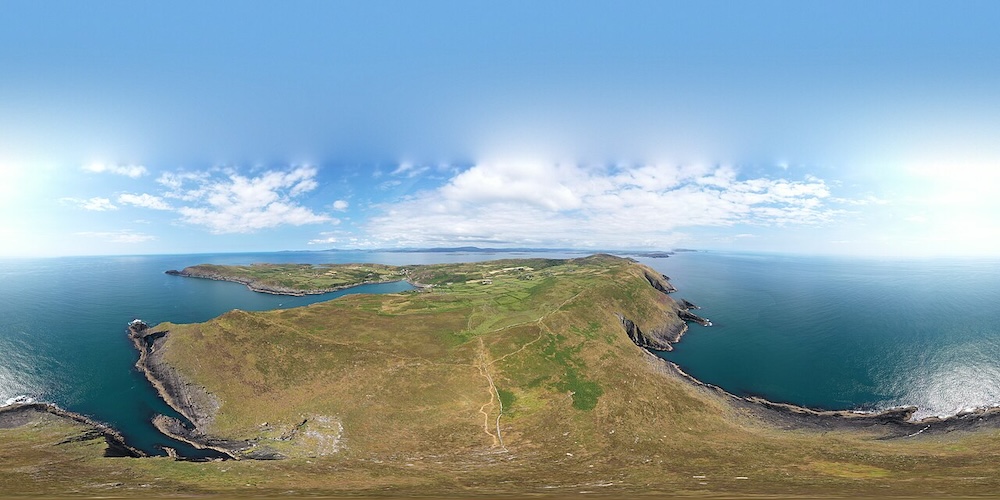
Cape Clear – ©Superbass / CC BY-SA 4.0 via Wikimedia Commons)
County Cork has a significant number of wetlands. For example, Cuskinny Marsh is a Birdwatch Ireland nature reserve, near Cobh, with an eight-hectare lagoon, wet meadow, reed beds, stream and woodland. Almost four hectares of privately owned woodland and stream is managed as part of the reserve. It is on the side of Great Island in Cork Harbour. A good variety of wetland, farmland and woodland species are found year-round, as well as passing seabirds. Being coastal it also attracts scare migrants and vagrants.
Harper’s Island Wetlands are a small (30 ha) low-lying island in the Glounthaune Estuary/Slatty Water complex, in the northern part of Cork Harbour. The low-lying northern section of the island is influenced by the surrounding tidal estuary through an old sluice point and hence the immediate vegetation is of brackish grasslands developing into successional saltmarsh. Nearly half of the Cork Harbour Icelandic Black-tailed Godwit population roost on the island on spring high tides. At times, during the spring months, peak Black-tailed Godwit counts can exceed 2,000 birds representing more than 4% of the global population. The complex also supports nationally important numbers of Shelduck, Teal, Little Grebe, Golden Plover, Dunlin, Redshank, Greenshank and Black-headed Gull.
Capel Island and Knockadoon Head Nature Reserve comprise all of Capel Island off the south coast near Youghal, Co. Cork, part of Knockadoon headland opposite the island and the intervening sea area. The reserve comprises 143.0 hectares, of which 126.9 are State-owned and 16.1 are privately owned.
Lough Hyne Nature Reserve is a sea lough with a very wide range of important habitats within the lough and its seaward approaches. The varied habitats support an exceptionally wide range of animal and plant species.
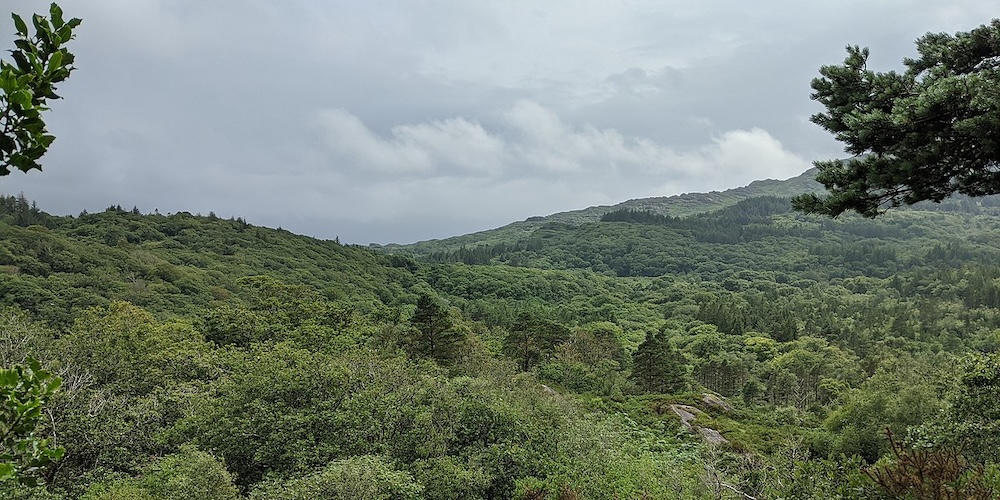
Glengarriff Woods – ©Viséan, CC BY-SA 4.0 via Wikimedia Commons
Cork being one of the best wooded counties there are some fine woodlands under conservation. Knockomagh Wood Nature Reserve consists of a small area of sessile oak and mixed broadleaf woodland. Glengarriff Woods Nature Reserve covers some 300ha, with the dominant habitats being old oak woodland and young woodland which is regenerating in areas which have been cleared of non-native conifers over the last few years. The woods form one of the best examples of oceanic sessile oak woodland in Ireland, being rated at least as important as the Killarney oakwoods. The Nature Reserve is part of the much larger Glengarriff Harbour & Woodlands Special Area of Conservation (SAC). It supports characteristic bird communities, with Chaffinch, Robin and tits being the most common breeding species. In spring Willow Warblers and Chiffchaffs arrive from Africa to breed in the woods and the population of Blackcaps, some of which over-winter in the south-west, is augmented by summer migrants. Several species of the crow family occur, including Jay. The late autumn also sees the arrival of migrants from Scandanavia such as Fieldfare and Redwing, which feast on the woodland berries.
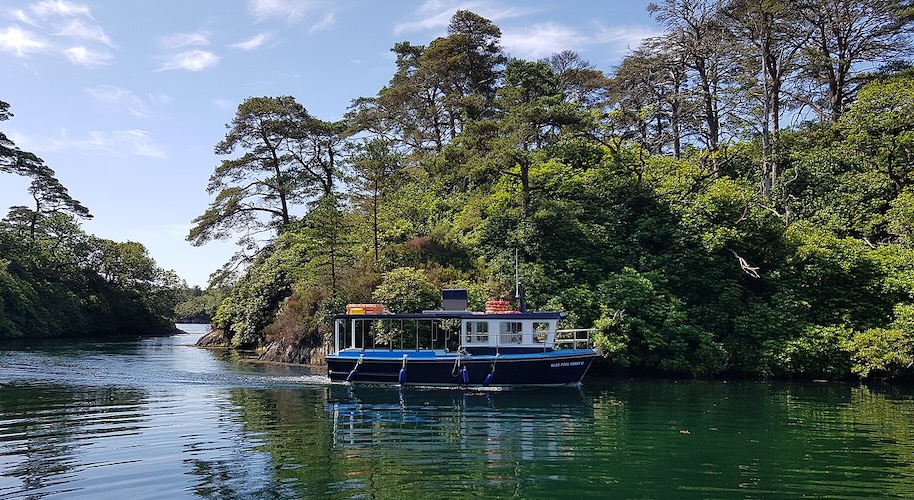
Blue Pool, Glengariff – ©NTF30 CC BY-SA 4.0 via Wikimedia Commons
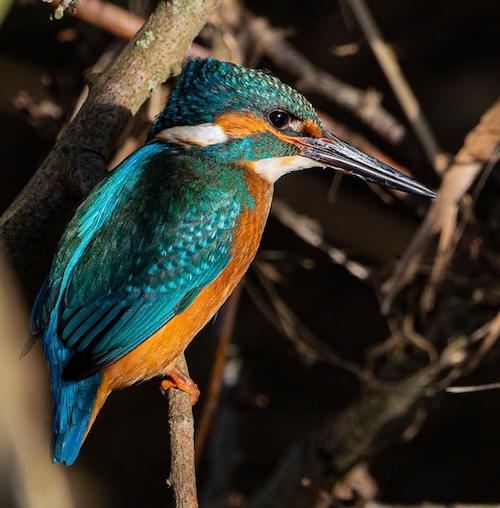
Along the river you will see birds such as wagtails and the unmistakable Dipper. You might also be lucky to see Kingfisher. At dusk look out for the deceptively slow flight of a Long-eared Owl in the Scot’s pine as well as Woodcock, although it is a mainly a winter visitor. The are also Barn owl present.
The Gearagh Nature Reserve is the largest area of alluvial woodland in Ireland. It consists of a network of narrow channels separating small islands which are covered in oak, ash, hazel and hawthorn. Wild garlic is abundant in the spring. The area is subject to frequent flooding and can be dangerous and difficult to access.
Kilcolman Bog Nature Reserve is a fen located in a glacially eroded limestone hollow, south of the Ballyhoura Mountains in north Cork. It has been a traditional wintering ground for Greenland White-fronted Geese and thousands of ducks.
-
Atlantic Pond, Cork City
WebpageSatellite ViewThe lake is most well known for its Grey Heron colony on the island which can be easily viewed from the path. Little Egret also breed on the island, but in smaller numbers. Common Sandpiper, Common Kingfisher and Grey Wagtail can be seen at the lake or nearby on the walls of the marina.... -
Ballycotton
WebsiteSatellite ViewLying in east Cork, Ballycotton has entered into the legends of European birding. A mixture of habitat from open bay (with a lighthouse); lagoons, intertidal flats, pools, reed beds and excellent hedgerows and gardens in the town make this an ideal birding venue in spring and autumn. It is the waders that have really placed Ballycotton on the birding map. It defies logic what this small area has produced over the years. Mega birds include Red-necked and Long-toed Stints, Stilt, Least and Broad-billed Sandpipers and Greater Yellowlegs. Regular waders include Baird`s, White-rumped, Pectoral, Semi-palmated, Wood and Green Sandpipers, with Temminck`s Stints and Kentish Plover also recorded. In addition the area has even produced Stone Curlew, with Red-footed Falcon and Black Kite also seen. On the passerine front, Citrine Wagtail, Greenish Warbler and Lesser Grey Shrike are but a few of the big finds that Ballycotton has unfolded. The whole area is easy to do and the village has a fantastic atmosphere (and some great pubs and B&Bs). And if the weather is bad, and its too wet and windy for the beach, take a look off the back of the cliffs…the sea watching is also excellent with large shearwaters, skuas and Sabine Gulls seen most years. -
Cape Clear Island
WebsiteSatellite ViewSituated off the southwestern coast of Cork, Cape Clear Island is another of Ireland's hotspots that has acquired legendary status. Reached by a ferry crossing from Baltimore, Cape has operated a manned observatory since 1959. The current obs is situated in the north harbour where the ferry lands. Accommodation is hostel style while holiday homes and B&Bs provide an alternative. Cape's fame is for the number of rare and unusual vagrants that find their way to the island and for the massive seabird movements that occur off the tip of Blanan, Ireland's most southern point. In spring, Cape is best visited from mid-April to late May where European migrants move through the island. Regular spring vagrants include Golden Oriole and Hoopoe, while last year, the island recorded Scop's Owl, Short-toed lark and, if accepted, Ireland's first Calandra Lark. In autumn the best times for visiting begin in early August when the seabird passage begins. During this month it's not unusual to see thousands of Great, Cory's and Sooty Shearwaters, skuas, Storm Petrels with Fea's Petrel seen every year since the mid-90s. In recent years birders have found Wilson's Petrels and Black-browed Albatross. While the seabirds are a great attraction, the autumn on Cape can produce anything from anywhere. In October 1999, birders looking at one of two Little Buntings found Ireland's first Chimney Swift. The list of goodies seen defies listing here but highlights include Yellow-bellied Sapsucker, American Redstart, Red-eyed Vireo's, Yellow-rumped and Blackpoll Warblers etc. Perhaps one of the most incredible sights was of a Pallas's Grasshopper Warbler and a Swainsons Thrush seen in the same bush at the same time. A small piece of this nature simply does not do justice to the superb birding and general great fun of the Cape Clear experience. -
Clonakilty Estuary
WebpageSatellite ViewThere is a large tidal inlet that stretches from Clonakilty in West Cork to Inchydoney Beach.... -
Courtmacsherry Estuary
WebpageSatellite ViewCourtmacsherry Estuary is now designated as a SAC for Birds and dune system habitat. It holds internationally important wintering numbers of Black-tailed Godwits, and nationally important numbers of Cormorant, Teal, Redshank, Great Northern Diver, Shelduck, Wigeon, Red Breasted Merganser, Lapwing, Bar-tailed Godwit, Curlew and Greenshank. Black-headed and Common Gulls also occur in significant numbers. -
Harper’s Island Wetlands
WebpageSatellite ViewHarper’s Island Wetlands is owned and managed by Cork County Council in partnership with BirdWatch Ireland, Glounthaune Community (Glounthaune Community Association/Tidy Towns/Men’s Shed), and NPWS.
-
Mark Shorten
-
Number of bird species: 466
(As at March 2026)
-
Avibase
PDF ChecklistThis checklist includes all bird species found in Cork , based on the best information available at this time. It is based on a wide variety of sources that I collated over many years. I am pleased to offer these checklists as a service to birdwatchers. If you find any error, please do not hesitate to report them. -
Birdwatch Cork
-
eBird
PDF ChecklistThis checklist is generated with data from eBird (ebird.org), a global database of bird sightings from birders like you. If you enjoy this checklist, please consider contributing your sightings to eBird. It is 100% free to take part, and your observations will help support birders, researchers, and conservationists worldwide.
-
Birds of Ireland - A Field Guide
distribution maps | ISBN: 9781804580721 Buy this book from NHBS.com -
Finding Birds in Ireland - The Complete Guide
| By Eric Dempsey & Michael O'Clery | Gill Books | 2014 | Edition 2 | Paperback | 389 pages, 300 colour photos, colour maps | ISBN: 9780717159253 Buy this book from NHBS.com -
The Birds of County Cork
| By Patrick Smiddy & Mark Shorten | Corkn UP | 2022 | Hardback | 636 pages, colour photos, colour & b/w illustrations, 4 colour maps, colour tables | ISBN: 9781782055198 Buy this book from NHBS.com -
Wild Guide - West of Ireland
| (Travel Adventure Guide - Wild Atlantic Way, Donegal, Galway, Mayo, Clare, Cork & Kerry) | By Candida Frith-Macdonald & Daniel Start | Wild Things Publishing | 2025 | Paperback | 300 pages, 300 colour photos, 25 colour maps | ISBN: 9781910636602 Buy this book from NHBS.com
-
Cape Clear Bird Observatory
Observatory WebsiteSatellite ViewCape Clear Bird Observatory, nestled in North Harbour of Cape Clear Island in West Cork is one of Ireland’s best known bird watching destinations, where we have studied bird migration since 1959.
-
BirdWatch Ireland - Cork
WebsiteThe web site will hopefully provide the visitor, from both near and far, with information on the birds of county Cork. It gives information on all things relating to birds and bird watching/birding in the county. The Branch Events page provides information on upcoming branch activities such as outings, indoor meeting and survey work.While every effort has been made to provide accurate information we always welcome any suggestions relating to corrections, amendments or improvements to the web site. -
BirdWatch Ireland - West Cork Branch
WebsiteThe Branch holds twenty to twenty-five outdoor and indoor events each year and these are open to the Public. The only exception to this is when a boat trip is involved, in which case the outing is limited to BirdWatch Ireland members only because of insurance. With exception of special trips, entry to our events is free.... -
BirdWatch Ireland - West Cork Branch
WebsiteThe Branch holds twenty to twenty-five outdoor and indoor events each year and these are open to the Public. The only exception to this is when a boat trip is involved, in which case the outing is limited to BirdWatch Ireland members only because of insurance. With exception of special trips, entry to our events is free….
-
Cork - National Parks & Wildlife Service
WebpageSatellite View -
NR Capel Island & Knockadoon Head
WebpageSatellite ViewKnockadoon is a headland on the western tip of Youghal Bay, situated on the east Cork coast, and Capel Island lies just offshore. The headland and its short cropped heathland vegetation, full of colour in summer, attract Choughs to feed during the autumn and winter months, whilst overhead and on the cliffs, Peregrines may be seen. Scanning across to Capel Island, a colony of breeding Cormorants can be seen from the headland along with a feral population of Irish Goats. During windy spring and autumn days the headland itself is a good sea-watching point which, at the same time, can be attractive to migrant birds. -
NR Cuskinny Marsh
WebpageSatellite ViewCuskinny Nature Reserve, near Cobh, County Cork, Ireland is managed by Birdwatch Ireland (BWI). The land is owned by the Bird and Ronan families and comprises about 12 ha of land located along the lower reaches of the Ballyleary Stream on the Great Island in Cork Harbour. -
NR Glengarriff Woods
WebsiteSatellite ViewGlengarriff Woods Nature Reserve was designated in 1991 and is managed and owned by NPWS. The staff based in the Nature Reserve includes a Conservation Ranger and three General Operatives. The entrance to Glengarriff Woods Nature Reserve is located approximately 1km from Glengarriff village, Co. Cork, on the Kenmare Road (N17). The Nature Reserve features a range of walking trails and picnic areas. There are no toilet facilities.
-
Cork Bird News
News & SightingsFormerly news of rare & scarce birds in County Cork. -
eBird
SightingseBirding This Month
-
Ireland's Wildlife - Calvin Jones
GuideDiscover Wildlife Experiences / Discover Wildlife Walks -
Oriole Birding
Tour Operator...After making the most of the superb birding in Wexford, we will make the journey west to the county of Cork, another of Ireland’s best birdwatching regions.... -
Shearwater Wildlife Tours
Tour Operator Facebook PageShearwater Wildlife Tours offer a variety of guided tours and tailor made holidays along the Wild Atlantic Way with a main focus on West Cork and its Headlands, Estuaries and Islands...
-
2017 [10 October] - P M Callagher
PDF ReportCounty Cork, Sep 28th–Oct 3rd2017(PMC & APM)This was our first birding trip to Southern Ireland, and wetimed ourvisitto catchthe tail end of Nearctic waderseason (which usually peaks mid-September) plushopefullythe earliestAmericanvagrant passerines (whichusually peakthe second week of October). There was also the chance of some good seawatching: 2017 sawa surprisingnumberof Wilson’s petrels and large shearwaters,and although most of these weregone by the end of September, there were plenty of Long-tailed Skuas and Sooty Shearwaters reported.
-
Inish Beg Estate
AccommodationThe gardens, orchard and woodland of Inish Beg have been carefully designed to encourage and compliment the many species of birds and wildlife native to the island and those that stop here annually during migration, while providing beautiful and dramatic scenery for walks and bird watching throughout all the seasons of the year — ideal for your bird watching holidays and vacations. In addition to the bird watching available on the estate, we can help arrange bird watching tours of other areas of West Cork and other prime bird watching spots in South west Ireland. The climate of Inish Beg is favourable to a wide array of plant species. Kept mild throughout the year by the Gulf Stream, growth is luxuriant. -
Suain-Aras B&B
AccommodationWildlife Wonders of Youghal, Birding, Wildlife, and Natural History Holiday Breaks (Ireland). Situated in East Cork Youghal (pronounced Yawl) is a heritage town surrounded by wetlands, rivers, mudflats, and estuaries. Home to variety of birds and small riverside mammals.
-
Birdwatching Clonakilty
WebsiteClonakilty comprises two estuaries separated by Inchydoney Island. The northern area is Clonakilty Harbour with estuarine mud and sandflats. Cul de sac pool, an area of open water and reedbed, with a fringe of alder woodland, is part of this area. The southern area is Muckross Strand, again an estuary with mainly sand flats. There are two areas of marsh with patches of exposed mud and marsh; White's Marsh and Clogheen Marsh lying to the north and west of Muckross Strand -
Where to Watch - West Cork
WebPage... The town creek in Bantry town can hold scarce gull species during late autumn to early spring. Look for Iceland, Glaucous, Mediterranean and Ring-billed Gulls. Black-throated Divers are seen every winter in the sound between Bantry and Whiddy Island... -
Where to go birding in East Cork, Ireland
WebPage...With breathtaking scenery, lush forests, dramatic coastal cliffs separated by sandy beaches, waterways, marshes and estuaries abound. It’s no wonder this is a hotspot for birders...
-
Calvin Jones - Ireland's Wildlife
BLOGThe Ireland’s Wildlife website was created and is run by me, Calvin Jones. I’m a lifelong wildlife enthusiast, freelance writer and author based in beautiful West Cork. -
Cork City Wildlife
BLOGLast updated September 2013 - A humble wildlife blog, this is my attempt to share my love for amateur wildlife photography as well as my enthusiasm for all forms of wildlife in the Irish city of Cork… -
Galley Head Birding
BLOGLast updated January 2016 - A patch birding BLOG from Galley in Co Cork -
Graham Clarke's Blog
BLOGBlog by birder and photographer Graham Clarke -
Patch Birding Ireland
BLOGGalley Head, Co. Cork by Colin Barton