

Rhineland-Palatinate
Landlocked Rhineland Palatinate is one of the 16 federal states of Germany. It borders France in the south, Luxembourg and Belgium in the northwest, and the states of Saarland to the southwest, North Rhine Westphalia to the north, Hesse to the northeast and Baden-Württemberg to the southeast. It covers 19,846 km2 (7,663 square miles) and has a population of over four million residents. Mainz is the state capital and largest city.
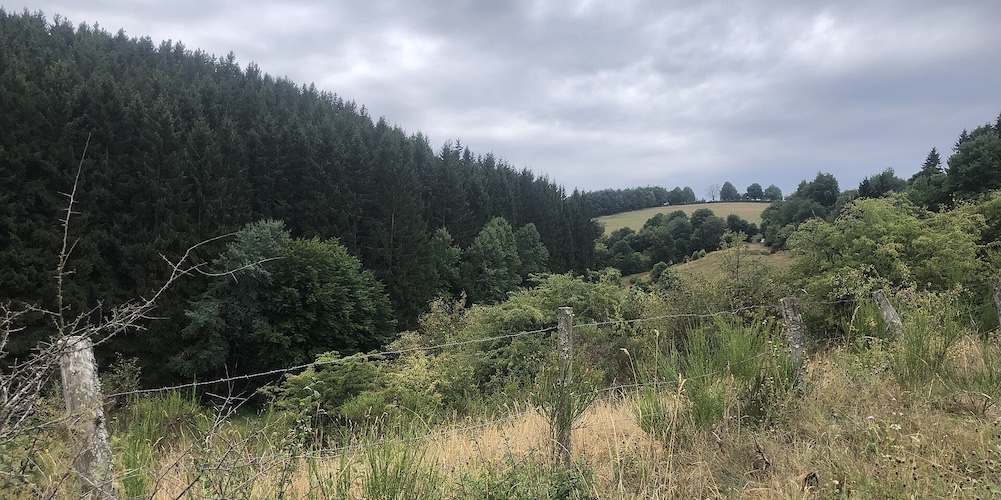
It is formed by the Rhineland in the north with the Rhine flowing through and the Palatinate in the south with the Rhine forming the eastern border. Over 40% of the state is forested and it’s landscape is characterised by thickly forested mountain chains, the most famous being the Palatine Forest in the south (Germany’s largest forest area) as well as the mountains of Eifel and Hunsrück (804 meters high) in the north.
The second most important river after the Rhine is the Mosel. To the east, protected by the rainy mountainous area, is the Rhine flatland one of the warmest parts of Germany.
Eifel Natrional Park – ©ManonB2018 CC BY-SA 4.0 via Wikimedia Commons
The state can be divided into two areas climatically. The Rhenish Massif with the typical humid continental climate, has warm summers with much precipitation, whereas the winters tend to be cold and dry. Snowfall is a common. The deep valleys of Rhine and Moselle have an oceanic climate, where summers are hot and moist, while winters are cool. Freezing temperatures are rare and snow usually melts within hours. The favourable weather conditions make this area ideal for the cultivation of figs, almonds and for extensive vineyards. It is Germany’s leading wine producer, accounting for as much as 70% of its production.
Birding Rhineland Palatinate
In all there are seven national parks (about 27% of the total land surface) and approximately 500 nature reserves (total surface 370 km²) in the state. Apart from that there are 51 bird protection areas, which cover about 8% of the total land surface.
Three territories are of particular interest for ornithologists:
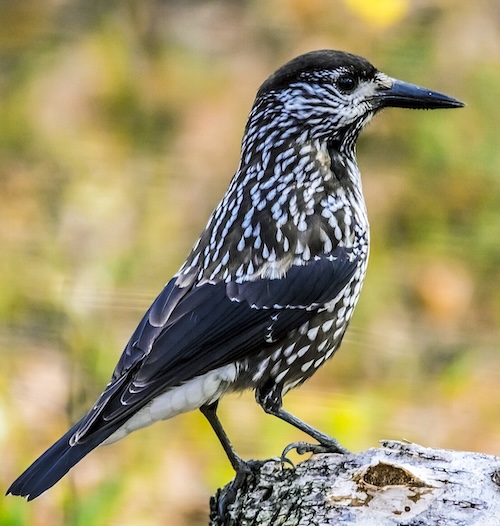
The higher areas of the lower mountain ranges for species such as Hazel Grouse, Eurasian Woodcock, Tengmalm’s Owl, Eurasian Nutcracker, Common Raven and Common Redpoll.

Hunsrück-Hochwald National Park – ©Silvia Bukovac Gasevic CC BY-SA 4.0 via Wikimedia Commons
The drier areas on the edge of the Rhine flatland for species such as European Honey-buzzard, Red Kite, Little Owl, Eurasian Nightjar, Hoopoe, Eurasian Wryneck, Middle-spotted Woodpecker, Wood Lark, Red-backed Shrike, Northern Shrike, Cirl Bunting and Rock Bunting on the stony hillsides.

Palatinate Forest Nature Park – © Friedrich Haag / Wikimedia Commons
The large wet areas (old Rhine offshoots, former gravel pits & fens) near the Rhine for Red-Necked Grebe, Slavonian Grebe, Purple Heron, Common Kingfisher, Bluethroat, Savi’s Warbler, Great Reed-Warbler, Melodious Warbler, and Eurasian Penduline Tit.
Other notable species found in the state are Black Woodpecker, Grey-faced Woodpecker and Crested Tit that can be found in all forest areas, and Black Stork, Collared Flycatcher, Eurasian Eagle Owl and Crested Lark, which can only be found in a few special habitats.
-
Number of bird species: 377
(As at June 2026)
-
Avibase
PDF ChecklistThis checklist includes all bird species found in Rhineland-Palatinate , based on the best information available at this time. It is based on a wide variety of sources that I collated over many years. I am pleased to offer these checklists as a service to birdwatchers. If you find any error, please do not hesitate to report them. -
eBird
PDF ChecklistThis checklist is generated with data from eBird (ebird.org), a global database of bird sightings from birders like you. If you enjoy this checklist, please consider contributing your sightings to eBird. It is 100% free to take part, and your observations will help support birders, researchers, and conservationists worldwide.
-
Staatliche Vogelschutzwarte Rheinland-Pfalz
WebsiteThe Rhineland-Palatinate State Bird Protection Center (VSW) was newly founded on November 1, 2022, and established within the "Nature Conservation" department of the State Office for the Environment (LfU). This marks the first time that Rhineland-Palatinate has a state-run bird protection center, following the termination in 2021 of the cooperation between the federal states and the city of Frankfurt as the operators of the previously joint State Bird Protection Center for Hesse, Rhineland-Palatinate, and Saarland.
-
NP Naturpark Nassau
WebsiteSatellite View -
NP Naturpark Saar-Hunsrück
InformationSatellite ViewWith its extensive forests, species-rich meadows, hedgerows and field margins, river and stream valleys, hillside fens (bogs), and characteristic rock formations, our natural and cultural landscape is incredibly diverse. It provides a habitat for numerous plants and animals, from the heights of the Hunsrück to the sunny vineyards along the Moselle, Saar, Ruwer, and Nahe rivers. -
NP Naturpark Soonwald Nahe
WebsiteSatellite ViewFrom the beautiful mountain ranges of the Soonwald forest to the gentle vineyards of the Nahe valley. In a small area, the Soonwald-Nahe Nature Park encompasses landscapes that could not be more different. -
NP Palatinate Forest
InformationSatellite ViewTogether with the northern part of the adjacent Vosges Mountains in France it forms the UNESCO-designated Palatinate Forest-North Vosges Biosphere Reserve, one of the biggest forests in Europe. Birds include hoopoe, kingfisher, wheatear, black woodpecker, whinchat and stonechat. Whilst the strictly protected peregrine falcon has been resident in the rock country of the Wasgau for several decades, hazel grouse and capercaillie appear to have died out in the Palatine Forest region. Typical autumn and winter species include the brambling and chaffinch, which overwinter here and occupy the woods in large flocks. -
NP Schwarzwald
WebsiteSatellite ViewThe wild beauty of the Black Forest, the magic of untouched nature, islands of tranquility far removed from the hustle and bustle of everyday life – all this awaits visitors to the Black Forest National Park. -
NP aturpark Südeifel
WebsiteSatellite ViewThe South Eifel Nature Park is a large protected area in the Eifel region, particularly well-suited for experiencing nature due to its diverse landscapes and the associated richness of its native flora and fauna.
-
Rheinland-Pfalz Rare Bird Alert
SightingsThe report below shows observations of rare birds in Rheinland-Pfalz. Includes both unreviewed and reviewed/approved observations.