

Berlin
Birding Berlin – A City Rich in BirdlifeThe German capital of Berlin is situated in the northern Central European lowlands and covers an area of 892 km2. The city is dominated by the confluence of the River Spree with the River Havel, which form a chain of lakes or broad stream and river beds. Geographically Berlin is part of the surrounding federal state of Brandenburg, which is well known for its diversity of lakes, rivers, streams, wetlands, forests and farmland. The incursion of species from the surrounding countryside influences the variety of Berlin’s birdlife and its specialities.
The Berlin landscape is richly structured with 59 km2 of rivers, streams and lakes and 159 km2 of woodland. The latter is dominated by young pine plantations grown since the 1950s, but also includes older areas of beech and oak stands. In addition there is some 91 km2 of green areas and 10 km2 of cemeteries within the built-up area, and a small area (47 km2) of farmland. The built-up area of the city is centrally dominated by housing blocks, new high-rise suburbs on the outskirts, and a broad residential area of detached houses with gardens. Berlin’s reputation as a green metropolis is characterised by a network of parks and open areas and its many tree-lined streets and avenues, even in the centre of the city.
The political division of the city since World War II ended in 1990. The previously abandoned border strip dividing and surrounding West Berlin was opened to development, as were other war-damaged areas which had been neglected for over 40 years. Species which had colonised these areas, such Partridge, Jackdaw or Wheatear in the wasteland between Potsdamer Platz and the Reichstag, disappeared as redevelopment took place. Other urban species are still well established such as the House Martin (which still have a small colony near the eastern entrance to the Reichstag), House Sparrow (with a stable population city-wide), Swift and Black Redstart.
The rich variety of bird species in the urban areas is however dependent on the green areas, typical species being Green Woodpecker, Short-toed Tree-creeper, Icterine Warbler and several species of forest origin such as Goshawk, Song Thrush, Wren, Nuthatch, and possibly even Wood Warbler.
The forests themselves, with their variety of tree mix, are home to four Woodpecker species including good numbers of Middle Spotted Woodpecker in oak stands. In beech forests the Red-breasted Flycatcher can be seen (a good place is Tegel Forest), although its numbers vary from year to year. The forests also provide good breeding sites for birds of prey, the most spectacular being the White-tailed Eagle which has bred since 2000 within the city boundary and hunts over the widespread stretches of lakes and streams. This is a clear “donation” from the increasing Brandenburg population.
Wetland species add greatly to the diversity of species in the city. Grey Herons breed freely in the Zoological Gardens and the Tierpark; there is a Cormorant colony on an island nature reserve on the River Havel near Kladow; Canada Goose have established an increasing wild population on the northern part of the Havel since an escape in 1985; Mandarin Duck, following releases in the 1920s are to be found from the Tiergarten in the city centre south-west as far as the neighbouring city of Potsdam; Red-necked Grebe breed on ponds in the north-east (e. g. Karower Teiche); Little Bittern has reappeared, after an absence of several years, at the Flughafensee (near Tegel airport); Black Tern, thanks to conservation measures, have established good colonies in two adjacent sites on the Müggelsee and Seddinsee lakes due to protective actions; Common Crane have attempted to breed in swamps in the northeast (also thanks to an increasing population in Brandenburg); and Great Reed Warbler inhabit nearly all well-established reed beds along the lakes and rivers.
There is little remaining farmland, but one success story is its recolonisation by Corn Bunting, along the eastern city boundary, since 1993.A very special habitat was created by the attempted afforestation in the 1980s of former irrigation fields near the suburb of Buch on the north-eastern edge of the city. The young plantation did not develop well, and diverse areas of open character were the outcome. A remarkable concentration of Wryneck, Barred Warbler and Tree Pipit can be observed here.
During migration and in winter waterfowl rest in good numbers on the Müggelsee and Tegeler See lakes and on stretches of the Havel. Species include Loons, Grebes, diving ducks, and Mergansers. There are few rest areas for dabbling ducks (except the ubiquitous Mallard), though Teal frequent the outflows of water filtration plants just outside the city boundary, where Water Pipit can also be observed.
-
Number of bird species: 253
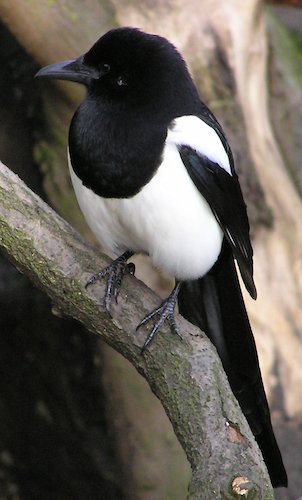
(As at March 2019)State Bird - Eurasian Magpie Pica pica

-
A Birdwatching Guide to Brandenburg & Berlin
Written & Published by Roger White | 2012 | Paperback | 230 pages, colour photos, colour maps | ISBN: 9780957169500 Buy this book from NHBS.com
-
Berlin Ornithological Society (BOA)
WebsiteIf you are interested in collaborating or have questions about the Berlin birdlife, you are cordially invited to the BOA meetings. BOA meetings are held 4 times a year on the third Wednesday of the (odd) months of January, March, Sept and Nov at 19.00. -
NABU Berlin
WebpageIf you would like to support the projects of the NABU Brandenburg, you will find all necessary information here.
-
NR Barnim
InformationSatellite ViewThe park is located between the northern side of Berlin and the central-north Brandenburg, between the towns of Oranienburg, Liebenwalde, Eberswalde and Bernau. Covering 750 square kilometers, 55% is forest, 32% is used for agriculture and 3% is water, including the lake Arkenberger Baggersee.
-
ORNI-BB
Mailing ListThis is a forum of the Berlin-Brandenburg and Berlin Ornithological Working Groups. It is designed to serve the exchange of information between ornithologists in the region. Please post information on interesting or unusual sightings, topical conservation themes, events and any other matters of interest to ornithologists and birdwatchers. The aim of the forum is the provision of rapid and up to date information and not the collation and archiving of observation data for later anaysis.
-
Birding Berlin - Rolf Nessing
GuideRolf offers field trips getting to know the urban bird life within the city of Berlin, as well as full day trips in the immediate vicinity of Berlin or further afield. There are 46 Important Bird Areas (IBAs) around Berlin as well as one IBA in the city itself (as at 2003). He knows most of them like the back of his hand.
-
2010 [06 June] - Allan Finlayson
Report…The above is part of the Schorfheide-Chorin reserve, and I mention it in particular as it was recommended to me by the locals when I enquired as to the best place to go to see White-tailed Eagle (my target species for the trip)… -
2017 [10 October] - Rick Wright - Brandenburg & Berlin
PDF Report...we also had periods nearly every day of beautiful blue skies, none more heart-rendingly lovely than an afternoon at Frederick the Great’s palace of Sans Souci, where over-the-top baroque gardens and the fanciest of rococo architecture provided the cultural backdrop for our encounters with a dazzling Common Kingfisher, noisy Middle Spotted Woodpecker, surprisingly abundant Hawfinches, and snowball-headed Long-tailed Tits.
-
Germany Birding
WebsiteBirdwatching in Berlin and East Germany - This website will provide information and advice for visitors to Berlin and the east of Germany. The area covered is bordered by Poland in the east, and the Baltic sea in the north. Berlin is within the State of Brandenburg. North of here is the State of Mecklenburg-Vorpommern and the Baltic coast and islands. In due course I will be posting Trip reports, and news of recent sightings. See information page for bird guides to the region...