
|
||||||||||||||||||||||||||||||||||||||||||||||||||||||||||||||||||||||||||||||||||||
birding...Channel Islands |
|
|||||||||||||||||||||||||||||||||||||||||||||||||||||||||||||||||||||||||||||||||||
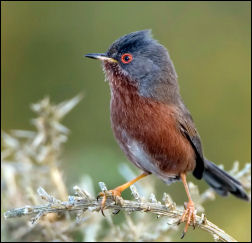
(Alderney) Le GiffoineCoastal heath on the west end of Alderney, dominated by heather, gorse and scrub. Together with Trois Vaux has supported 15 pairs of Dartford Warblers. An excellent site for witnessing the thrills of migration, including raptors such as Osprey, Honey Buzzard, Marsh Harrier, Hobby and Black Kite, against a backdrop of 3,500 pairs of breeding Northern Gannets on Les Etacs just 200m offshore.(Alderney) Les Etacs (The Garden Rocks)Surely the most exciting place in Britain to watch Northern Gannets on their breeding grounds without the need for a boat. A small group of igneous rocks rising 39m above sea-level, lying 200m off the west coast of Alderney. With the wind in the west one can see, hear and smell the birds. The colony was established during the Second World War after Alderney had been completely evacuated. It now holds 3,500 pairs of Gannets and is growing. Common Guillemots also breed on Les Etacs.(Alderney) Mainland AlderneyA fabulous island for birding. Virtually all the important seabird colonies occur on the cliffs and offshore islets of the south-west corner. They comprise Northern Fulmar (40 pairs); European Shag (200 pairs); Lesser Black-backed Gull (55 pairs); Black-legged Kittiwakes (95 pairs). In addition there are 170 Common Guillemot, 80 Razorbill and about 50 pairs of Puffins. The main colony of Common Terns (30 pairs) nest on islets off the north-east cost of Alderney. Peregrine Falcon, Common Buzzard and Eurasian Sparrowhawk nest, and the island is easily the best of all the Channel Islands for its passage of raptors (a consequence of its close proximity to the French mainland). The island is seriously under-watched. Almost every visit by birders in spring and autumn turns up scarce and/or rare birds.(Alderney) Trois VauxCoastal heath on the south coast of Alderney, dominated by heather and gorse. Has held breeding Dartford Warblers.(Guernsey) Belle Greve BayAn inter-tidal area of rock, shingle and sand. At high tide a large sheltered bay protected from the prevailing south-westerly winds. Another very good bay for waders, and for over-wintering divers (Great Northern Diver and Black-throated Diver) and grebes (Great Crested, Slavonian and Red-necked Grebes).(Guernsey) Fort le CrocqA west coast rocky headland with several sandy areas and off-lying islands. Premier site for waders with 22 species recorded to date. Roost offshore for Little Egrets, Grey Herons and waders. Regular hunting territory of Peregrine Falcons and Merlin (winter).(Guernsey) Grand Havre BayA large natural bay with several sandy beaches. A freshwater outlet from the Vale Pond runs into the bay. Another very good bay for waders with good numbers of Dunlin, Ringed Plover, Sanderling and Ruddy Turnstone. Divers, grebes and occasional sea ducks in winter. Sea-watching in north-westerly winds from Chouet Headland (and nearby Jaonneusse Bay headland) can be superb with reasonable numbers of Manx, Balearic and Sooty Shearwaters, Cory`s and Great Shearwater (both rare); Arctic, Great and Pomarine Skuas, impressive movements of Northern gannets and Black-legged Kittiwakes.(Guernsey) Guernsey ShorelineA rocky shoreline which runs north from St Peter Port Harbour, around the north coast and down the west coast to Pleinmont, with numerous small bays of both sand and shingle. There are a number of low-lying reefs and islets which greatly increase the area of habitat available. The shoreline is of national importance for wintering Ringed Plover (330) and of international importance for Ruddy Turnstones (730). Many other wading birds occur. During migration up to 25 species of wader can be found and observed at close range. The principal feeding areas are centred on Richmond, Rocquaine, Belle Greve and Grand Havre. There are also a number of roosts at Pecqueries, Miellete and Portinfer. The offshore islets of Houmet Paradis, Omptolle, La Capelle and the rocks off Fort le Crocq also provide safe and undisturbed roost sites.(Guernsey) Les Landes ValeA modestly sized reed bed with pools of standing water. Good for freshwater waders on passage, breeding Reed Warblers and passage Sedge Warblers. Aquatic warblers have been regular at this site. Probably the best site for Cetti`s Warbler.(Guernsey) L`Ancresse, ValeA low lying area of heath-land-common with gorse. A golf course has been created over the western end of the area. During spring and autumn migration the position of the site on the island’s north coast often allows for the build up of migrants. This is the first landfall after the 70-mile crossing of the English Channel. Common Redstart, Northern Wheatear, Whinchat and Yellow Wagtail can be abundant. Waders also use the area with Whimbrel every spring and autumn, and Buff-breasted Sandpipers and Dotterels on a regular basis.(Guernsey) L`EreeOpen low lying grassland. An area of open water and phragmites reeds forms the northern boundary. A maturing reserve, which is producing scarce and rare birds on an annual basis. Regular Curlew roost of up to 140 birds, Little Egrets (20 birds). Excellent site for passage hirundines and warblers. Aquatic Warblers are annual autumn migrants.(Guernsey) Pleinmont, TortevalA cliff-top headland forming the south-west corner of Guernsey. Remnant heath-land with a mixture of small fields and non-cultivated land makes this the largest open area on the south coast. Many of the passerine migrants occur in their highest numbers at Pleinmont. More than 150 species have been recorded on this site alone. Breeding birds include Long-eared Owl, Eurasian Sparrowhawk, Common Stonechat, Linnet, Dartford Warbler and (occasionally) Black Redstart.(Guernsey) South Coast CliffsCliff and heath-land dominated by gorse. Scenically stunning, the cliffs are also home to low numbers of breeding Dartford Warblers. Also good for breeding seabirds- Northern Fulmars (15 pairs); European Shag (100 pairs); Lesser Black-backed Gull (35 pairs); Herring Gull (550 pairs) and Great Black-backed Gull (20 pairs). There is also one pair each of Ravens and Peregrine Falcons.(Guernsey) St Saviour’s ReservoirLargest surface area of freshwater on island, surrounded by conifer and deciduous plantations. Open water is attractive to diving ducks in winter. Also good for gull roosts (including Glaucous and Kumlien’s Gulls in recent years).(Guernsey) Vale MaraisA private site, which has been the subject of an intensive ornithological study. A freshwater pond, surrounded by small areas of reed and willow beds. Two unimproved meadows to the south provide additional valuable habitat. This is one of the best sites remaining in Guernsey. 161 species recorded to date. Scarce/rare birds recorded annually.(Guernsey) Vale PondThe largest area of brackish water on the island. Fringed with reeds and subject to tidal influence. This is another of the most important ornithological sites in Guernsey. More than 140 species have been recorded, including many rarities. Water birds, waders and reed-bed birds.(Guernsey) Wooded ValleysA number of small valleys with mixed woodland. The best of these are:-Fauxquets Valley (WV293785 to WV299772); Talbot Valley (WV 294786 to WV 301782); Havilland, Foulon, St Andrew’s (WV 322780 to WV 322788); Petit Bot (WV 300752 to WV 308754); Fermain/Bouvee (WV 332762 to WV 339769 and WV 337755 to WV 340755); and Silbe/La Rue des Vinaires (WV 263765 to WV 265767). These valleys provide breeding sites for a variety of species which are found in broad-leaved woodland, including Short-toed Treecreeper, Garden Warbler, Blackcap, Chiffchaff, Eurasian Sparrowhawk and Long-eared Owl. Other summering birds have included Eurasian Golden-oriole, Great Spotted Woodpecker and the occasional Honey-buzzard. Firecrest breeds in some years.BurhouBurhou island, 5 km to the north of Alderney, is about one kilometre long by half a kilometre wide. At one time its population of European Storm-petrels was estimated to be 1,000 plus pairs. Today this figure is put closer to 150 pairs, although it is difficult to census the birds. Manx Shearwaters are frequently seen near to the island, and they have been trapped (for ringing) at night over the island. The breeding colony of 275 pairs of Lesser Black-backed Gulls is stable, but Puffin numbers have decreased from 50,000 pairs in 1950 to around 300 currently. In order to minimise disturbance to the breeding Puffins the island is closed to visitors until mid-July each year.Herm, Jethou & Offshore IsletsHerm, and its offshore islets, are important for their colonies of breeding seabirds which include Puffins (85 birds); Manx Shearwaters (10 pairs on Jethou); Common Terns (50 pairs); Fulmar (40 pairs); Lesser Black-backed Gull (110 pairs); Herring Gull (200 pairs); Great Black-backed gull (85 pairs); Razorbill (35 birds); Common Guillemot (120 birds) and European Shag (330 pairs). Other breeding species include single pairs of Raven and Long-eared Owl. An excellent boat trip, the RSPB Puffin Patrol, runs around Herm and Jethou twice each week during the summer to show people Puffins and other seabirds. The island can be very exciting during the migrations. Herm also has a wintering population of around 100 dark-bellied Brent Geese.OrtacA small isolated sandstone stack, located 4.5 km off the north-west coast of Alderney. It rises 24m above the sea and has a colony of just over 2,000 pairs of Northern Gannets. A few Black-legged Kittiwakes and Common Guillemots also breed on this rock.Sark, Brecqhou & Offshore IsletsSark and its offshore islands and islets (including the private island of Brecqhou) lie 12 km east of Guernsey, and 35 km from the west coast of the Cotentin peninsula in Normandy. Sark is almost divided into two islands by a sheer-sided isthmus 3m wide and 90m high. The island is basically a plateau about 90 metres high with steep granite cliffs rising out of the sea. The island has a special rural character (with no motor cars). Its coastal scenery is spectacular and beautiful. It is about 6.5 km by 3.5 km in size. The shallower slopes at the tops of the cliffs are covered with bracken, gorse or scrub consisting mostly of hawthorn or blackthorn. There are a number of islets off both the east and west coasts which support breeding seabirds. There are two small colonies of Manx Shearwaters (c 30 pairs each); but these are highly vulnerable to predation from feral cats. Peregrine Falcons are breeding again on the cliffs, and the largest colony of Common Guillemots in the Channel Islands (120 birds) can be viewed on Les Autelets. Ringing studies carried out at a site on the north coast have shown that the island’s scrub and common habitats are widely used by significant numbers of migratory birds during both spring and autumn passages. The site also turned up scarce birds and national rarities annually.
Tim Earl Paul K Veron
Tony Paintin (Jersey) Mark Atkinson (Alderney) Mark Lawlor (Guernsey)
A List of the Birds of AlderneyMendham ML, (1990). The Alderney Society. AlderneyA List of the Birds of GuernseyBisson, AJ (1976)A List of the Birds of Guernsey UpdateBisson, AJ (1989). also checklist of Birds of the Channel Islands.Alderney’s Breeding SeabirdsSanders, J.G. 2005 Report and Transactions of La Société Guernesiaise Vol. XXV. Part IV.Birds of SarkRountree, FRG (1974). Sark Ornithological Committee, Sark.Important Sites for Birds in the Channel IslandsVeron, PK (ed); (1997). La Societe Guernesiaise.Ornithology in the Channel Islands- One Man?s ContributionVeron, PK (1989). La Societe Guernesiaise Transactions. Vol. 22 Pt.3 480-505.Review of Birds in the Channel Islands, 1951-1980Long, R (1981). British Birds 74:327-344.The Birds of AlderneySanders, J.G. 2007 The Press at St AnneThe Birds of the Channel IslandsDobson, R (1952). Staples Press, Newton Abbot.The Distribution of Breeding Seabirds in the Bailiwick of Guernsey 1986-1990Hill, MG (1994). La Societe Guernesiaise. La Societe Guernesiaise: Annual Transactions
Guernsey College of Further EducationOrnithology night-classes are held throughout the year by the Guernsey College of Further Education (tutor Tim Earl Tel: 01481 264504). Visitors are welcome to join their Sunday morning field trips. ProactCoordinator: none (why not apply?) see http://www.proact-campaigns.net/coordinators Members: None! Join us now at http://www.proact-campaigns.net/team
Guernsey Bird Report 2002http://www.societe.org.ggThe Guernsey Bird Report 2002 is available (for free for anyone to copy) online at the Societe Guernesiaise website La Societe Guernesiaisehttp://www.societe.org.gg/sections/ornithology.htmlA Victorian research society and Guernsey`s natural history society is affiliated to the UK county naturalists trusts. La Societe has a number of active sections, including Ornithology which meets at the society`s headquarters at the Guernsey Museum and Art Gallery, Candie Gardens, St Peter Port, at 8 p.m. on the first Thursday in each month (Secretary Mr Vic Froome tel: 01481 254841). A monthly field-trip is arranged by the Ornithological Section. Other sections include Conservation, Entomology, Botany and Marine Biology. La Société Guernesiaise was founded in 1882 to encourage the study of the history, natural history, geography and geology of the Bailiwick of Guernsey, the conservation of the Bailiwick`s natural environment and the preservation of its historic buildings and monuments... La Société Jersiaisehttp://www.societe-jersiaise.org/The La Société Jersiaise was founded in 1873, and promotes and encourages - The study of the history, the archaeology, the natural history, the language and many other subjects of interest in the Island of Jersey... RSPBThe RSPB is well represented in Guernsey with over 750 members, (250 in the local Members Group). Special field-trips and indoor winter meetings are organised. The Group also organises the twice weekly Puffin Patrols from May to mid-July each year. The local representative is Tony Grange, Tel: 01481 715059.
La Société Guernesiaise - Nature Reserveshttp://www.societe.org.gg/reserves/index.htmle.g. Vale Pond - Park in the car park by the pumping station at Grand Havre, and walk across the road to the viewing hide. This can be entered through a hole in the wall which runs alongside the road. It is primarily a reserve for birds, and as such is particularly good during the spring and autumn migrations.
Travelling Birder
Birding Palhttp://www.birdingpal.org/Unitedkingdom.htmLocal birders willing to show visiting birders around their area...
Belle Vue Hotel - Alderneyhttp://www.guernsey.net/~bellevue/The mature gardens at the Belle Vue Hotel Alderney complement our Bar, Bistro, Coffee Shop and A la Carte Restaurant affording alfresco dining on fine summer days. Or just use it as a quiet haven, a special somewhere to relax with a drink under the shade of the apple tree. Dixcart Hotel - Sarkhttp://www.dixcart.guernseyci.com/Dixcart valley - (ten minutes S of village, following signed footpath) Millbrook House - Jerseyhttp://www.jersey.co.uk/hotels/millbrookhouse/index.htmlA much extended Georgian mansion peacefully located in ten acres of grounds. Bright, well appointed bedrooms are comfortably furnished. There are two cosy lounges, one for non-smokers, and a separate bar. Good home-cooked meals are accompanied by an extensive range of wines.
Alderney Ornithologyhttp://www.alderney.gov.gg/index.php/pid/106Alderney is a magnet for birdwatchers. The island`s proximity to France means that species found on mainland Europe but not in Britain, are sometimes seen here. The Island is famous for its seabirds, especially the gannets . About 5000 pairs nest on the Channel Island`s two gannetries, Ortac and Les Etacs. Puffins, fulmars, guillemots and kittiwakes are regular residents. Guernsey Bird Newshttp://www.geocities.com/mplawlorgue/Guernseybirdnews.htmlThis website is intended to keep you updated on the interesting birds reported to me. None of these records have been officially accepted by any committee, they are just reports by local birders.Mark Lawlor (Guernsey Bird Recorder) Romano da Costa's Jersey Sightingshttp://www.surfbirds.com/blogs/Romano/BLOG from a Channel Islander… This is Guernseyhttp://www.thisisguernsey.com/code/showarticle.pl?ArticleID=000026AUGUST is a great month for me. It is one of the best months for watching birds in the many trees we have planted around our home.
Photographer - Paul Hillionhttp://www.paulhillion.com/Living Images from this Guernsey based photographer... |
||||||||||||||||||||||||||||||||||||||||||||||||||||||||||||||||||||||||||||||||||||
![]() |
back to the top of this page |
Site developed by PlanetWorks and Firecast |
||||||||||||||||||||||||||||||||||||||||||||||||||||||||||||||||||||||||||||||||||
| This site was last updated on Friday, 23rd May 2008. | ||||||||||||||||||||||||||||||||||||||||||||||||||||||||||||||||||||||||||||||||||||
| Fatbirder is best viewed with a screen resolution of 800x600 or greater using Netscape v4+ or Internet Explorer v4+
Feedback/Contact/Advertising Info :: |
||||||||||||||||||||||||||||||||||||||||||||||||||||||||||||||||||||||||||||||||||||