

New South Wales
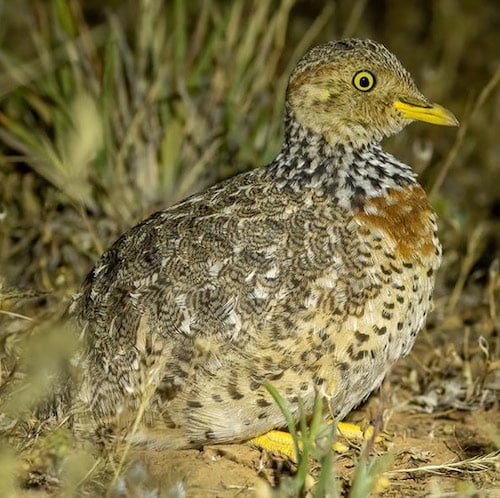
New South Wales (abbreviation NSW) is a state on the east coast of Australia. It borders Queensland to the north, Victoria to the south, and South Australia to the west. Its coast borders the Tasman Sea to the east. The Australian Capital Territory is an enclave within the state. New South Wales’ state capital is Sydney, which is also Australia’s most populous city. The population of New South Wales is (2024) over 8.3 million, people making it Australia’s most populous state. About two-thirds of the state’s population live in the Greater Sydney area (5.5 million) Inhabitants of New South Wales are referred to as New South Welshmen. Mainland New South Wales covers an area of about 800,000 square kilometres, extending over 12 degrees of longitude and 6 degrees of latitude. In broad terms, NSW encompasses four geographic zones – the coastal plains, the tablelands, western slopes and the western plains.
Climate – Apart from Antarctica, Australia is the world’s driest continent and climate is the major factor affecting the distribution of Australian birds; many species are adapted to this climate. Eastern Australia is especially well known for its seemingly unpredictable extremes in weather with floods or droughts an irregular feature.
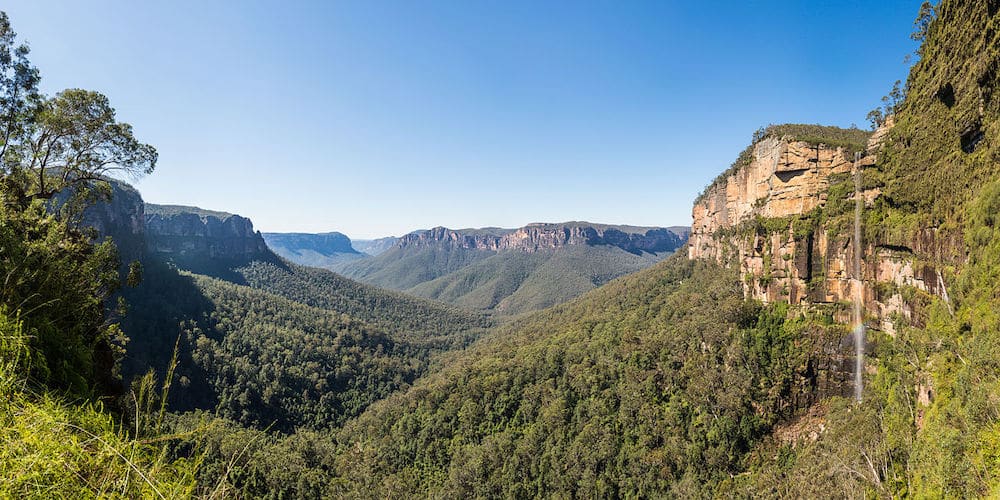
Grose Valley, Blue Mountains – ©Wikipedia Creative Commons
Climatically, New South Wales lies within a temperate zone; however, very high temperatures occur in the far northwest and very cold temperatures on the Southern Highlands. The climate changes markedly east to west and this is evidenced by significant differences in vegetation. Average annual rainfall varies from greater than 2000 mm per annum in parts of eastern NSW to less than 200 mm in the far west. In part, the climatic variation occurs because of the presence of the Great Dividing Range, which runs the full length of NSW from north to south and is never more than 150kms from the coast; it rises abruptly from the coastal plain and much rain borne by onshore winds falls on the eastern escarpment. Thus, the coastal strip has good rainfall and being influenced by the warm waters of the adjacent Tasman Sea maintains relatively mild temperatures. Winter snow falls, mostly in the Southern Alps (the far southern section of the Great Divide) and severe frosts can occur anywhere on the high country of the Great Divide. Beyond the Great Divide, rainfall decreases and temperature extremes occur. Most inland locations experience maximum summer temperatures above 30° C, and in the northwest may reach 50° C while winter frosts and temperatures below -5° C may occur in the Southern Alps and inland.
Birding New South Wales
Australian weather patterns are influenced by a phenomenon known as the Southern Oscillation – a major air pressure shift occurring between the eastern Pacific and the western Pacific/Asian regions as a result of large-scale interactions between the ocean and the atmosphere and has a profound effect on climate variability, season to season and year to year. In addition to impacting land-based habitats, the Southern Oscillation influences oceanic circulation and productivity of the Tasman Sea. The western Tasman Sea is dominated by the interplay between bodies of warm and cold water and these result in great variability in the composition of the seabirds found through the year.
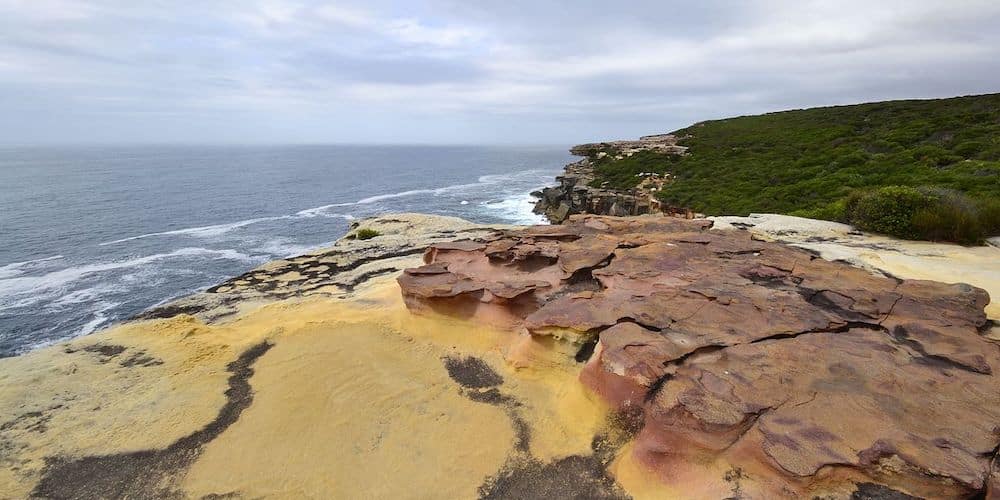
Royal National Park – ©Hal 1945 CC BY-SA 4.0 via Wikimedia Commons
Regular seabird trips travel to the Continental Shelf and adjacent waters from Port Stephens (near Newcastle), Swansea (a suburb of Newcastle); Sydney, Wollongong and Eden (Far South Coast). An outcome of this activity is that most recent new vagrants to NSW have been seabirds. In addition, the topography of the waters of the mainland, coastal islands, the volcanic island of Lord Howe and its associated rock outcrops and reefs, and seamounts (undersea mountains) further modify oceanic waters so they contain high concentrations of food and larger numbers of seabird are often associated with these places.
The Great Dividing Range is both a climatic barrier and a distribution barrier for birds by separating the narrow and wetter coastal plain from the drier inland. A number of westward range offshoots of the Great Dividing Range (notably the Liverpool, Warrumbungle and Nandewar Ranges) extend the range of some coastal rainforest and forest dwelling species. The lowest section of the Great Dividing Range occurs in the Upper Hunter and, here, woodlands similar to those of the inland enable typically inland birds to move towards coastal areas.
Throughout the Divide, there are upland areas ranging from 300 metres to over 2,150 metres, these Tablelands comprise the New England Tableland, the Central Tablelands (Blue Mountains to Bathurst and Orange, Goulburn and Yass), the Monaro Tableland and the high plateaux of Kosciusko and Kiandra. Far from being level, their surface consists of a series of very broad, undulating valleys. They experience obvious altitudinal changes in climate, particularly cold winters and mild summers. Interspersed on the tablelands are open grasslands or heathlands. Previously, extensive temperate woodlands largely covered much of the tableland area, but they have been extensively cleared and modified for agricultural pursuits, primarily sheep farming and cereal cropping. As one progresses west of the Divide, across the Western Slopes (similarly extensively cleared) the land flattens to dry plains and, here, the major rivers are important in determining bird distribution.
Further inland, the far western plains country may appear featureless, but there are numerous outcrops. These ranges and other outcrops introduce added diversity to the surrounding landscape.
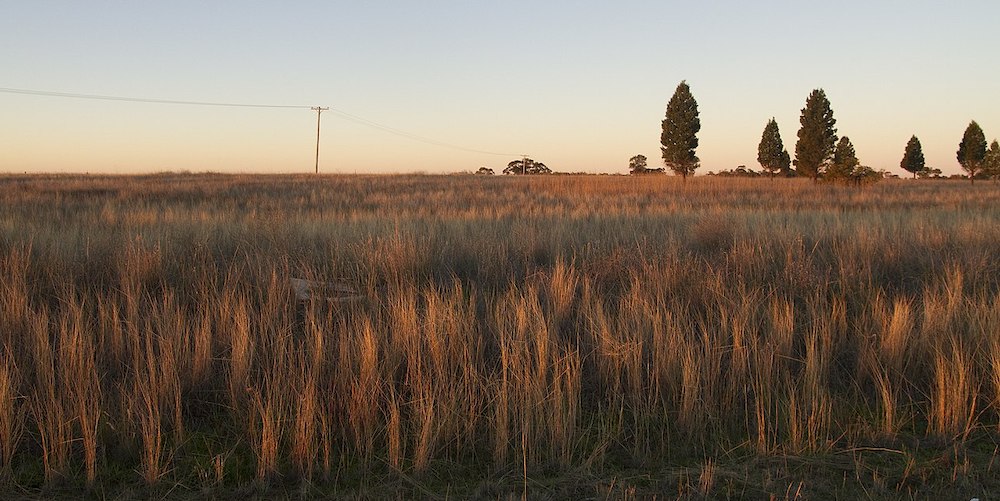
Western Plains – ©Maksym Kozlenko CC BY-SA 3.0 via Wikimedia Commons
Before the arrival of Europeans, people manipulated the vegetation for thousands of years through the use of fire. Vegetation patterns were profoundly affected by this action. Europeans imposed more basic, permanent and rapid change to the vegetative cover. This change is still occurring through land clearing, the use of European agricultural practices, the introduction of foreign plants and animals, and salinisation. Almost all of New South Wales has been modified to some extent; in particular the understory has been eliminated or substantially reduced.
Australia is dominated by xerophytic (hard-leaved) plants, which have to contend with very arid conditions. Here the vegetation mainly consists of eucalypts, acacias, geebungs, needlewood, allocasuarinas, quandong, spinifex, saltbush, bluebush, prickly wattle, etc. Tall forests and woodlands are mostly confined to the higher rainfall areas of eastern New South Wales; while on the more easterly plains unless cleared, open eucalypt woodland or woody shrubland are key habitats. Tall forests may be rainforest or wet eucalypt types. Rainforest types, ranging from Sub-tropical to Cool Temperate, exist along the east coast of NSW. Where conditions are unsuitable for rainforests, wet eucalypt forest dominates this region. Temperate woodlands occurred in fertile rain shadows of coastal valleys, e.g. the Clarence, Hunter and Bega valleys and on the Cumberland Plain and on the western slopes and nearby plains. These savanna-type woodlands are now the most extensively cleared vegetation communities across NSW because the areas are valued as important for wool, lamb and wheat production.
Large tracts of mallee or acacia woodlands originally occupied parts of the semi-arid and arid parts, but much has been cleared. Areas of mallee, some of which are controlled by the NSW NP&WS still remain in the Western Division. Mallee is an important habitat for several rare birds (including Mallee-fowl, Regent Parrot, Scarlet-chested Parrot, Striated Grasswren, Shy Heathwren, Red-lored Whistler, Chestnut Quailthrush, Southern Scrub-robin and Black-eared Miner). In the northern parts of the semi-arid and arid western and central-western NSW mulga woodlands dominate.
In the Northwest, the plains extend from the foothills of New England to the Darling or Barwon River, with practically negligible irregularities in their topography. Close in, Box, Ironbark or Cypress Pine woodlands are important; while to the west of these trees such as belah or brigalow often dominate sometimes interrupted by areas of large shrubs and scattered, open grasslands occur. Examples are the Old Man, Tycannah, and Edgeroi Plains. On the far western plains, the vegetation usually consists of low saltbush, bluebush or prickly wattle shrublands, mitchell grass plains or stony (‘gibber’) plains. In southern inland NSW, the Riverina plain is a huge expanse of country mostly sparingly treed by only the Boree, Acacia pendulata.
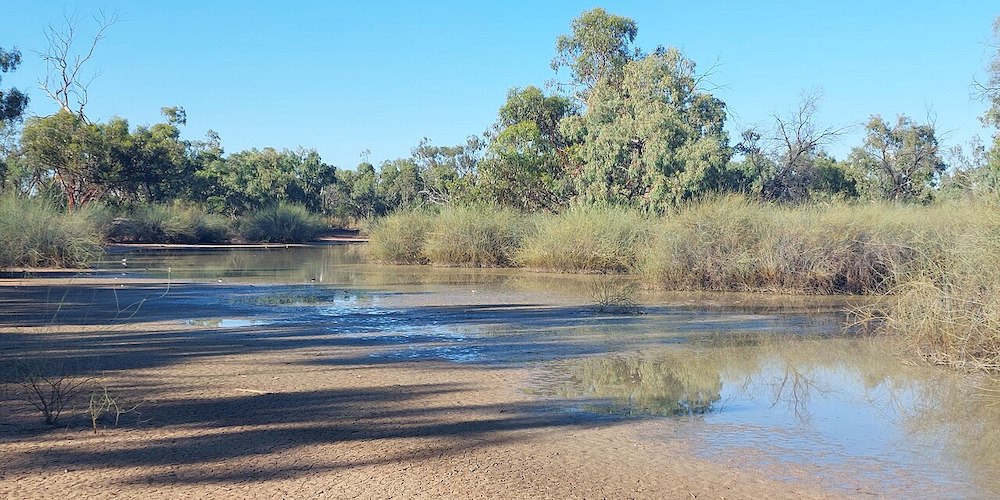
Nocoleche Nature Reserve – ©Stitchingbushwalker CC BY-SA 4.0 via Wikimedia Commons
NSW wetlands and rivers are important sites for waterbirds, waders and other birds reliant on such habitats but much of the coastal wetlands have been drained despite a growing appreciation of the importance of wetlands and natural areas. In western NSW wetlands play an especially important role. The more permanent sites provide essential breeding sites of egrets, ibis and herons. Some of these, e.g. the Menidee Lakes, Lake Mulwala, are artificially filled as water storage basins. Others, e.g. Gingham Watercourses, Narran Lake, Macquarie Marshes those at the Lachlan/Murrumbidgee junction and the many billabongs along the Darling, Murrumbidgee and Murray are natural areas relying on regular floodwater. In the far northwest, most wetlands are ephemeral and some of the more extensive include Lake Wallace, Salt Lake, Cobham Lake, the Bulloo Overflow, the Cuttaburra channels, Yantabulla Swamps, Lake Bancannia, Lake Altiboulka, Mullawoolka Basin, Tonga Lake, Peery Lake. Coastal wetlands tend to be dominated by sedge, phragmites and other emergent reeds, heath, paperbarks, mangroves, samphire, etc. Inland the vegetation is often Lignum, Cumbungi, Canegrass Nitre Goosefoot or River Cooba are important.
The inland rivers, creeks, etc. of inland NSW are typically bordered by tall forests, and in Southern NSW towering majestically over the network of waterways, are River Red Gum forests. These are often forestry reserves, sometimes national parks, and may stretch for over 100,000 hectares. They are home to more than 150 species of birds. Ideal birding locations are to be found along the valleys of the Murray, Murrumbidgee and Lachlan rivers and are ideal places to get up close with the gums and their amazing bird life.
-
Everlasting Swamp
WebsiteSatellite ViewEverlasting Swamp is named for the large number of waterfowl living in the backswamp next to the Clarence River. The reserve protects species including brolga and jabiru, along with a rare coastal wetland floodplain ecosystem.
-
Number of bird species: 622 (Including Lord Howe Island - as at April 2024)
State Bird - Laughing Kookaburra Dacelo novaeguineae
Number of endemics: 2
Rockwarbler Origma solitaria
Lord Howe Woodhen Gallirallus sylvestris
NB at least 98% of Superb Parrots live in NSW.
-
Avibase - Bird Checklists of the World
PDF ChecklistThis checklist includes all bird species found in New South Wales , based on the best information available at this time. It is based on a wide variety of sources that I collated over many years. I am pleased to offer these checklists as a service to birdwatchers. -
Wikipedia
Annotated ListNew South Wales is a state in Australia of great biodiversity, with 622 species of bird recorded.

-
A Guide to the Bird Habitats in NSW
| By Richard M Cooper & Ian A W McAllan | NSW Bird Atlassers Inc | 1999 | Paperback | 155 pages, colour photos | ISBN: 9780957704718 Buy this book from NHBS.com -
An Atlas of the Birds of NSW & the ACT, Volume 3
| By Richard M Cooper, Ian A W McAllan, Chrstopher C.P. Brandis & Brian Curtis | NSW Bird Atlassers Inc | 2020 | Volume 3 | Hardback | 762 pages, colour photos, b/w illustrations, colour distribution maps, tables | ISBN: 9780957704756 Buy this book from NHBS.com -
An Atlas of the Birds of NSW and the ACT - Volume 1
| By Richard M Cooper, Ian A W McAllan & Brian Curtis | NSW Bird Atlassers Inc | 2014 | Volume 1 | Hardback | 720 pages, colour photos, b/w illustrations, colour distribution maps | ISBN: 9780957704732 Buy this book from NHBS.com -
An Atlas of the Birds of NSW and the ACT - Volume 2
| By Richard M Cooper, Ian A W McAllan, Chrstopher C.P. Brandis & Brian Curtis | NSW Bird Atlassers Inc | 2016 | Volume 2 |Hardback | 674 pages, colour photos, b/w illustrations, colour distribution maps, tables | ISBN: 9780957704749 Buy this book from NHBS.com
-
Australasian Bird Fair
Facebook PageThe next Australasian Bird Fair will be conducted in 2019. Stay tuned for details: PO Box 2006, Rockdale 2216 NSW Australia - +61 (0)2 9567 9743 - +61 (0)411 249 075
-
Australia Museum Online
WebsiteOrnithology Section: The Australian Museum has had a long history of research in ornithology (study of birds). Its collections are a valuable resource for scientific research, are part of our natural heritage and contribute to the knowledge and information available to the whole community. -
Charles Sturt University - Graduate Diploma of Ornithology
WebpageThe natural world faces greater challenges than ever before. Those challenges are, to a large extent, created by humans. But that means the solution will come from us as well. From generating new knowledge for protecting animal species to ensuring natural environments retain their unique characteristics, we need people who respect and value the natural world to step up and make a difference. With a degree from Charles Sturt University, that can be you. -
The Fenner School of Environment and Society
WebsiteThe Fenner School is unique in Australia. There are very few places in the world where economists and hydrologists, historians and ecologists, foresters, geographers and climatologists work together towards common objectives…
-
BirdLife Australia
InformationLists the local branches etc… -
BirdLife Echuca District
InformationBirdLife Echuca District is a cross-border Branch that aims to serve approximately 120 members who reside in southern New South Wales (including Shire of Murray, Deniliquin, Shire of Conargo, Barham and surrounding areas) or northern Victoria, (including Campaspe Shire, City of Greater Bendigo, Gunnawarra Shire, Loddon Shire and surrounding areas -
BirdLife Mildura
InformationBirdlife Mildura is situated in the northwest corner of Victoria. We are fortunate to have a range of habitats to explore from riverine red gum and black box forests with billabongs to shallow, saline drainage lakes and vast areas of mallee including the Murray-Sunset National Park. -
BirdLife Northern NSW
InformationBirdLife Northern NSW was formed in 1986 (previously Birds Australia Northern NSW) with its membership drawn from north-eastern New South Wales from the Queensland border south along the coast to Port Macquarie and inland to about Broken Hill. - northernnsw@birdlife.org.au - Peter Higgins, Convenor, PO Box 99, Sawtell NSW 2452 - (02) 6658 5289 -
BirdLife Ovens and Murray
InformationBirdLife Ovens and Murray is a branch providing local activities for BirdLife members in the Ovens and Murray region of south-eastern NSW and north-eastern Victoria -
BirdLife Shoalhaven
WebpageBirdLife Shoalhaven encompasses the shire of Shoalhaven City stretching from south of Gerringong to north of Bateman's Bay on the south coast of NSW, and west to the Southern Highlands. We include the main towns of Nowra, Berry and Ulladulla and many national parks including Jervis Bay, Booderee, Morton and the Budawangs. Members can enjoy a field trip each month and in the future we hope to provide information nights with guest speakers three or four times per year. -
BirdLife Southern Highlands
InformationThe Southern Highlands provide sites for field trips in forested areas, some wetlands, riverine habitats, heathlands and a several National Parks and designated Nature Reserves… -
BirdLife Southern NSW
WebpageBirdLife Southern NSW covers NSW and the ACT south of a rough line from Port Macquarie on the east coast to Tamworth, down to Dubbo, through Nyngan, Cobar and Wilcannia before ending at Broken Hill on the western border, excluding those centres in the post code range of 2570 to 2580 which fall within the catchment area of BirdLife Southern Highlands. (Birdlife members who live along the Murray Valley have the option of being part of either BirdLife Southern NSW or their local group). This large region contains diverse ecological habitats, from temperate rainforests on the east coast and Dividing Range, through drier eucalypt woodlands to the semi-arid rangelands in the west. -
Birding NSW - NSW Field Ornithologists Club
WebsiteBIRDING NSW is ‘Birding NSW – New South Wales Field Ornithologists Club Incorporated’. Our aim is to share the joy of bird watching with others and support conservation of bird life. We’re a not-for-profit organisation run by a voluntary committee of elected officials. -
Blue Mountains Bird Observers
WebsiteBlue Mountains Bird Observers is a community group open to all who are interested in the bird life of the Blue Mountains, NSW. We have more than a hundred members, including some expert bird watchers and bird photographers from whom we all learn. New members are always welcome… -
Canberra Ornithologists Group
WebsiteCanberra and the surrounding region has the richest bird life of any Australian capital city – over two hundred species have been recorded here. From our largest bird, the Emu, to the smallest, the Weebill, the birds of Canberra present an ever-changing kaleidoscope of sizes, shapes, colours and sounds. -
Cumberland Bird Observers Club
WebsiteThe Cumberland Bird Observers' Club conducts at least 40 birdwatching trips every year all over the greater Sydney region. That's more than three outings every month - rain, hail or shine - and you are very welcome to come along. No bookings required. -
Hunter Bird Observers Club
WebsiteThe Hunter Region is centred on the coastal city of Newcastle (some 160 km north of Sydney). However, the Region spans from Catherine Hill Bay in the south to Diamond Head (Crowdy Bay National Park) in the north, inland to around Cassilis, and also includes the ocean to a distance of 100km offshore. -
Illawarra Birders
WebsiteIllawarra Birders aim is to inspire the enjoyment, education, research and conservation of birds. Our mission is to build and encourage cooperation and partnerships between birding clubs and all levels of Government to ensure the conservation of bird species and their habitat. -
New South Wales Bird Atlassers Inc.
WebsiteEstablished in 1982 as an independent, volunteer-based, non-profit group, focusing on NSW birds, their habitats and their conservation. The area of coverage is NSW including Lord Howe Island and the Tasman Sea from the NSW coast to 200km offshore, the ACT, and Elizabeth and Middleton Reef Marine National Nature Reserve. Etc etc. -
Southern Oceans Seabird Study Association
WebsiteSOSSA was founded by members of the New South Wales Albatross Study Group (NSWASG) in 1994. It was set up to be an umbrella organisation for many study groups concerned with studies of Southern Ocean bio-diversity. SOSSA is a wildlife research and conservation group which consists of dedicated people both professional and amateur. These people share a common interest and concern for the environment and the wildlife of the Southern Oceans…
-
*New South Wales National Parks and Wildlife Service
WebsiteSatellite ViewThe New South Wales National Parks and Wildlife Service has developed the following Threatened Species Profiles as a general overview of many species listed under the Threatened Species Conservation Act, 1995. There are currently over 700 plants and animal species listed as threatened under the TSC Act. -
Lord Howe Island Marine Park
Websiteps://www.dpi.nsw.gov.au/fishing/marine-Satellite ViewLord Howe Island is a narrow volcanic strip surrounded by several small, environmentally sensitive islets. The island is a remnant of a long-extinct shield volcano, dating back millions of years. The marine environment is internationally significant and features the world's southern-most coral reef. -
Menindee Lakes
InformationSatellite ViewMenindee Lakes in Outback NSW is one of Australia’s most iconic wetlands. This inland oasis, which has more than 220 species of bird life, attracts hundreds of thousands of birds including large flocks of Black Swans, Budgerigars, Pelicans, Major Mitchell Cockatoos and Emus. -
NP Barrington Tops
InformationSatellite ViewImmerse yourself in the World Heritage-listed rainforests of Barrington Tops National Park. Easy walks, overnight hikes, great picnic, fishing and camping spots await. -
NP Blue Mountains
InformationSatellite ViewExplore the World Heritage-listed Blue Mountains National Park. Home of the famous Three Sisters, take a day trip from Sydney to the Blue Mountains area, near Katoomba. -
NP Bundjalung
InformationSatellite ViewTen Mile Beach forms part of Bundjalung's 38 km of protected coastline. The Esk River, the largest untouched coastal river system on the north coast, runs through the southern half of the park. Other features include the Jerusalem Creek Peninsula, freshwater lagoons, mangrove mudflats and rare rainforests at Woody Head… -
NP Cocoparra
InformationSatellite ViewEight species of birds listed as threatened in schedule 2 of the NSW Threatened Species Conservation Act 1995. have been identified within the area; these include the Major Mitchell's Cockatoo, Glossy Black Cockatoo, Gilbert's Whistler, Painted Honeyeater, Chestnut-breasted Quail-thrush, Shy Heathwren, Superb Parrot and Swift Parrot. (the last two not sighted for some time). -
NP Dorrigo
InformationSatellite ViewAt Dorrigo National Park you'll discover World Heritage-listed Gondwana rainforests, secret waterfalls, walking tracks and Australian wildlife. -
NP Ghin-Doo-Ee
InformationSatellite ViewGhin-Doo-Ee is a national park in New South Wales, Australia, 200 km northeast of Sydney. Its name comes from the Gadjang word for the Australian brushturkey -
NP Gibraltar Range
InformationSatellite ViewDeep valleys and giant granite boulders protect rainforest of World Heritage importance. Scenic creeks and cascades, swamps, heaths and woodlands can be explored on more than 100 kilometres of walking trails… -
NP Kinchega
InformationSatellite ViewThe Kinchega National Park is a protected national park that is located in the Far West region of New South Wales, in eastern Australia. The 44,259-hectare (109,370-acre) national park is located approximately 840 kilometres (520 mi) west of Sydney and 111 kilometres (69 mi) south-east of Broken Hill. The park adjoins the town of Menindee. The eastern edge of the Kinchega National Park is formed by the Darling River. -
NP Lane Cove
InformationSatellite ViewLane Cove National Park, not far from Sydney's city centre, is the perfect place for a family day out or school excursion. Explore historic sites along the Heritage walk or enjoy a picnic, canoe or go birdwatching. -
NP Macquarie Marshes
InformationSatellite ViewThe Macquarie Marshes have been identified by BirdLife International as a 2378 km2 Important Bird Area (IBA), defined by the maximum extent of the 1990 floods. Among over 200 species of birds recorded, the marshes have supported over 1% of the world population of the endangered Australasian bittern, as well as white-necked herons, intermediate egrets, nankeen night-herons, Australian white and straw-necked ibises, and sharp-tailed sandpipers. The IBA also supports a population of diamond firetails. Other birds recorded in substantial numbers include glossy ibises, great and little egrets, royal spoonbills, Pacific black ducks and Caspian terns. Australian painted snipes, superb parrots, painted and pied honeyeaters have been recorded in the IBA -
NP Murray Valley
InformationSatellite Viewt’s an easy walk along the boardwalk to Reed Beds Bird Hide, with fun things to do along the way. Listen to see how many different bird calls you can hear on the way. -
NP Mutawintji (Mootwingee)
InformationSatellite ViewThe Mutawintji area supports a wide range of native animals representative of arid environments. Eleven native mammal species, five species of frog, 138 bird species, 38 reptiles and 347 species of insects have been recorded in the area. Rare and endangered fauna include: the Peregrine Falcon (Falco peregrinus); Grey Falcon Falco hypoleucos; and Pink Cockatoo Cacatua leadbeateri… -
NP Myall Lakes
InformationSatellite ViewMyall Lakes National Park is a national park located in New South Wales, Australia, 236 kilometres (147 mi) north of Sydney. It encompasses one of the state's largest coastal lake systems Myall Lakes, and includes Broughton Island. The park includes 40 kilometres of beaches and rolling sand dunes. Myall Lakes is also one of the most visited parks in New South Wales. Native Fauna which can also be seen in the park includes the nocturnal long-nosed bandicoot which has grey-brown fur and a pointed snout for which it uses to forage for worms and insects. The Striped marsh frog can be found near ponds and swamps and has a distinct sound which can be heard all year round. -
NP Pilliga
InformationSatellite ViewA 4,909 km2 tract of land, including the forest and the nearby Warrumbungle National Park, has been identified by BirdLife International as an Important Bird Area (IBA) because it supports populations of painted honeyeaters and diamond firetails. It also experiences irregular occurrences of endangered swift parrots and regent honeyeaters, and near threatened bush stone-curlews.[8] Other declining woodland birds present in good numbers include barking owls, glossy black-cockatoos, grey-crowned babblers, speckled warblers, brown treecreepers, hooded robins and turquoise parrots. -
NP Saltwatert
InformationSatellite ViewAt this small coastal reserve east of Taree, you can bushwalk, canoe, kayak, swim, fish, surf, picnic, and even whale watch from August through November. -
NP Wallingat
InformationSatellite ViewWallingat is a national park located in New South Wales, Australia, 211 kilometres (131 mi) northeast of Sydney. The park has forest walks, a campsite on the banks of the Wallingat River and a viewpoint, the Whoota Whoota Lookout, with views of Wallis Lake and the coast. The 25km loop of Wallingat Forest drive, near Forster, is on unsealed roads that meander through forests, and excellent for cars, 4WDs, bicycles, walking and horse riding. -
NP Washpool
InformationSatellite ViewThe landscape of steep gorges, clear waters and expansive World Heritage rainforest protects some of the most diverse and least disturbed forest in NSW, including the world's largest stand of coachwood trees. The scope for wilderness walking is excellent… -
NP Yanga
InformationSatellite ViewYanga National Park, close to Balranald, features great fishing spots along the Murrumbidgee River. Bring your tent or caravan to stay at the free campgrounds. Bird watchers will also enjoy Yanga Lake. -
NP Yuraygir
InformationSatellite View60 kilometres of striking cliffs, rocky headlands, isolated beaches and quiet lake systems, set against a backdrop of forests, heaths, estuaries and wetlands, make Yuraygir the longest stretch of undeveloped coastline in NSW… -
NR BarungubaMontague Island
InformationSatellite ViewMontague Island Nature Reserve is home to hundreds of seals and more than 90 bird species. Enjoy a stay in a heritage lighthouse keeper’s cottage. -
NR Khappinghat
InformationSatellite ViewNature Reserve was created in August 1993. It covers an area of 1494ha. -
NR Kooragang & Hexam Swamp
InformationSatellite ViewOur vision is for an estuary in which healthy, restored fisheries and other wildlife habitat is in balance with a thriving port, the whole providing opportunities for research, education and recreation for people. -
NR Nombinnie
InformationSatellite ViewA variety of endangered fauna including malleefowl, red lored whistler, southern scrub robin and pink cockatoo are present in the reserve. Over 90 species of birds are known from the area. -
NR Queens Lake
InformationSatellite ViewA lakeside haven for koalas and wildlife, Queens Lake Nature Reserve is ideal for swimming, fishing, birdwatching, picnicking and boating, south of Port Macquarie. -
NR Round Hill
InformationSatellite ViewThe reserve includes habitats of malleefowl, shy hylacola, southern scrub robin, pink cockatoo, red lored whistler, chestnut quail thrush, ningaui and western blue tongue lizard. -
NR Yathong
InformationSatellite ViewThe area is rich in bird species with 130 being confirmed and a further concentration of 12 species within mallee habitat. Current records raise the total number of bird species present in the area up to 162. All recorded bird species are listed as protected in NSW; of these 11 are protected and 1 endangered and 4 recognised nationally. Notable species include malleefowl Leipoa ocellata, red-lored whistler Pachycephala rufogularis, grey falcon Falco hypoleucos, pink cockatoo Lophochroa leadbeateri and striated grass wren Amytornis striatus. -
SP Burrinjuck
InformationSatellite ViewFor a release from the stresses of modern life, Burrinjuck Waters State Park offers relaxation among stunning scenery overlooking the giant Lake Burrinjuck, surrounded by bushland that has changed little since European settlement. The park is home to many native animals, which you can see up-close, and a paradise for birdwatchers…
-
Birdline New South Wales
SightingsBirdline NSW is a site for the reporting of rare or unusual birds outside their normal range, unusually high or low numbers, early or late arrivals or departures for migrant species and interesting behaviour or unusual habitat usage. We may also consider publishing unusually-plumaged birds (e.g. albinistic/leucistic/melanistic) if they are considered interesting or are uncommonly seen. -
NSW Rare Bird Alert
Facebook GroupNSW Rare Bird Alert is exclusively for the reporting of rare and vagrant birds in New South Wales, at a state and/or local level. -
NatureMapr
WebsiteNSW Rare Bird Alert is exclusively for the reporting of rare and vagrant birds in New South Wales, at a state and/or local level. -
eBird
Sightings
-
Andrew Patrick - Zest for Birds
Tour OperatorSee many of Sydney's fantastically beautiful birds with this series of one-day outings which can be enjoyed individually or in combination with each other. -
Aussie Bird Tours
Tour OperatorSpecialising in full and half day tours from Sydney -
Australian Geographic
Tour OperatorCome and join us on one of the best Outback wildlife experiences in Australia. Discover the animals and history of the Australian Outback at Lake Mungo in the Willandra Lakes World Heritage Area. -
Australian Ornithological Services
Tour OperatorPersonalised birding tours around Deniliquin -
Birding Ecotours
Tour OperatorEastern Australia offers many varied birding options, with cities such as Cairns, Brisbane, Sydney, and Melbourne providing excellent entry points into the country. All are interesting cities with top birding and wildlife watching right on their doorsteps. It is also possible to form a nice route taking in some of these areas over an approximate 3-week period as shown here, which is a perfect introduction into Australian birding. -
David Bishop Bird Tours
Tour OperatorDavid launched David Bishop Bird Tours in early 2014 after a long and successful 28 year career with Victor Emanuel Nature Tours (Vent), during which time he was Vent’s Director for the Asia Pacific. -
Nature Travel Birding
Tour OperatorSydney Short & Day Birding Tours -
Philip Maher - Australian Ornithological Services
Tour OperatorNSW Birding and overseas trips... -
Sydney Pelagics & Nature Watching Tours
PelagicThese tours are run by the Sydney Pelagic Group Cooperative comprising four local birders who are keen to keep these pelagics operating, and will continue to run as long as the support of the local and overseas birding fraternity continues. -
Wings
Tour Operator...A trip out to the stunning coastal heathlands may well reveal New South Wales’s only endemic bird, Rockwarbler, as well as heathland specialties such as Southern Emu-wren, Chestnut-rumped Heathwren, and Tawny-crowned Honeyeater...
-
2019 [02 February] - Valentin Moser - A Naturalist’s Guide to Sydney
PDF ReportSydney, a modern mega city with 5 million inhabitants, is not only beautiful, but also good spots to find wildlife. I spend a semester in Sydney in the second half of 2019 and tried to find some of the wildlife. -
2019 [11 No vember] - Ben Knoot
PDF ReportThis 21-day excursion down the east coast of Australia starts in the north of Cairns, travels to Brisbane and Sydney and finishes on the scenic island of Tasmania. -
2023 [04 April] - Bird Spots
Report...Boyters Lane is a reliable spot for the wonderful Striped Honeyeater. Love this bird (not quite as much as the Spiny-Cheeked, if we’re splitting hairs, but pretty close!)... -
2023 [11 November] - Andy Walker - rom the Outback to the Wet Tropics
PDF Report...Our late afternoon and evening birding was simply sensational. We stopped at some bushland that was featuring lots of flowering plants, just north of Deniliquin, where we found Australian Owlet-nightjar, Horsfield’s Bronze Cuckoo, Black-shouldered Kite, Black Kite, Rainbow Bee-eater, Greater Bluebonnet, Black Honeyeater, Singing Honeyeater, Striped Honeyeater, Spiny-cheeked Honeyeater, Pied Butcherbird, Australian Raven, and Mistletoebird. Driving north we picked up our first family group of Emus and shortly after had close perched views of a pair of Wedge-tailed Eagles, with other species seen including Black-tailed Nativehen, Australian Crake, Red-kneed Dotterel, White-winged Fairywren, Singing (Horsfield’s) Bush Lark, Fairy Martin, Brown Songlark, and Australian Pipit...
-
Boobook Mountain COttage
AccommodationWake up to the dawn chorus from your fully self-contained cottage with forest views. Some of the birds you are likely to see or hear include Wonga Pigeon, Brown Cuckoo-Dove, Topknot Pigeon, Australian Logrunner, Bassian Thrush, Superb Lyrebird, White-throated and Red-browed Treecreeper, Green Catbird, Satin Bowerbird, Gang-gang Cockatoo, Yellow-tailed Black Cockatoo, Australian King Parrot, Crimson Rosella, Yellow-throated and Large-billed Scrubwren, Raptors. Summer migrants can include many of the Cuckoos, Crested Shrike-tit, Mistletoebird, Rose Robin, Rufous Fantail, Black-faced Monarch, and a variety of Honeyeaters. Southern Boobook, Powerful and Sooty Owl... -
Capertee Valley Retreats
AccommodationIf bird watching is your thing, then you will definitely feel at home here (and you'll probably love our logo too!). Capertee Valley Retreats is strategically located in one of the world's top bird watching destinations. -
Somerset Apartments - Lord Howe Island
AccommodationSome of Lord Howe Island's landbirds breed within the forested grounds of Somerset. Somerset's twenty five units contain ensuite bathrooms, separate bedroom and living areas, and outside covered verandas with tables and chairs.
-
Australian National Botanic Gardens
WebsiteThe Australian National Botanic Gardens provides a haven for many birds. The diversity of native plant species and the range of habitats provide food and shelter for a greater variety and larger numbers of birds than might otherwise be expected in Canberra -
Birds of NSW Wetlands
WebsiteMany bird species rely on wetlands in NSW for all or part of their life cycle. Waterbirds can use a range of different wetland habitats including swamps, lagoons, mudflats, estuaries, embayments and open beaches, freshwater and salt lakes, rivers, floodplain wetlands and dams... -
Sydney Pelagic Birding
WebsiteThe Wollongong and Sydney trips are now world famous, although there are pelagics operating from other ports around Australia -
Urban bird watchers' guide to Sydney
ArticleSydney may be known for bin-scrounging ibis and bobble-headed pigeons, but there’s more diverse birdlife in this metropolis than many probably realise.