

Independent State of Samoa
Samoa is an island country in Polynesia, consisting of two main islands (Savai’i and Upolu); two smaller, inhabited islands (Manono and Apolima); and several smaller, uninhabited islands, including the Aleipata Islands (Nuʻutele, Nuʻulua, Fanuatapu and Namua). Samoa is located 64 km (40 miles) west of American Samoa, 889 km (552 miles) northeast of Tonga, 1,152 km (716 miles) northeast of Fiji, 483 km (300 miles) east of Wallis and Futuna, 1,151 km (715 miles) southeast of Tuvalu, 519 km (322 miles) south of Tokelau, 4,190 km (2,600 miles) southwest of Hawaii, and 610 km (380 miles) northwest of Niue. The Lapita people discovered and settled the Samoan Islands around 3,500 years ago. They developed a Samoan language and Samoan cultural identity.
The total land area is 2,842 km2 (1,097 square miles), consisting of the two large islands, which together account for 99% of the total land area and eight small islets. The main island of Upolu is home to nearly three-quarters of Samoa’s population, and to the capital and largest city, Apia. The population is under 220,000 people, of which about 40,000 live in the capital.
While all of the islands have volcanic origins, only Savaiʻi, the westernmost island in Samoa, remains volcanically active, with the most recent eruption at Mount Matavanu over 100 years ago. The highest point in Samoa is Mount Silisili, at 6,096 feet. The Saleaula lava fields situated on the central north coast of Savaiʻi result from the Mount Matavanu eruptions, which left 50 km2 (19 square miles) of solidified lava. Savaiʻi is the largest of the Samoan islands and the sixth-largest Polynesian island (after New Zealand’s North, South and Stewart Islands and the Hawaiian Islands of Hawaiʻi and Maui).
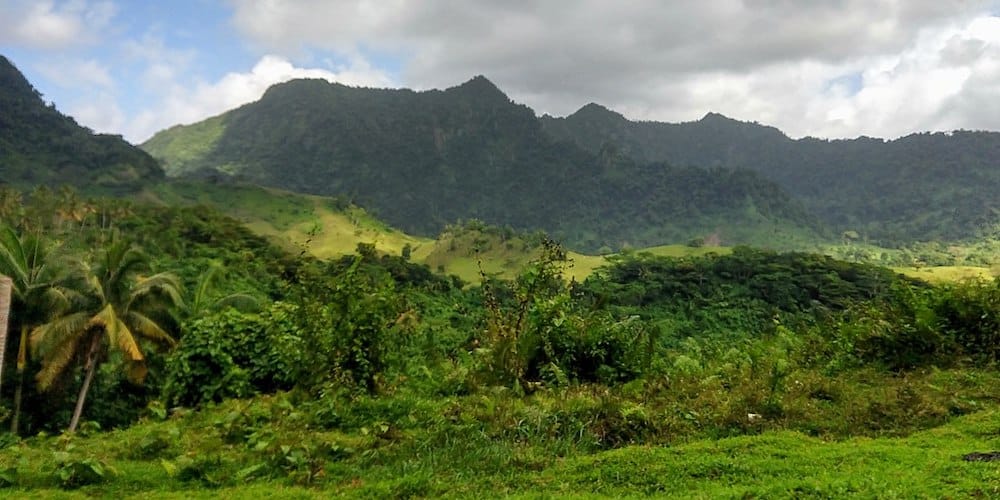
amanderson2, CC BY 2.0 via Wikimedia Commons
Samoa has an equatorial climate, with an average annual temperature of 26.5 °C and a main rainy season from November to April, although heavy rain may fall in any month.
Birding Samoa
Samoa forms part of the Samoan tropical moist forests ecoregion. Since human habitation began, about 80% of the lowland rainforests have disappeared. Within the ecoregion about 28% of plants and 84% of land birds are endemic.
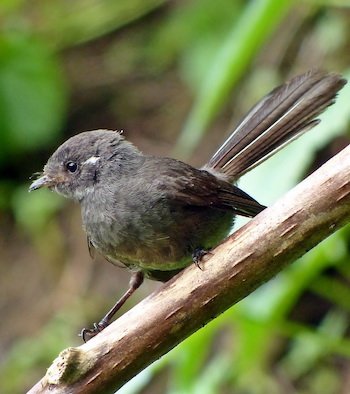
Despite having only 100 or so birds, and only around one third being land-birds it would be easy to dismiss birding there as not worthwhile. However, there are nine or more endemics that include: Flat-billed Kingfisher, Mao (a honeyeater), Samoan Triller, Samoan Whistler, Samoan Flycatcher, Samoan Fantail, Samoan White-eye, Samoan Starling and Tooth-billed Pigeon, which is considered Critically Endangered and is both extremely rare and close to extinction. Recent IOC updates may extend Samoa’s list of endemic species. The Island Thrush may be split into around 15 species, so the Samoan Island Thrush is likely to be added as endemic.
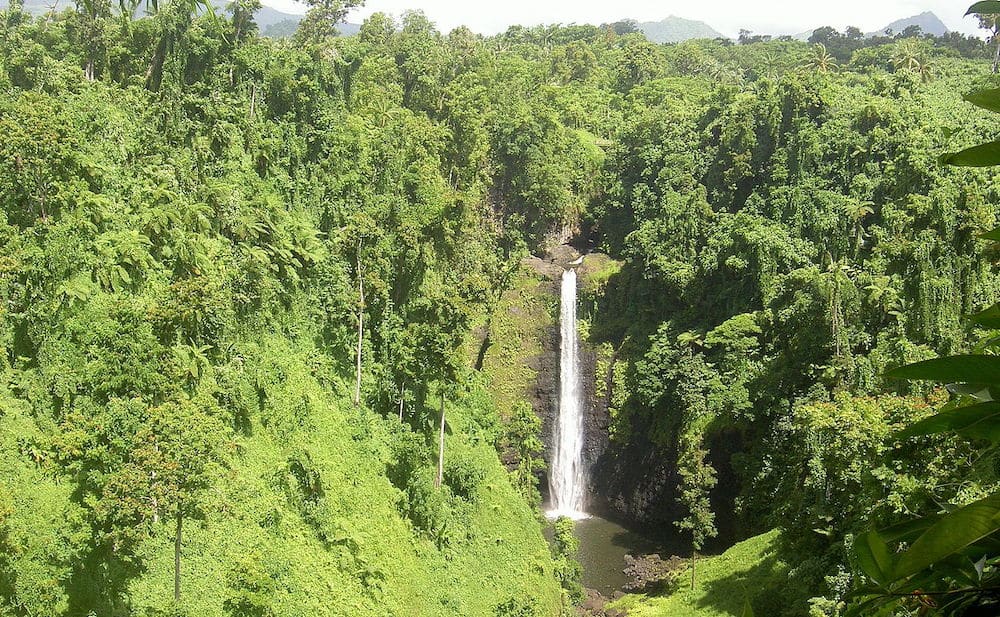
Sopoaga Falls – CC BY-SA 2.5 via Wikimedia Commons
Other special birds include Pacific Long-tailed Cuckoo, Shy Ground Dove, Many-colored Fruit Dove, Crimson-crowned Fruit Dove, Blue-crowned Lorikeet, Cardinal Myzomela, Polynesian Wattled Honeyeater, Polynesian Triller, Polynesian Starling, Royal Parrotfinch, Pacific Robin and Red-headed Parrotfinch, which also some consider endemic. The island and its waters are great for terns and other seabirds such as Black Noddy, White Tern, Spectacled Tern, White-tailed Tropicbird, Great Frigatebird, and Masked Booby. It is possible to see Buff-banded Rails and Pacific Golden Plovers in peoples’ gardens as well as seeing nesting White Terns when birding in the forest!
-
Number of bird species: 101
(As at Januar 2025)National Bird: Tooth-billed Pigeon Didunculus sprigirostris
Number of endemics: 9
Samoan Moorhen Gallinula pacifica
Tooth-billed Pigeon Didunculus strigirostris
Flat-billed Kingfisher Todirhamphus recurvirostris
Samoan Triller Lalage sharpei
Samoan Fantail Rhipidura nebulosa
Samoan Flycatcher Myiagra albiventris
Samoan Whistler Pachycephala flavifrons
Samoan White-eye Zosterops samoensis
Mao Gymnomyza samoensis
Possible Splits:
Red-headed Parrotfinch Erythrura cyaneovirens
Samoan Island Thrush Turdus samoensis
-
Avibase
PDF ChecklistThis checklist includes all bird species found in Samoa , based on the best information available at this time. It is based on a wide variety of sources that I collated over many years. I am pleased to offer these checklists as a service to birdwatchers. If you find any error, please do not hesitate to report them. -
Wikipedia
Annotated ListThis is a list of the bird species recorded in Samoa. The avifauna of Samoa include a total of 100 species, of which 9 are endemic, and 5 have been introduced by humans and 23 are rare or accidental. 13 species are globally threatened. -
eBird
PDF ChecklistThis checklist is generated with data from eBird (ebird.org), a global database of bird sightings from birders like you. If you enjoy this checklist, please consider contributing your sightings to eBird. It is 100% free to take part, and your observations will help support birders, researchers, and conservationists worldwide.

-
A Guide to the Birds of Fiji and Western Polynesia including American Samoa, Niue, Samoa, Tokelau, Tonga, Tuvalu and Wallis & Futuna
| By Dick Watling Hard Cover; 16 Full Colour Plates; Figures, Tables & Maps; 272 pages | Out of Print | ISBN: 9789829030047 Buy this book from NHBS.com -
Birds of Samoa and American Samoa
| (Pocket Identification Guide) | By D Watling & J Atherton | Conservation International | 2008 | Unbound | 21 pages, Laminated concertina fold out guide, colour illustrations | ISBN: 9781934151181 Buy this book from NHBS.com -
The Birds of Samoa
| By Ulf Beichle & Sabine Baumann | Ulf Beichle | 2016 | Paperback | 239 pages, 325 colour photos, 70 colour illustrations | Out of Print | ISBN: 9783000540035 Buy this book from NHBS.com
-
O Le Siosiomaga Society Inc.
Facebook Pagele Siosiomaga Society Inc.P0 Box 5774, Matautu WESTERN SAMOA. + 685 21993; ngo.fiiosiomaga@samos.net -
Samoa Conservation Society
Facebook PagePromoting conservation efforts in Samoa
-
List of protected areas of Samoa
InformationSatellite ViewThis is a list of some protected areas of Samoa which include national parks, reservations, protected nature zones, marine reserves and other areas of significant biodiversity and conservation. -
NP O Le Pupu-Puʿe National Park
InformationSalellite ViewO Le Pupu-Puʿe National Park ("The Cliffs-Mountain")[1] is the oldest national park in Samoa. -
NP Lake Lanoto'o National Park
InformationSalellite View...the park covers 470 hectares of the central portion of the Tuamasaga district of Upolu and includes three volcanic crater-lakes: Lake Lanoto'o, Lanoata’ata and Lanoanea. In 2004 it was designated as a wetland of international importance under the Ramsar Convention.
-
BirdQuest
Tour OperatorNEW CALEDONIA, FIJI & SAMOA WITH VANUATU & COOK ISLANDS – an extraordinary tour for a multitude of endemics including Kagu -
Birding Ecotours
Tour OperatorOur Samoa birding tours form part of our Fiji and Samoa Pacific islands birding tours and during our time on Samoa we concentrate our efforts on the endemics of the large island of Upolu. -
Island Hopper Vacations
Tour OperatorBird Watching at Samoa Highland Hideaway... -
Rockjumper
Tour OperatorSouthwest Pacific Islands - Samoa & Fiji - Tour Leader: Erik Forsyth -
Tropical Birding Tours
Tour OperatorPacific Islands: Birding New Caledonia, Fiji, Vanuatu & Samo
-
2015 [07 July] - Russ Cannings
Report...Have just returned from 11 days in Western Samoa. Nice to escape the chilly winter for a bit! I don't have a ton of time so I'm afraid this will be somewhat abbreviated... -
2016 [05 July] - David Hoddinott & Rich Lindie - New Caledonia, Fiji, Vanuatu & Samoa
PDF ReportThere, from the restaurant balconyitself, we watched White-tailed Tropicbirds, WhiteTerns, hundreds of flying foxes, Cardinal Myzomelas,Crimson-crowned Fruit Dove and Polynesian WattledHoneyeaters, whilst the surrounding greenery yieldedRed-headed Parrotfinch, Samoan Flycatcher, SamoanFantail, Samoan Whistler, Blue-crowned Lorikeet andFlat-billed Kingfisher! -
2017 [07 July] - Erik Forsyth & Rich Lindie
PDF Report...despitehavingtoquicklyarrangealternativetransport,wedidmakeittoouraccommodationintimetoseeourfirstSamoanendemics,includingthetrickyMao!AnotherdayoffoulweatherlayaheadofusasweawokethefollowingmorningonUpoluIsland.Nonetheless,westartedwithalittlebirdingaroundourlodge–wherewonderfulviewsofdelicateWhiteTernsandacrobaticWhite-tailedTropicbirdswerearealtreat–andthenjumpedintoourminivansanddepartedfortheothersideoftheisland,stoppingbrieflyatthebottomofthedrivewayforourfirstFlat-billedKingfishers.Alongtheway,andcountlessBuff-bandedRailslater,westoppedforwonderfulviewsofperchedBlue-crownedLorikeets;whilsttheremainderofthedrivewasspentmostlystaringthroughtorrentialrain... -
2018 [11 November] - New Caledonia & Fiji, with Vanuatu & Samoa
PDF ReportThe unique Orange Fruit Dove was the undisputed highlight of our very enjoyable foray to the Melanesian islands of Vanuatu and New Caledonia and the Polynesian islands of Fiji and Samoa. These little dots sprinkled about in the western Pacific Ocean hold an amazing variety of endemics and specialities and on our recent trip we managed to see the majority of these. -
2024 [08 August] - Joshua Bergmark
PDF Report...we dutifully headed to the forest just after dawn to begin searching out the endemics. The most important for this morning was Mao, a huge Endangered honeyeater which we saw well several times, sometimes striding along branches in the canopy like an oversized thicketbird! We studied Flatbilled Kingfisher, had some epic perched views of Blue-crowned Lorikeet, while kicking both Eastern Wattled Honeyeater and the stunning Samoan Myzomela out of the way. Other endemics included several striking Samoan Whistler, the more subtle Samoan Fantail, and the oversized Samoan Starling... -
2024 [09 September] - Glen Valentine
PDF Report...What an amazing part of the world this is! The islands of Fifi (Viti Levu, Vanua Levu, Taveuni and Kadavu) and Upolu (Samoa) and are not only extremely beautiful and scenic but are also laden with endemic birds, many of which are utterly spectacular...
-
5 Best Places for Bird Watching in Samoa
WebpageHave you got a soft spot for seeing our tropical feathered friends flittering in the wild? So do we! Although Samoa isn’t as famous for its birds as other islands in the South Pacific, the nation still has intriguing endemic species, as well as amazing seabirds and migrating birds. Check out the best places to see them in this list of the best spots for bird watching in Samoa. -
Samoa's IBAs
PDFBirdlife International in partnership with Conservation International, O Le Siosiomaga Society Incorporated and the Ministry of Natural Resources and Environment -
Uafato Bird Hide Trail
ArticleA new birdwatching and nature trail has been opened in the 2,500-hectare Uafato conservation area to add to Samoa’s list of tourist attractions.