

Democratic Socialist Republic of Sri Lanka
Sri Lanka, historically known as Ceylon is an island country in South Asia. It lies in the Indian Ocean, southwest of the Bay of Bengal, separated from the Indian peninsula by the Gulf of Mannar and the Palk Strait. It shares a maritime border with the Maldives in the southwest and India in the northwest. Sri Jayawardenepura Kotte is the legislative capital of Sri Lanka. However, the largest city with 640,000 inhabitants is Colombo, the administrative and judicial capital and the nation’s political, financial and cultural centre. Kandy is the second-largest urban area and also the capital of the last native kingdom of Sri Lanka. The most spoken language Sinhala, is spoken by the majority of the population (c.80%). Tamil is spoken by a sizeable minority (c.20%).
Sri Lanka has a population of just over 23 million and covers an area of just over 65,600 km2 (c. 25,300 square miles). It is home to several cultures, languages and ethnicities. The Sinhalese people form the majority of the population, followed by the Sri Lankan Tamils, who are the largest minority group and are concentrated in northern Sri Lanka; both groups have played an influential role in the island’s history. Other long-established groups include the Moors, Indian Tamils, Burghers, Malays, Chinese, and Vedda.
The island consists mostly of flat to rolling coastal plains, with mountains rising only in the south-central part. The highest point is Pidurutalagala, reaching 8,281 feet above sea level. Better known is Adam’s Peak (aka Sri Pada, Mount Malaya or ‘Mountain of Shiva’s Light’) a 7,359 feet-tall conical sacred mountain located in central Sri Lanka.
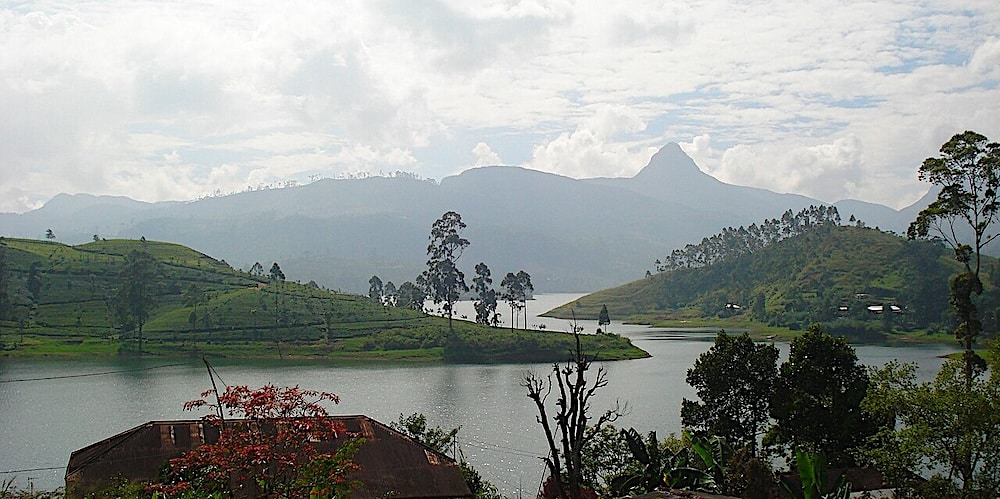
Sri Pada – ©Astronomyinertia CC BY-SA 3.0 via Wikimedia Commons
Sri Lanka has 103 rivers. The longest of these is the Mahaweli River, extending 335 kilometres. These waterways give rise to 51 natural waterfalls of 10 metres or more. The highest is Bambarakanda Falls, with a height of 863 feet. The drainage pattern of the country is almost entirely governed by the central highlands, with all the perennial water courses originating in the mountains and winding their way down to the plains below. The coastline is 1,585 km (985 miles) long and Sri Lanka claims an exclusive economic zone extending 200 nautical miles. The coastline and adjacent waters support highly productive marine ecosystems such as fringing coral reefs and shallow beds of coastal and estuarine seagrasses. There are 45 estuaries and 40 lagoons and the mangrove ecosystem spans over 7,000 hectares and plays a vital role in buffering the force of the waves. The island is rich in minerals.
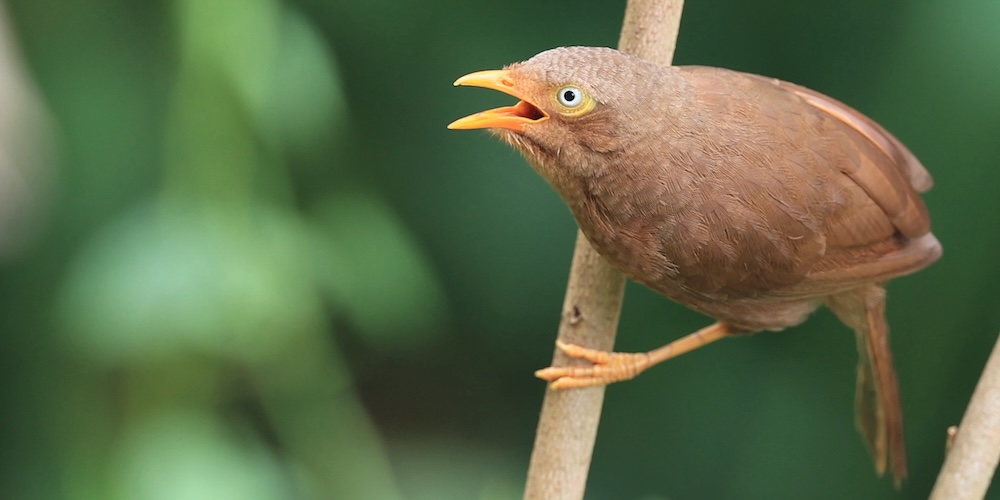
Orange-billed Babbler Turdoides rufescens – ©Bird-Photo-Tours ASIA
The Department of Wildlife Conservation administrates 61 wildlife sanctuaries, 22 national parks, four nature reserves, three strict nature reserves, and one jungle corridor while the Department of Forest Conservation oversees 65 conservation forests and one national heritage wilderness area. 26.5% of the country’s land area is legally protected, a higher percentage of protected areas compared to the rest of Asia.
Birding Sri Lanka
Today Sri Lanka is considered one of the most bio-diverse areas in the world, having the highest biodiversity per unit area among Asian countries for flowering plants and all vertebrate groups except birds. Recent scientific evidence indicates that many of the plants species in the southwest of the country have a Deccan-Gondwana ancestry.
Climate – Sri Lanka’s equatorial position gives its lowlands a tropical climate, with year-round temperatures of c. 28ºC and a relatively constant day length. It is always the right season somewhere on the island. Rainfall is largely governed by monsoonal winds, which occur during two seasons of the year. From mid-May to September, the monsoon blows from the southwest direction and brings in a greater amount of moisture than during December to February when the wind blows from the northeast. The distinct inter-monsoonal periods receive convectional rains at times cyclones. During the southwest monsoon, the position and dramatic relief of the southwestern side of the central highlands forces the moisture-laden air upwards. The rapidly cooled air condenses, causing precipitation mostly on the windward slopes of the island’s southwest. During this time the northeastern and southeastern parts of the island hardly get any rain.
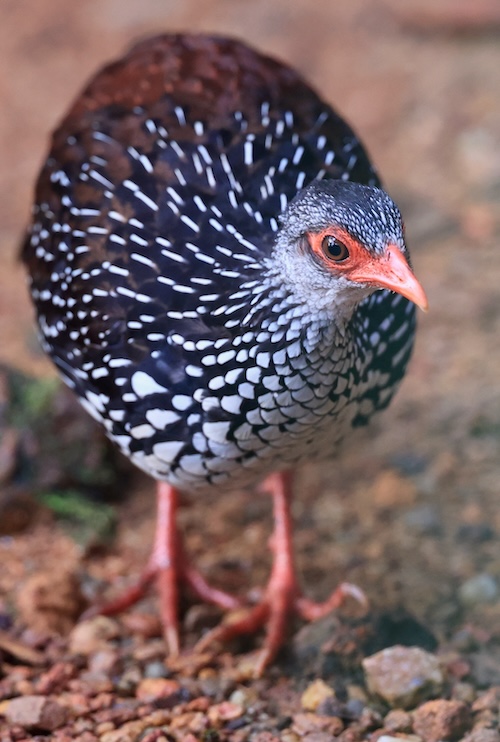
Sri Lanka Spurfowl Galloperdix bicalcarata – ©Bird-Photo-Tours ASIA
On the other hand, the northeast monsoon winds rise over the central highlands more gradually, and the rain shadow effect is not nearly so distinct, allowing precipitation to fall on the entire island. This has resulted in the division of the country in to two major climatic zones; the wet zone, which receives rain from both monsoons, and the dry zone, which receives rain from only one. The gradual change from the wet zone to dry zone allows an intermediate zone to exist. In addition, two small areas at the extreme northwest and southeast of the country have a very dry climate and known as arid zones.
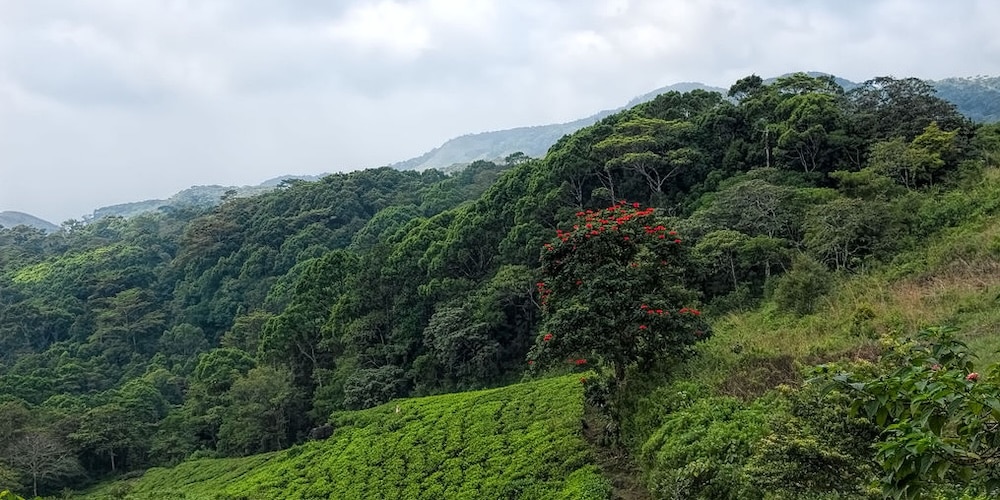
Tea Plantation by Sinharaja Forest edge – ©Dan Lundberg CC BY-SA 2.0 via Wikimedia Commons
Vegetation types – Vegetation reflects the combined effect of topography, climate and soils. In Sri Lanka the natural vegetation is predominately a diversity of forest types. Only a small fraction of land is under non-tree-dominated vegetation. This is mainly grassland, and coastal and fresh water wetlands. The most extensive type of forest in the island is the dry mixed evergreen forest found in the dry zone (also called semi-evergreen forests). In the intermediate zone, the vegetation gradually changes to moist semi-evergreen forests. Although these forests have a fair proportion of deciduous species, they are essentially evergreen. In the wet zone vegetation has been largely categorised by elevation with wet-evergreen forests or rain forests in the lowlands and hills, lower montane forests on the lower slopes of mountains between 1,000 metres and 1,500 metres, and montane forests above 1500 metres. Also, in the coastal areas mangroves and salt marshes colonise inundated bays while areas inundated by fresh water have swamp and floodplain forests.
Habitat – Within each climatic zone, the presence and extent of specific habitat types determine the occurrence and prevalence of particular species of birds. Within dry zone, for example, habitats such as forests, marshes, grassland, man-made lakes, coastal mudflats etc. harbour certain species of birds, which are restricted to that specific habitat or are most often associated with it. While some species of birds occur in both zones at all elevations (e.g. Junglefowl) the distribution of many others is more limited. Many species and subspecies of birds are endemic to Sri Lanka and a significant number of these are more or less restricted to and characteristic of the rain forests of the wet zone. Some of this wet zone endemics are further restricted to the higher hills.
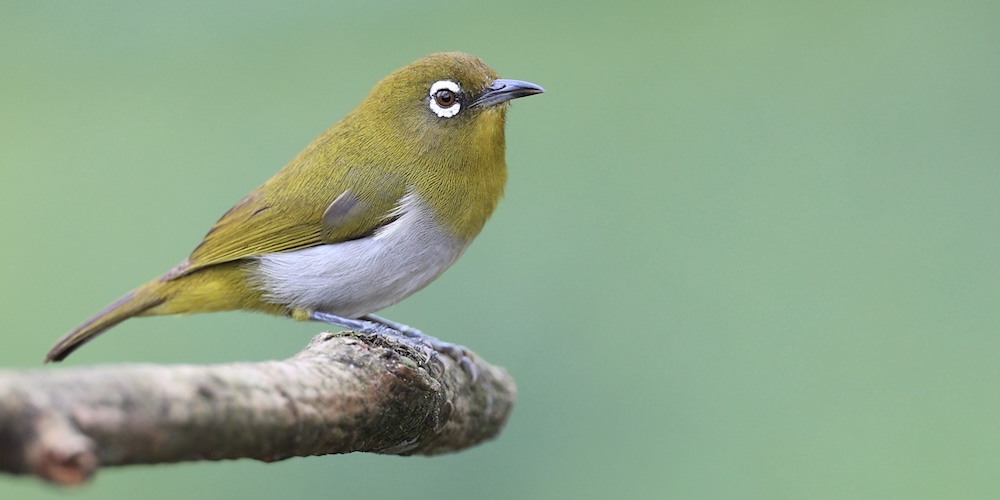
Sri Lanka White-eye Zosterops ceylonensis – ©Bird-Photo-Tours ASIA
Avifauna of Sri Lanka – Sri Lanka has a total list of well over 500 species of birds. Of these, around half are resident and these include the thirty or more endemic species and many endemic subspecies. Most of the resident species are shared with the Asian mainland. The other species have been recorded as migrants. The majority of these migrate to Sri Lanka during the northern winter and are present from about late August to early May. In contrast, pelagic species of seabirds like Shearwaters, Petrels, Storm-Petrels etc., migrate to Sri Lankan waters from southern oceanic islands during the southern hemisphere’s winter. Of the migrants, about 100 species are regular visitors. The rest are occasional or vagrant.
When to go – Any period between October and early May is best for visiting birders. This period is best because all the winter visitors to the country are present and there is a very good chance of seeing a lot of wintering waders and some spectacular migrants such as Indian Pitta, Pied Thrush, Kashmir Flycatcher, Orange-headed Thrush etc. If the visitor is not so much interested in the migrants, May, June and July are also good time to arrive in the island.

Uda Walawe National Park – ©Ji-Elle CC BY-SA 3.0 via Wikimedia Commons
Birding sites – There are many good birding sites, but Sinharaja World Heritage Wilderness area, Bundala Ramsar site, Yala and Uda Walawe National Parks and Horton Plains are imperative for any birder. These will give all the endemics plus some other spectacular species. A two week tour of the island should give about 225 species, if the visitor is with the right person who knows his birdcalls and the best places well.
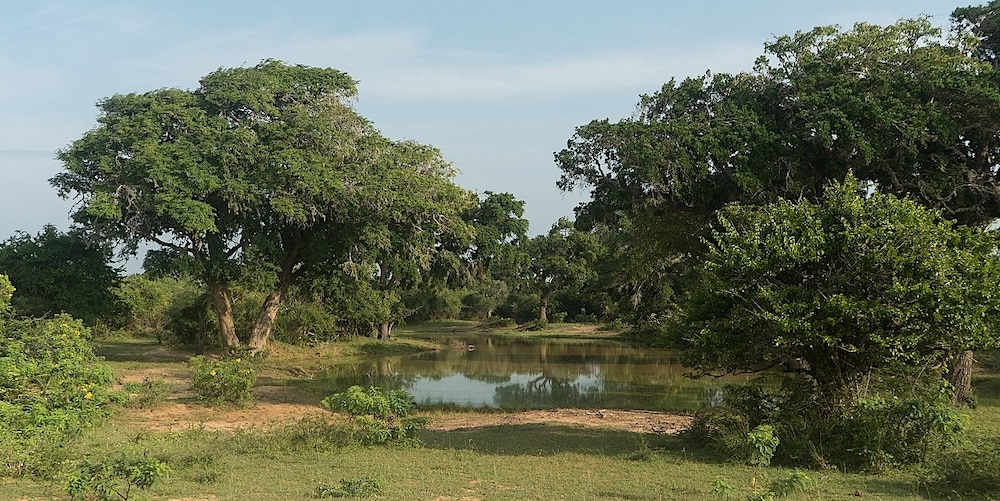
Yala National Park – ©Alexey Komarov CC BY-SA 4.0 via Wikimedia Commons
Yala National Park in the southeast protects herds of elephant, deer, and peacocks. The Wilpattu National Park in the northwest, the largest national park, preserves the habitats of many water birds such as storks, pelicans, ibis, and spoonbills. The island has four biosphere reserves: Bundala, Hurulu Forest Reserve, the Kanneliya – Dediyagala – Nakiyadeniya, and Sinharaja. Sinharaja is home to 26 endemic birds and 20 rainforest species, including the elusive Red-faced Malkoha, Green-billed Coucal and Sri Lanka Blue Magpie. The untapped genetic potential of Sinharaja flora is enormous. Of the 211 woody trees and lianas within the reserve, 139 (66%) are endemic. The total vegetation density, including trees, shrubs, herbs, and seedlings, has been estimated at 240,000 individuals per hectare. The Minneriya National Park borders the Minneriya Tank is an important source of water for elephants inhabiting the surrounding forests. Dubbed ‘The Gathering’, the congregation of elephants can be seen on the tank-bed in the late dry season (August to October) as the surrounding water sources steadily disappear. The park also encompasses a range of micro-habitats which include classic dry zone tropical monsoonal evergreen forest, thick stands of giant bamboo, hilly pastures (patanas), and grasslands (talawas).
This page is sponsored by Bird-Photo-Tours ASIA

-
Bundala National Park
Trip AdvisorSatellite ViewThis NP is a Ramsar Site and is situated in the dry zone and borders the Indian Ocean. This comprises of dry semi-evergreen forest, scrub jungle and shallow water holes. The beaches in this are important sites for nesting Turtles. Birds likely to be seen: Little Grebe, Little Cormorant, Indian Shag, Great Cormorant, Indian Darter, Spot-billed Pelican, Night Heron, Little Green Heron, Indian Pond Heron, Cattle Egret, Little Egret, Median Egret, Large Egret, Grey Heron, Purple Heron, Painted Stork, Openbill, White-necked Stork, White Ibis, Spoonbill, Greater Flamingo, Brahminy Kite, White-bellied Sea Eagle, Crested Serpent Eagle, Crested Hawk-Eagle, Little Pratincole, Little Ringed Plover, Ringed Plover, Kentish Plover, Lesser Sand Plover, Large Sand Plover, Golden Plover, Grey Plover, Yellow-wattled Lapwing, Red-wattled Lapwing, Little Stint, Curlew Sandpiper, Ruff, Pintail Snipe, Black-tailed Godwit, Common Redshank, Marsh Sandpiper, Common Greenshank, Green Sandpiper, Wood Sandpiper, Common Sandpiper, Turnstone, Brown-headed Gull, Gull-billed Tern, Caspian Tern , Large-Crested Tern, Lesser-Crested Tern, Little Tern, Saunders's Tern, Whiskered Tern, White-winged Black Tern -
Horton Plains National Park
InformationSatellite ViewA highland plateau comprising of montane forest and grassland. Famous among the birders for the highland endemics like the Dull-blue Flycatcher, SL Wood Pigeon, Bush Warbler, Yellow-eared Bulbul and the most elusive crepuscular Whistling Thrush also called Arrenga.. Other birds of interest are the Pied Bush Chat, Grey Tit, Grey-headed Canary Flycatcher, Spot-winged Thrush. -
Sinharaja Forest Reserve
InformationSatellite ViewAccording to International Union for Conservation of Nature (IUCN), Sinharaja is the country's last viable area of primary tropical rainforest. More than 60% of the trees are endemic and many of them are considered rare. -
Uda Walawe National Park
InformationSatellite ViewThis is another dry zone area which is the catchment of a very large man made reservoir. A mixture of abandoned Teak plantation, grassland, scrub jungle and some riverine frests. This is also a very famous site for Elephants. Birds likely to be seen: Apart from seeing most of the waterbirds in the Bundala NP it is very likely that the following also be seen. Spot-billed Pelican, Lesser Adjutant, Black-winged Kite, Brahminy Kite, White-bellied Sea Eagle, Grey-headed Fishing Eagle, Crested Serpent Eagle, Crested Hawk-Eagle,Orange-breasted Green Pigeon, Pompadour Green Pigeon, Green Imperial Pigeon, Orange-breasted Green Pigeon, Pompadour Green Pigeon, Green Imperial Pigeon, Blue-faced Malkoha, Red-faced Malkoha, Sirkeer, Little Green Bee-eater, Blue-tailed Bee-eater, Indian Roller, Malabar Pied Hornbill, Crimson-breasted Barbet, Brown-capped Pygmy Woodpecker, Yellow-fronted Pied Woodpecker
-
Number of bird species: 538
(As at April 2026)National Bird: Sri Lanka Jungle Fowl Gallus lafayetti
Number of endemics: 35
Sri Lanka Spurfowl Galloperdix bicalcarata
Sri Lanka Junglefowl Gallus lafayettii
Sri Lanka Woodpigeon Columba torringtonii
Sri Lanka Green Pigeon Treron pompadora
Sri Lanka Hanging Parrot Loriculus beryllinus
Layard’s (Emerald-collared) Parakeet Psittacula calthropae
Red-faced Malkoha Phaenicophaeus pyrrhocephalus
Green-billed Coucal Centropus chlororhynchos
Serendib Scops-Owl Otus thilohoffmanni
Chestnut-backed Owlet Glaucidium castanonotum
Sri Lanka Grey Hornbill Ocyceros gingalensis
Yellow-fronted Barbet Megalaima flavifrons
Sri Lanka Barbet Megalaima rubricapillus
Greater Sri Lanka Flameback Chrysocolaptes stricklandi
Lesser Sri Lanka Flameback Chrysocolaptes psarodes
Sri Lanka Swallow Hirundo hyperythra
Sri Lanka Woodshrike Tephrodornis affinis
Black-capped Bulbul Pycnonotus melanicterus
Yellow-eared Bulbul Pycnonotus penicillatus
Sri Lanka Whistling-Thrush Myophonus blighi
Spot-winged Thrush Geokichla spiloptera
Sri Lanka Thrush Zoothera imbricate
Sri Lanka Warbler Elaphrornis palliseri
Dull-blue Flycatcher Eumyias sordidus
Brown-capped Babbler Pellorneum fuscocapillus
Sri Lanka Scimitar-Babbler Pomatorhinus (schisticeps) melanurus
Orange-billed Babbler Turdoides rufescens
Ashy-headed Laughingthrush Garrulax cinereifrons
Legge’s (White-throated) Flowerpecker Dicaeum vincens
Sri Lanka White-eye Zosterops Sri Lankaensis
Sri Lanka Drongo Dicrurus lophorinus
Sri Lanka Blue Magpie Urocissa ornata
White-faced Starling Sturnia albofrontata
Sri Lanka Hill-Myna Gracula ptilogenys
Sri Lankan Shama Copsychus leggei
-
Avibase
PDF ChecklistThis checklist includes all bird species found in Sri Lanka , based on the best information available at this time. It is based on a wide variety of sources that I collated over many years. I am pleased to offer these checklists as a service to birdwatchers. If you find any error, please do not hesitate to report them. -
Sri Lanka Bird Club
PDF ChecklistThe Sri Lanka List of bird species (the Country List of bird species for Sri Lanka) is compiled by the Ceylon Bird Club (CBC). Its basis is explained in The Avifauna of Sri Lanka: An overview of the current status (2009) D. Warakagoda and U. Sirivardana, Taprobanica. Vol. 1 (1), pp. 28-35, and the section ‘The CBCRRC List Categories’ in the document ‘The Ceylon Bird Club Rarities and Records Committee’. -
The Field Ornithology Group of Sri Lanka
PPDF ChecklistPurchase Sri Lanka Bird Checklist -
Wikipedia
Annotated ListSri Lanka is a tropical island situated close to the southern tip of India. The bird life of Sri Lanka is very rich for its size and more than 500 species have been recorded. In addition to the many resident birds, a considerable number of migratory species winter in the country to escape their northern breeding grounds. -
eBird
PDF ChecklistThis checklist is generated with data from eBird (ebird.org), a global database of bird sightings from birders like you. If you enjoy this checklist, please consider contributing your sightings to eBird. It is 100% free to take part, and your observations will help support birders, researchers, and conservationists worldwide.

-
A Field Guide to the Birds of Sri Lanka
| By John Harrison a& Tim Worfolk | Oxford University Press | 2011 | Edition 2 | Paperback | 208 pages, 49 plates with colour illustrations | ISBN: 9780199585670 Buy this book from NHBS.com -
A Naturalist's Guide to the Birds of Sri Lanka
| By Gehan de Silva Wijeyeratne | John Beaufoy Publishing | 2020 | 3rd Edition | Paperback | 176 Pages, 300 colour photos, Maps | ISBN: 9781913679002 Buy this book from NHBS.com -
A Photographic Field Guide to the Birds of India, Pakistan, Nepal, Bhutan, Sri Lanka, and Bangladesh
| By Bikram Grewal, Sumit Sen, Sarwandeep Singh, Nikhil Devasar & Garima Bhatia | Princeton University Press | 2017 | Paperback | 792 pages, 4000+ colour photos, 1300+ colour distribution maps | ISBN: 9780691176499 Buy this book from NHBS.com -
A Photographic Guide to the Birds of Sri Lanka
| By Gehan de Silva Wijeyeratne | John Beaufoy Books | 2019 | Edition 2 | Paperback | 296 pages, 650 colour photos, colour distribution maps, 2 colour maps | ISBN: 9781912081011 Buy this book from NHBS.com -
An Illustrated Guide to the Birds of Sri Lanka
| By Sarath Kotagama & Gamini Ratnavira | Field Ornithology Group Sri Lanka | 2010 | Hardback | 356 pages, 52 plates with colour illustrations; colour & b/w illustrations, colour distribution maps | ISBN: 9789558576267 Buy this book from NHBS.com -
Birds of Sri Lanka
| By Deepal Warakagoda, Carol Inskipp, Tim Inskipp & Richard Grimmett |Helm | 2022 | Paperback | 224 pages | 104 colour plates | colour photos | 350 colour distribution maps | ISBN: 9781408110416 Buy this book from NHBS.com -
Birds of Sri Lanka
| By Gehan de Silva Wijeyeratne | National Trust Sri Lanka | 2009 | Hardback | 208 pages, colour photos, b/w illustrations | ISBN: 9789550093007 Buy this book from NHBS.com -
Birds of Sri Lanka - An Illustrated Guide
| By Sarath Kotagama & Gamini Ratnavira | Field Ornithology Group Sri Lanka | 2017 | Paperback | 540 pages, plates with colour illustrations; b/w illustrations, colour maps | ISBN: 9789558576434 Buy this book from NHBS.com -
Birds of the Indian Subcontinent
| By Richard Grimmett, Carol Inskipp & Tim Inskipp | Christopher Helm | 2012 | Softcover | Edition: 2 | 528 Pages | 226 Colour Plates | Colour Distribution Maps | Black & White Illustrations | Out of Print | ISBN: 9781408127636 Buy this book from NHBS.com -
Common Garden Birds of Sri Lanka
| By Pathmanath Samaraweera | Pathmanath Samaraweera | 2017 | Paperback | 60 pages, colour & b/w illustrations | ISBN: 9789553832405 Buy this book from NHBS.com -
Endemic Birds of Sri Lanka
| (Complete and Unabridged Accounts From a History of the Birds of Ceylon) | By W Vincent Legge | Tisara Prakasakayo | 2011 | Hardback | 183 pages, colour plates, colour illustrations, colour maps | Out of Print | ISBN: 9789555641272 Buy this book from NHBS.com
Birds of Sri Lanka
Android"Birds of Sri Lanka" is your comprehensive guide to the island's rich avian diversity. Discover a vast array of endemic and migratory species, organized by district for easy exploration. Identify birds by their unique sounds, with a vast library of audio recordings. Explore the habitats and behaviors of rare and elusive species, and learn about conservation efforts to protect Sri Lanka's feathered treasures. Whether you're a seasoned birder or just starting your journey, "Birds of Sri Lanka" is your essential companion for discovering the island's avian wonders.
eGuide to Birds of the Indian Subcontinent
Apple iOS |The eGuide to Birds of the Indian Subcontinent is an interactive companion to Birds of the Indian Subcontinent – the definitive guide for birdwatchers visiting the region. It covers India, Pakistan, Nepal, Bhutan, Bangladesh, Sri Lanka and the Maldives. This application has specific features that will enhance your birding experience.Organisations-
Ceylon Bird Club
WebsiteThe objective of the club widened over the years to promoting the protection of bird species and subspecies, and the conservation of their habitats, in Sri Lanka. Towards this, the club strives to find out which bird taxa are threatened, monitors their survival and habitats, and conducts surveys. The Bundala National Park, the Annaiwilundawa Sanctuary and the Vankalai Sanctuary were designated as such and/or Ramsar Sites mainly owing to the club’s proposal, information and persuasion. Other sites are presently receiving similar attention by the CBC. -
Ceylon Bird Club
Facebook PageThe Ceylon Bird Club is pleased to initiate this Facebook Group for its Members, Affiliates and anybody who has interest in our country’s birds -
Field Ornithology Group of Sri Lanka
WebsiteThe Field Ornithology Group of Sri Lanka, established in 1976 is a non-profit, non-governmental organization attached to the Department of Zoology, University of Colombo. -
Sri Lanka Bird Watching Society
Facebook PagePurpose of this page is to share knowledge of Birds in Sri Lanka. -
Sri Lanka Wildlife Conservation Society
WebsiteTwenty-five centuries ago Mahinda, a Buddhist monk and son of Emperor Asoka of India told the King of Ceylon: O Great King, the birds of the air and the beasts have an equal right to live and move about in any part of the island as thou. The land belongs to the people and all other beings; thou art only the guardian of it. Acting on these words, King Devanampiyatissa established the world's first wildlife sanctuary. -
Wildlife Heritage Trust
WebsiteSri Lanka's leading biodiversity exploration and research institution and natural history publisher
Reserves-
BR Kanneliya-Dediyagala-Nakiyadeniya
InformationSatellite ViewOut of 26 endemic birds of Sri Lanka, 20 of them can be seen in KDN forest complex. Sri Lanka spurfowl, Sri Lanka junglefowl, Sri Lanka grey hornbill, red-faced malkoha, orange-billed babbler, Sri Lanka blue magpie are some of them. -
BS Kalametiya
WebsiteSatellite ViewKalametiya is a coastal wetland area that has an especially rich bio-diversity, and is situated on the picturesque southeastern coast of Sri Lanka, in the district of Hambantota. It, along with Rekawa and Ussangoda, forms an area known as “Ruk,” a coastal belt of land of outstanding beauty littered with numerous bays, coves, lagoons, rocky outcrops and sandy beaches, stretching from approximately Tangalle to Hambantota. -
BS Kokkilai Lagoon
InformationSatellite ViewIt currently has an area of 1,995 ha (4,930 acres). Numerous varieties of water and wader birds are found in the sanctuary including cormorants, ducks, egrets, flamingoes, herons, ibis, pelicans and storks. The sanctuary is a haven for birds migrating along Sri Lanka's east coast.[9] Elephants are also found in the sanctuary. -
NP Angammedilla
InformationSatellite ViewSri Lankan elephant, Sri Lankan sambar deer, Indian muntjac, Sri Lankan axis deer, water buffalo, wild boar, and peafowl are common within the park. However Sri Lanka leopard, sloth bear, grizzled giant squirrel and Sri Lanka junglefowl are sometimes seen. -
NP Bundala (IBA)
InformationSatellite ViewBundala National Park is an internationally important wintering ground for migratory water birds in Sri Lanka. Bundala harbors 197 species of birds, the highlight being the greater flamingo, which migrate in large flocks. 197 species of birds. The wetland habitats in Bundala harbours about 100 species of water birds, half of them being migrant birds. -
NP Chundikkulam (BS)
InformationSatellite ViewChundikkulam Lagoon and its surrounding area was designated as a bird sanctuary. Numerous varieties of water and wader birds are found in the park. -
NP Flood Plains
InformationSatellite ViewFlood Plains National Park is one of the four national parks set aside under the Mahaweli River development project.[2] The park was created on 7 August 1984.[3] The national park is situated along the Mahaweli flood plain and is considered a rich feeding ground for elephants. The flood plains are especially important for the diversity and richness of their avifauna, particularly migrant birds. The rare species lesser adjutant Leptoptilos javanicus and variety of other species inhabit the park. -
NP Gal Oya
InformationSatellite ViewMore than 150 species of birds have been recorded in Gal Oya. The lesser adjutant, spot-billed pelican and red-faced malkoha are some of the park's resident birds. -
NP Galway's Land (IBA)
InformationSatellite ViewField Ornithology Group of Sri Lanka considers that the Victoria park of Nuwara Eliya and the Galway's Land as two of the most significant birding sites in Sri Lanka. Galway's Land harbours about 20 rare migrant bird species and 30 native species. -
NP Horton Plains (IBA)
InformationSatellite ViewHorton Plains National Park is a protected area in the central highlands of Sri Lanka and is covered by montane grassland and cloud forest. This plateau at an altitude of 2,100–2,300 metres (6,900–7,500 ft) is rich in biodiversity and many species found here are endemic to the region. Horton Plains contains 21 bird species which occur only on Sri Lanka. Four, Sri Lanka blue magpie, dull-blue flycatcher, Sri Lanka white-eye, and Sri Lanka wood pigeon, occur only in Horton plains, while other endemic species include Sri Lanka spurfowl, Sri Lanka junglefowl, yellow-fronted barbet, orange-billed babbler, Sri Lanka bush warbler, and Sri Lanka whistling-thrush. -
NP Kaudulla
InformationSatellite ViewLarge water birds such as spot-billed pelican and lesser adjutant visit the Kaudulla tank. -
NP Kumana (BS)
InformationSatellite ViewKumana National Park in Sri Lanka is renowned for its avifauna, particularly its large flocks of migratory waterfowl and wading birds. Kumana is one of the most important bird nesting and breeding grounds in Sri Lanka. 255 species of birds have been recorded in the national park. From April to July tens of thousands of birds migrate to the Kumana swamp area. Rare species such as black-necked stork, lesser adjutant, Eurasian spoonbill, and great thick-knee are breeding inhabitants. -
NP Lahugala Kitulana
InformationSatellite ViewMany wetland birds found in Lahugala Kitulana include great white pelican, purple heron, painted stork, lesser adjutant, Anas spp., white-bellied sea eagle, grey-headed fish eagle, common kingfisher, stork-billed kingfisher, white-throated kingfisher. Spot-billed pelican, Asian openbill and woolly-necked stork are also recorded visiting the wetland. -
NP Madhu Road
InformationSatellite ViewNumerous varieties of birds are found in Madhu Road including Alexandrine parakeet, ashy-crowned sparrow-lark, ashy prinia, ashy woodswallow, Asian koel, Asian palm swift..... -
NP Maduru Oya
InformationSatellite ViewThe importance of the park's fauna is its richness, which includes a number of endemic species. The park's diverse aquatic avifauna includes painted stork Mycteria leucocephala, white-bellied sea eagle Haliaeetus leucogaster, grey pelican Pelecanus philippensis, great cormorant Phalacrocorax carbo , and little cormorant P. niger. Notable forest species are endemic Sri Lanka junglefowl Gallus lafayetii, the rare broad-billed roller Eurystomus glaucurus (possibly the only dry zone haunt), common tailorbird Orthotomus sutorius, shama Copsychus malabaricus, black-hooded oriole Oriolus xanthornus, and woodpecker Dendrocopos nanus. Endemic red-faced malkoha (Phaenicophaeus pyrrhocephalus) also occurs. The reservoirs harbor several species of bird including Oriental darter Anhinga melanogaster, spot-billed pelican Pelecanus philippensis, Asian openbill Anastomus oscitans, black-headed ibis Threskiornis melanocephalus, and Eurasian spoonbill Platalea leucorodia -
NP Minneriya (IBA WS)
InformationSatellite ViewThe reason for declaring the area as protected is to protect the catchment of Minneriya tank and the wildlife of the surrounding area. The national park's faunal species include 24 species of mammals, 160 species of birds, 9 species of amphibians, 25 species of reptiles, 26 species of fish, and 75 species of butterflies. The Minneriya reservoir is an important habitat for large water birds such as lesser adjutant, painted stork, and spot-billed pelican. Minneriya is a dormitory for many resident as well as migrant bird species. Flocks of 2000 little cormorants have been reported. Great white pelican, ruddy turnstone, and grey heron are the other water birds here. Among the endemic birds are Sri Lanka junglefowl, Sri Lanka hanging parrot, brown-capped babbler, Sri Lanka grey hornbill, black-crested bulbul and crimson-fronted barbet. The number of threatened birds recorded from this national park is 11. -
NP Sinharaja Forest Reserve (BR)
InformationSatellite ViewSinharaja Forest Reserve is a national park and a biodiversity hotspot in Sri Lanka. It is of international significance and has been designated a Biosphere Reserve and World Heritage Site by UNESCO. The reserve is only 21 km (13 mi) from east to west, and a maximum of 7 km (4.3 mi) from north to south, but it is a treasure trove of endemic species, including trees, insects, amphibians, reptiles, birds, and mammals. Birds tend to move in mixed feeding flocks, invariably led by the fearless Sri Lanka Crested Drongo and the noisy orange-billed babbler. Of Sri Lanka's 26 endemic birds, the 20 rainforest species all occur here, including the elusive red-faced malkoha, green-billed coucal and Sri Lanka blue magpie. -
NP Somawathiya (NR)
InformationSatellite ViewIncluding Trikonamadu Nature Reserve. The importance of ecology of the park is due mainly to the wide occurrence of elephants Elephas maximus estimated at about 400 within the protected area and adjacent surroundings and the rich avifauna. Around 75 migrant species winter in the marshes. Usual migrants include garganey Anas querquedula, marsh sandpiper Tringa stagnatilis, wood sandpiper T. glareola, pintail snipe Gallinago stenura, whiskered tern Chlidonias hybridus, and black-tailed godwit Limosa limosa. Resident birds are painted stork Ibis leucocephala, openbill stork Anastomus oscitans, little egret Egretta garzetta, cattle egret Bubulens ibis, pond heron Ardeola grayii, pheasant-tailed jacana Hydrophasianus chirurgus, purple gallinule Porphyrio porphyrio, white ibis Threskiornis melanocephalus, and black-winged stilt Himantopus himantopus. Within the forest area the following birds are seen, crimson-fronted barbet Megalaima haemacephala, common peafowl Pavo cristatus, Malabar pied hornbill Anthracoceros coronatus, thick-billed flowerpecker Dicaeum agile, common iora Aegithina tiphia, junglefowl Gallus lafayetii, and golden-fronted leafbird Chloropsis aurifrons. While barred buttonquail Turnix suscitator frequents the open areas, marshy northern area is visited by woolly-necked stork Ciconia episcopus, crested hawk eagle Spizaetus cirrhatus, grey-headed fish eagle Ichthyophaga ichthyaetus, pied kingfisher Ceryle rudis, crested serpent-eagle Spilornis cheela, and painted stork Ibis leucocephala. -
NP Udawalawe
InformationSatellite ViewThe national park was created to provide a sanctuary for wild animals displaced by the construction of the Udawalawe Reservoir on the Walawe River, as well as to protect the catchment of the reservoir. The reserve covers 30,821 hectares (119.00 sq mi) of land area. Endemics such as Sri Lanka spurfowl, red-faced malkoha, Sri Lanka grey hornbill, brown-capped babbler, and Sri Lanka junglefowl are among of the breeding resident birds. White wagtail and black-capped kingfisher are rare migrants. A variety of water birds visit the reservoir, including cormorants, the spot-billed pelican, Asian Openbill, painted stork, black-headed ibis and Eurasian spoonbill. The open parkland attracts birds of prey such as white-bellied sea eagle, crested serpent-eagle, grey-headed fish eagle, booted eagle, and changeable hawk-eagle. Landbirds are in abundance, and include Indian roller, Indian peafowl, Malabar pied hornbill and pied cuckoo. -
NP Ussangoda
InformationSatellite ViewThe park borders the Kalametiya Wildlife Sanctuary in the east. -
NP Wasgamuwa
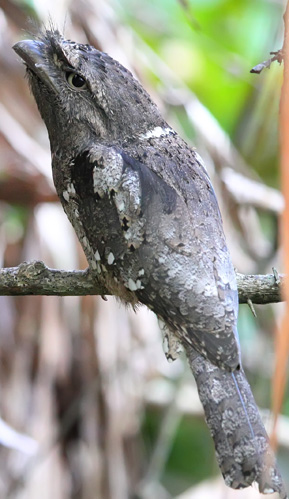
InformationSatellite ViewThe number of bird species recorded from the park is 143. This includes 8 endemic species. Endemic red-faced malkoha is a resident bird in this national park. Sri Lanka junglefowl is another endemic bird inhabits the park. Lesser adjutant, yellow-fronted barbet, and Sri Lanka spurfowl are the species that visit the reservoirs and streams of the national park. Peafowl, painted stork, black-headed ibis and Eurasian spoonbill are the park's other aquatic birds. Rare Sri Lanka frogmouth can be found here. Another rare species, chestnut-winged cuckoo, is seen near the Mahaweli river. -
NP Wilpattu
InformationSatellite ViewThe unique feature of this park is the existence of "Willus" (Natural lakes) - Natural, sand-rimmed water basins or depressions that fill with rainwater. Located in the Northwest coast lowland dry zone of Sri Lanka. The park is located 30 km west Anuradhapura and located 26 km north of Puttalam (approximately 180 km north of Colombo). The park is 1,317 square kilometers (131, 693 hectares) and ranges from 0 to 152 meters above sea level. Nearly sixty lakes (Willu) and tanks are found spread throughout Wilpattu. Wilpattu is the largest and one of the oldest National Parks in Sri Lanka. The painted stork, the open bill, little cormorant, Sri Lankan junglefowl (Gallus lafayetii) along with many species of owls, terns, gulls, eagles, kites buzzards are to be found at Wilpattu National Park. -
NP Yala (IBA WS)
InformationSatellite ViewYala National Park is the most visited and second largest national park in Sri Lanka, bordering the Indian Ocean. The park consists of five blocks, two of which are now open to the public, and also adjoining parks. The blocks have individual names such as, Ruhuna National Park (Block 1), and Kumana National Park or 'Yala East' for the adjoining area. Yala is one of the 70 Important Bird Areas (IBAs) in Sri Lanka. Of 215 bird species of the park, seven are endemic to Sri Lanka. They are Sri Lanka grey hornbill, Sri Lanka junglefowl, Sri Lanka wood pigeon, crimson-fronted barbet, black-capped bulbul, blue-tailed bee-eater and brown-capped babbler. -
NR Hurulu Forest Reserve
InformationSatellite ViewThe forest reserve is an important habitat of the Sri Lankan elephant. The Indian star tortoise, Sri Lanka junglefowl, Sri Lankan elephant, Sri Lanka leopard and rusty-spotted cat are among the endangered species of the forest reserve. -
WS Giant's Tank Sanctuary
InformationSatellite ViewGiant's Tank is surrounded by rice paddies and dry scrub forest. Numerous varieties of water and wader birds are found in the sanctuary including the Eurasian wigeon, garganey, knob-billed duck and pygmy goose. -
WS Udawattakele
InformationSatellite ViewUdawattakele is a famous birdwatching site. About 80 bird species have been recorded in the sanctuary. The endemic bird species are Layard's parakeet, yellow-fronted barbet, brown-capped babbler and [Sri Lanka hanging parrot]] . The rare three-toed kingfisher Ceyx erythacus has been observed occasionally at the pond. Common hill myna, golden-fronted leafbird, blue-winged leafbird, spotted dove, emerald dove, Tickell's blue flycatcher, white-rumped shama, crimson-fronted barbet, brown-headed barbet crested serpent eagle, and brown fish owl are regularly seen and heard in the forest. -
Wetlands
WebpageSatellite ViewSri Lanka currently has 6 sites designated as Wetlands of International Importance (Ramsar Sites), with a surface area of 198,172 hectares.
Sightings, News & Forums-
eBird
SightingseBirding This Month J
Guides & Tour Operators-
Adventure Birding
Local Tour OperatorAdventure Birding is a one of a kind birding company in Sri Lanka. -
Asian Adventures
Tour OperatorThe Great Birding and Wildlife Experience in Sri Lanka - 150 Species -
Best of Lanka
Local Tour Operatorird watching tours in Sri Lanka offer an unparalleled experience for bird enthusiasts. -
Bird & Wildlife Team
Local Tour OperatorOur team members have run very successful tours for over 25 years and thereby have first-hand experience on where, when and how to find birds, mammals and other wildlife in the country, and also in India and the Andaman Islands. This long-term experience has provided the team with unmatched know-how on carefully tailoring any type of nature observation tour to meet your needs. We provide very personalised services to achieve the goal of every tour and to make it a highly successful one for you. This is proven in testimonials and tour reports of our tours. -
Bird Photo Tours ASIA
Tour OperatorFor the bird photographer Sri Lanka’s 30+ endemic bird species are of particular interest and Bird- Photo-Tours Asia will be concentrating on obtaining high-quality photographic portraits of many of these endemic species including the possibility for close photographic encounters with the secretive Sri Lanka Spurfowl, the spectacular Sri Lanka Blue Magpie, the tiny Sri Lanka Whiteeye and the splendid Sri Lanka Grey Hornbill. -
BirdFinders
Tour OperatorWith 32 endemic bird species currently recognised, Sri Lanka is a wonderful, warm winter destination and a ‘must visit’ birding island. -
BirdQuest
Tour OperatorSRI LANKA – Serendib Scops Owl and the many other endemics of the fabled isle of Ceylon -
Birding Ecotours
Tour OperatorSri Lanka is a picturesque island and has 33 endemic bird species. It is the western-most representative of Indo-Malayan Flora and its abundant birdlife shows many such affinities. We cover a variety of habitat types, including lowland, monsoon and cloud forests, grasslands, coastal mudflats, imposing riverine woodland and forest. -
Birding Sri Lanka
Local Tour OperatorChaminda Jayaweera has had extensive experience of more than twenty years as a tour guide. His specialty is birdwatching tours. He is also well versed in mammals, dragonflies and butterflies and an enthusiastic wildlife photographer too. -
Birds Wildlife & Nature
Tour OperatorKnown as the tear drop of India, Sri Lanka is home to over 300 species of bird, of which 33 are endemic. -
Birdwing Nature Holidays
Local nTour OperatorBest value Birding and Natural History Holidays in Sri Lanka with Amila Salgado -
Bluetail Birding
Local Tour OperatorBluetail Birding is a dedicated bird tour operator offering both scheduled departure (small group) and custom travel worldwide. We specialise in bird tours across South Asia, to destinations throughout India, Bhutan, Nepal and Sri Lanka where we have been operating since 2009 as India Nature Tourism, which now acts as our ground agent in this region. -
Bluetail Birding
Tour OperatorBluetail Birding is a specialist travel company offering an enticing selection of small group and private/custom bird tours and combined bird/wildlife holidays. -
Ceylon Expeditions
Tour OperatorBird Watching Holiday Sri Lanka -
EcoTeam
Local Tour OperatorBird Watching In Sri Lanka: Let Us Help You Find the Birds You Desire... -
FieldGuides
Tour OperatorA two-week introduction to Asia's birds, including more than 30 species endemic to the island, with one of the country's foremost birders as a co-leader. -
High Elms Travel
Local Tour OperatorBirdwatching or Ornithological Tours - 425 species of birds found in Sri Lanka of which 26 are endemics. You can record at least 18 endemic on our 15 day programme. Also visit The Sinharaja Forest Reserve, a World Heritage Site, Bundala National Park, a Ramsar Wetland and many more important bird sites -
Jetwing Eco Holidays
Local Tour OperatorJetwing Eco Holidays tours combine a heady mix of fun filled and exciting experiences of nature, people and culture. The itineraries are selected to offer the most attractive and fascinating attractions of the country. The tours cover a broad spectrum of special interest requirements ranging from Bird watching… -
Kalypso Adventures
Tour OperatorSri Lanka Endemic Birding Tour -
NT Bird Specialists
Tour OperatorOur specialised Sri Lankan Birdwatching and Wildlife Tours showcase nature at it's best. Sri Lanka has a strong claim to be amongst the best wildlife destinations in the world and offers the best big game safaris outside of Africa. -
NatureTrek
Tour OperatorA 10-day tour in search of endemic birds, visiting Sinharaja Forest and the Hill Country, with an optional extension in search of the birds and mammals of the southern coast. -
Oriole Birding
Tour OperatorWe are delighted to be offering an exciting itinerary to this fantastic country, surely one of the most pleasurable birding and wildlife destinations in the world... -
Ornithvacations
Local Tour OperatorWe invite you to the Pearl of the Indian Ocean for a lifetime special travel experience. We are professionals specialized in Guided Birding & Wildlife Tours. -
Real Lanka Holidays
Local Tour OperatorSri Lanka has one of the highest rates of biological endemism in the World. Sri Lanka is a tropical island situated close to the southern tip of India. The bird life of Sri Lanka is very rich for its size and 523 species have been recorded. In addition to the many resident birds, a considerable number of migratory species winter in the country to escape their northern breeding grounds. we designed this 07 days Birding journey with covering country’s hotspots for birding. you can customized the tour with your suggestions as we are fully bespoke. -
Red Dot
Local Tour OperatorOur Sri Lanka birdwatching tour has been planned by experts and comes with a specialist guide -
Rockjumper Birding Tours
Tour OperatorThis small, friendly island nation provides one of the most enjoyable and rewarding birding tours imaginable. With plenty of endemics, most of which are extremely easy to locate, comfortable lodges and abundant wildlife, it makes perfect sense that Sri Lanka has become such a popular destination. Our tour also targets the countries’ big game, including Leopard and Sloth Bear. -
Starron Bird & Wildlife Tours
Local Tour OperatorUpali Ekanayake is the senior most Ornithological Tour Leader in Sri Lanka and is the Director Operations of Starron Bird & Wildlife Tours Ltd. -
Tropical Birding Tours
Tour OperatorSri Lanka is a great destination for the all-round naturalist, with a list of more than 20 mammal species regularly recorded on this tour (usually including Leopard and Asian Elephant), as well as a profusion of colorful butterflies, and a discrete set of reptiles unique to the island, not of course to mention 250 bird species. -
WINGS
Tour OperatorEarly travelers romantically named Sri Lanka “the teardrop of India.” Just 270 miles long and 140 miles wide, this small island does indeed look like a tear that has fallen from the face of the subcontinent to become petrified in the Indian Ocean. -
Walk with Jith
LocalTour OperatorWalk With Jith specializes in Bird watching and nature tours in Sri Lanka.You will have the rare opportunity to share birding experiences with local village people, visit their homes,and immerse yourself in their lives and culture… -
Walkers Tours
Local Tour OperatorWildlife Safari Tours - You will come back to them, searching, again & again - and in time will grow within you an intimacy, a love for the jungle which offers sanctuary to fast dwindling and very precious wildlife… -
Zoothera Birding
Tour OperatorThis special endemic-focussed tour visits the tropical paradise island of Sri Lanka in search of some of the most exciting birds in the Indian Subcontinent.
Trip Reports-
2001 [02 February] -
PDF ReportA trip with Andrew & Isabel Senior – My wife Isabel, and myself, decided in May 2000 to arrange a tour of Sri Lanka. We’ve some experience of bird tours elsewhere, and were attracted to Sri Lanka for a number of reasons. Not least among these, was the list of Sri Lankan endemic birds. -
2007 [10 October] - Bo & Maggie Crombet-Beolens
ReportThis was the first trip that Maggie and I had taken by ourselves for some years, ever since I began to organise trips for the disabled birders association. We were looking forward to being able to please ourselves, go at our own pace and not make any of the numerous small compromises we all make when we travel as a group… -
2017 [01 January] - Andy Walker
PDF ReportA total of 243 bird species was recorded during this tour, among them 33 of the 34 currently recognised (IOC 6.4) endemics with excellent views and photographs of Serendib Scops Owl, Sri Lanka Whistling Thrush, and Sri Lanka Thrush, as well as a range of exciting migrants such as Pied Thrush, Kashmir Flycatcher, and Indian Pitta. -
2017 [07 July] - Steve Anyon-Smith
PDF ReportThe 21-day tour we signed up for did not have the words “birds” or “wildlife” in the title. We had a blend of culture, history, scenery and fair enough, national parks, beaches and forests here and there. We fiddled with the time and motion stuff as we went along. -
2017 [12 December] - Rich Lindie
PDF ReportOnce there, we had lunch, and then crossed the river (by pontoon) for our first visit to the park, where we quickly got onto our first Red-backed Flamebacks, and a Serendib Scops Owl not long after, not to mention a few goodies like Sri Lanka Swallow, Layard’s Parakeet and Sri Lanka Hanging Parrot on the way! Returning to the river, we also saw our first Brown-breasted Flycatcher and a male Sri Lanka Junglefowl. After dinner, and back in the national park, a few of us tried for Sri Lanka Bay Owl but had to settle for a Dark-fronted Babbler and Brown Fish Owl instead. -
2018 [01 January] - Craig Robson - Southern India & Sri Lanka
PDF ReportThis remarkable South Asian tour certainly came up with the goods this year, with ALL of the endemic targets located. Amongst a ridiculous 26 species of nightbird (including 19 owls), was a new species for Birdquest, in the form of the fantastic Sri Lanka Bay Owl. -
2018 [02 February] - Stephan Lorenz
PDF ReportWhat do you do when the group has seen all Sri Lankan endemics well and there are still one and a half days left on the tour? Well, you go birding, of course, and that’s exactly what we did. This year’s January tour proved highly successful and we enjoyed quality views of all endemics well before the tour was over, allowing us to finish with some leisurely birding and exploration of the Sinharaja Rain Forest. Of course, we even added a few more birds to the list, finishing at a respectable 248 species. -
2018 [11 November] - Chinthaka De Silva
PDF ReportOn our way, we saw some of the widespread herons, egrets, storks and ibises, including four Ashy Woodswallows, that we would become very familiar with during the oncoming days of our tour. -
2018 [12 December] - Dave Farrow - Southern India & Sri Lanka
PDF ReportThis years’ tour to Southern India and Sri Lanka was once again a very successful and enjoyable affair. A heady brew of wonderful birdlife was seen, rich in endemics... -
2019 [01 January] - Chris Lotz
PDF ReportSri Lanka is always incredible, but we enjoy doing our annual trip in January, as Blue Whale is tough to miss during that month and wintering birds such as Indian Pitta, Pied Thrush, and Kashmir Flycatcher can be seen along with the island’s 34 endemics (that are present year-round). The 2019 trip did not disappoint, and we did well with the endemics, wintering birds, mammals (which also included Leopard), and a lot of reptiles and other taxa. -
2019 [02 February] - Ken Behrens
PDF ReportSri Lanka: Ceylon Sojourn January 20-February 2, 2019 TOUR SUMMARY The Indian Subcontinent is rich, both in human culture and history and in biological treasures. Sri Lanka is a large island at the southern tip of this region, lying a short distance from the Indian mainland. It contains a rich selection of the birds, mammals, and other wildlife of the subcontinent, which thrive in a selection of delightful protected areas; enough to thoroughly recommend it as a destination for a travelling birder. -
2019 [02 February] - Stephan Lorenz
PDF ReportThe first Rockjumper tour to Sri Lanka in 2019 proved to be very successful: full of endemic birds, many speciality species, plenty of mammals, some unusual reptiles, and endless verdant and unique landscapes. Any tour to this beautiful island will leave visitors with enjoyable memories of some exciting birding, a surprising variety of wildlife, and, of course, its friendly people. -
2019 [02 February] - Stephen Burch
ReportWe arrived at this standard hotel in time for lunch on the first day of our tour. It is very well situated overlooking a river that can be viewed from a veranda area. We stayed for 2 nights which gave us time to explore the immediate vicinity of the hotel both on our own and with our guide Dhammi. There were spectacular views from the back of the hotel over the river to the rain forest beyond. The river had Asian Openbill, Grey Wagtail and we had our only (distant) views of Stork-billed Kingfisher on wires over the river. There were distant views of Alexandrine and Layard's Parakeets in the forest beyond and over the river. Closer to the hotel was our first Yellow-fronted Barbet, Lesser Goldenback with Magpie Robin on the lawn outside the dining room. -
2019 [12 December] - Daniel Keith Danckwerts
PDF ReportHere, we enjoyed sightings of Loten’s and Purple-rumped Sunbirds, Brahminy Kite, White-breasted Waterhen, both Scaly-breasted and Tricolored Munias, Oriental Magpie-robin, and noisy flocks of Yellow-billed Babbler. -
2020 [01 January] - Tropical Birding Tours
PDF ReportKnown to the Romans as Serendivis, the Arabs as Serendib, the British as Ceylon, and the modern world as Sri Lanka, this large island off of the Indian subcontinent beholds a true world of its own. A little south Asian, a little Indonesian, with a flavour hearkening back to its history as a Chinese trading post, this teardrop shaped piece of land off of south-east India has rightly earned its reputation among birders and general naturalists as a heaven on Earth. -
2021 [04 April] - Luca Feuerriegel
PDF ReportPelagic birding is relatively new in Sri Lanka. While seabirds have been recorded from land as well as from boats, long-term systematic observations have not been made. This means that detailed distribution and migration patterns of many uncommon seabirds are relatively unknown. -
2022 [03 March] - Okamoto Keita Sin
PDF ReportLife as a non-rich birder wilted past the first quarter of 2019 due to reasons that involve masks and toilet paper shortages. Towards 2022, travel restrictions in Singapore started easing slightly for select countries and I finally had the chance to take a long overdue birding break in Sri Lanka with my fantastic group of friends. -
2023 [01 January] - Arjan Brenkman
PDF ReportBetween 27th January and 6 th February 2023 Arjan Brenkman and I (Jan van der Laan) finally made it to make a trip together again. We had planned this for February 2022, but a few days before departure I was diagnosed to have Covid-19 and was not allowed to travel. We managed to postpone the trip for 11 months. In the summer of 2022 there was a deep economic crisis in Sri Lanka, affecting -
2023 [03 March] - Steve Firth
PDF Report12 nights, 40 species of mammals, 209 birds (including all the endemics), 25 species of reptile including 8 snakes, 10 frog species and 16 species of butterflies -
2023 [10 October] - Malcolm Hayes
PDF ReportThis 14-day tour is highly recommended. It extremely well organized, uses good quality hotels, transportation and expert, highly experienced, and friendly staff... -
2024 [01 January] - Glen Valentine
PDF Report... Our fortunes also extended as far as encountering numerous other species that can be very tricky to find elsewhere in their ranges such as Slaty-legged Crake, Marshall’s Iora, Black-headed Cuckooshrike, Pied Thrush, Kashmir Flycatcher, Indian Nightjar, Oriental and Small Pratincoles, Grey-headed Fish Eagle, White-naped Woodpecker and Pallas’s Grasshopper Warbler... -
2024 [01 January] - Ulrik Andersen
PDF Report...Morning visit to the absolutely spectacular Lion’s Rock (we also saw the local pair of the beautiful Shaheen Peregrine). Late morning birding around Sigiriya gave a pair of Sri Lanka Woodshrike, before we left for Minneriya National Park where we had a nice afternoon drive with some nice birds and (particularly) elephants. Night drive around Sigiriya hoping to see a Fishing Cat, but no such luck (only Jungle Cats, Mouse Deer and two species of nightjar)... -
2024 [10 October] - Greg de Klerk
PDF Report...we managed to locate and enjoy views of Layard’s Parakeet, Chestnut-backed Owlet, Red-backed Flameback, Brown-capped Babbler, Orange-billed Babbler, Yellowbilled Babbler, Greater Coucal, Indian Pitta, Blackbacked Dwarf Kingfisher, Square-tailed Bulbul... -
2024 [11 November] - André Bernon
PDF Report...We explored other areas and managed to connect with Chestnut-backed Owlet, Indian Pitta, Brown-capped Babbler, Pale-billed Flowerpecker, Square-tailed Bulbul, Crimson-backed and Red-backed Flamebacks, Tickell's Blue, Brown-breasted, Asian Brown and Indian Paradise Flycatchers and some shy, Greenbilled Coucals!... -
2025 [01 January] - Bird-Photo-Tours
ReportThis trip report showcases many of the photographic portraits from our Sri Lanka 2025 Bird-Photo-Tour with an itinerary that encompassed 6-out-of-the-9 provinces of this enchanting nation and which focussed both on the photography of Sri Lanka's endemic as well as resident non-endemic birds. -
2025 [11 November] - Peg Abbott
PDF ReportThe birds were wonderful, 252 species from wetlands to forests, including colorful doves, and great looks at both Sirkeer and Blue-faced Malkohas (and for the hikers the Red-faced Malkoha too). We saw a wonderful array of water-loving birds including Pheasant-tailed Jacana and thee species of bitterns - Yellow, Black, and Cinnamon (in order of difficulty). -
2025 [12 December] - Bill Simpson
PDF Report...I contacted Pradip again about a night of owling and we had point blank views of Andaman Scops but only heard the Masked Owl, but now I knew the location I could just try myself using Tuk-tuks (500 INR return from Port Blair). The next night I got a few seconds view of the Masked Owl as it left the roost and was the last target of the trip... -
2026 [03 March] - Greg Butcher
PDF Report...253 species were recorded. Details are included in the eBird link below which documents all the species of birds our group observed during the tour...
Places to Stay-
Hotel Sigiriya - Sigiriya
AccommodationThe Sigiriya rock, which is amongst the ten wonders of the world, is home to Hotel Sigiriya. Hotel Sigiriya has a serene rustic and inviting charm in a setting of ancient glory. Its cool woodland gardens echoes of birds-songs. A stunning view of the fifth century A.D Sigiriya Rock / Fortress, the World heritage site Citadel in the sky famed for its entrancing frescoes, lion stairway, Mirror wall and water gardens dominates the hotel
Blogs-
Amila Kanchana - Wild Sri Lanka
BLOGLast updated May 2017 - A wildlife BLOG from Sri Lanka… -
Amila Salgado - Gallicissa
BLOGLast updated January 2013 - I am a bird watching and nature Tour Guide in Sri Lanka. My blog is about my birding and natural history travel notes and other commentary… -
Luca Feurriegel - My Zone is Birding
BLOGI am 18 years old and was born in Hamburg, Germany. I lived in South Africa from 2007 to 2017. My interest in birds started when I was very young and I got more serious with birding in 2013, when I started keeping a list of the species I saw. -
Nishantha Ganeshapriya - Explore Sri Lanka
BLOGLast updated December 2012 - Sri Lanka a land like no other is a pearl in the Indian Ocean. Blend of beautiful nature creations like sunny beaches, misty hills, rain forests, valleys etc. It is a Paradise for bird watchers and wildlife enthusiasts because of rich bio diversity. Number of endemic bird species can be observing in Sri Lanka. Sigiriya rock fortress, which is regards as the eighth wonder of the world, is a mirror to the ancient architecture.
Photographers & Artists-
Photographer - Amilia Salgado
GalleryI hold a record as the first birder from Colombo to visit Sinharaja rain forest in a tuktuk – a feat achieved to bag the ultra-secretive Bay Owl in a daytime roost in Jan, 2007. I got hooked on birds in 1989 after a school project. Apart from birding, I enjoy digiscoping & thrashing my clients at Scrabble -
Photographer - Wim van der Schot
GalleryWim van der Schot's World of Birds - Sri Lanka photos
Fatbirder - linking birders worldwide...
Skip to content