

Mongolia
Mongolia is a landlocked country in East Asia, (the world’s 18th-largest) bordered by Russia to the north and China to the south. It covers an area of over 1.5 million K² square kilometres (c.600,000 square miles), with a population of just under 3.4 million, making it the world’s most sparsely populated sovereign state. Mongolia is the world’s largest landlocked country that does not border a closed sea, and much of its area is covered by grassy steppe, with mountains to the north and west and the Gobi Desert to the south. Ulaanbaatar, the capital and largest city, is home to roughly half of the country’s population, just under 1.5 million people.
The geography of Mongolia is varied, with the Gobi Desert to the south and cold, mountainous regions to the north and west. Much of Mongolia consists of the Mongolian-Manchurian grassland, with forested areas accounting for 11.2% of the total land area. The whole of Mongolia is considered to be part of the Mongolian Plateau. The highest point is the Khüiten Peak in the Tavan bogd massif in the far west at 4,374 m (14,350 ft). The basin of the Uvs Lake, shared with Tuva Republic in Russia, is a natural World Heritage Site.
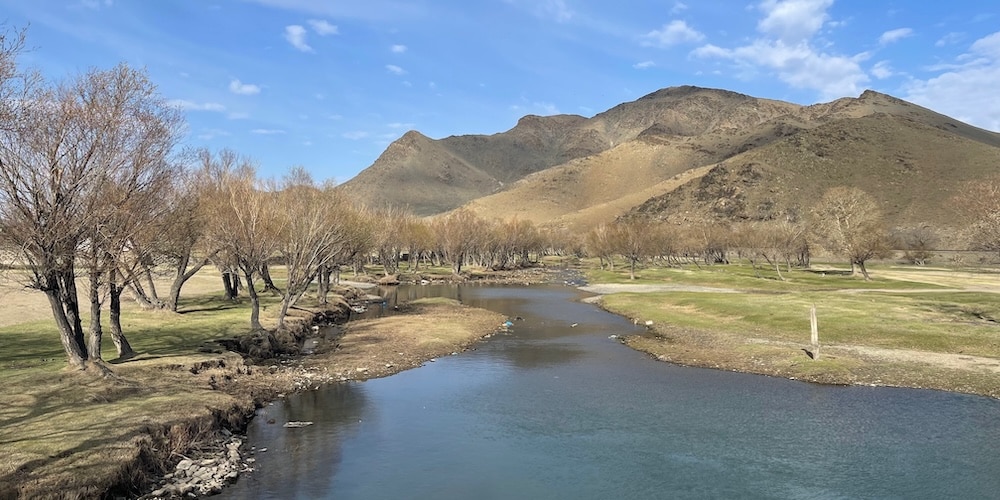
Mongolia is known as the “Land of the Eternal Blue Sky” or “Country of Blue Sky” because it has over 250 sunny days a year. Most of the country is hot in the summer and extremely cold in the winter, with January averages dropping as low as −30 °C. A vast front of cold, heavy, shallow air comes in from Siberia in winter and collects in river valleys and low basins causing very cold temperatures while slopes of mountains are much warmer as temperature increases with altitude. The cold gets less severe as one goes south, reaching the warmest January temperatures in Omnogovi Province and the region of the Altai mountains bordering China. A unique microclimate is the fertile grassland-forest region of central and eastern Arkhangai Province and northern Ovorkhangai Province where January temperatures are on average the same and often higher than the warmest desert regions to the south in addition to being more stable. The Khangai Mountains play a certain role in forming this microclimate. The eastern part of Mongolia including the Onon and Kherlen rivers and Lake Buir form part of the Amur river basin draining to the Pacific Ocean. It hosts some unique species.

Mongolian-Manchurian Grassland ©Chris Lotz
The name “Gobi” is a Mongol term for a desert steppe, which usually refers to a category of arid rangeland with insufficient vegetation to support marmots but with enough to support camels. Mongols distinguish Gobi from desert proper, although the distinction is not always apparent to outsiders unfamiliar with the Mongolian landscape. Gobi rangelands are fragile and easily destroyed by overgrazing, which results in expansion of the true desert, a stony waste where not even Bactrian camels can survive. The arid conditions in the Gobi are attributed to the rain shadow effect caused by the Himalayas. However, there are many pressing environmental issues in Mongolia that are detrimental to both human and environmental wellness with climate change and deforestation and industrialisation.
Birding Mongolia
Mongolia is a landlocked country in East Asia. Its area is roughly equivalent with the historical territory of Outer Mongolia, and that term is sometimes used to refer to the current state. It is sandwiched between China to the south and Russia to the north. Mongolia does not share a border with Kazakhstan, although only 37 kilometres (23 mi) separates them.
At 1,564,116 square kilometres (603,909 square miles), Mongolia is the 18th-largest and the most sparsely populated unitary sovereign state in the world, with a population of around 3 million people. It is also the world’s second-largest landlocked country behind Kazakhstan and the largest landlocked country that does not border a closed sea. The country contains very little arable land, as much of its area is covered by grassy steppe, with mountains to the north and west and the Gobi Desert to the south.
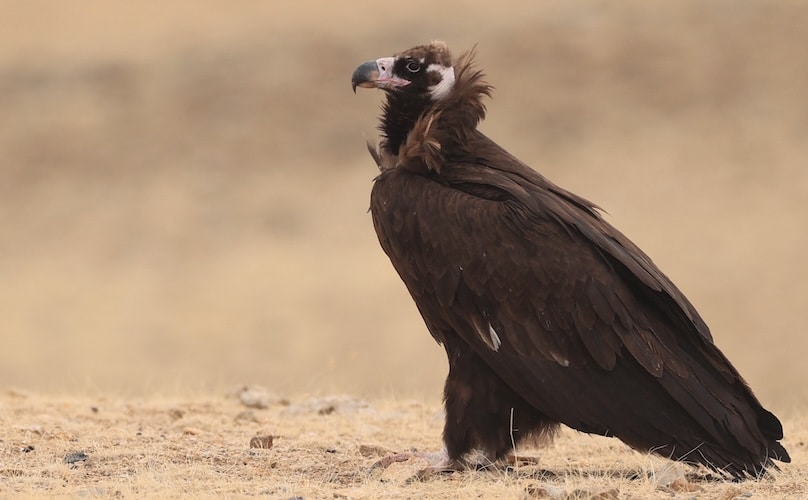
Cinereous Vulture Aegypius monachus – ©Bird-Photo-Tours ASIA
Mongolia is surely one of the last, most remote and most pristine frontiers on this planet. It is the home of Chinggis Khan. It is a vast country with breathtakingly beautiful landscapes, skyscapes and habitats, ranging from deserts (notably the Gobi) to alpine forests and mountains, from grasslands as impressive as the Serengetti in Africa to salt and fresh water lakes like Huvsgul (the headwaters for Lake Baikal in Siberia which holds 20% of the world’s fresh water). There is a rich flora and fauna, even though the country may seem to be a vacant desert to many people. Only 10% of the country is forested.
Mongolia abounds in waterfowl, waders and raptors and small passerines which live in grasslands (larks & finches) and birds which are adapted to alpine terrain and to the taiga of Siberia. The wetlands of northeastern Mongolia (on the border of Russia) are the home of various species of nesting (and endangered) cranes, not to mention many species of geese, ducks and other waterfowl. The salt lakes south of Bayanhongor also have immense concentrations of waterfowl, including Whooper Swans and one of the rarest and least known birds in the world – the Relict Gull. The lakes (both salt and fresh water) in western Mongolia (in Khovd, Bayan-Ulgii and Uvs provinces) are equally rich in waterfowl. And, if you want to see a White-tailed Eagle or a Great Black Woodpecker or Black-throated Loons, try the Lake Huvsgul region.
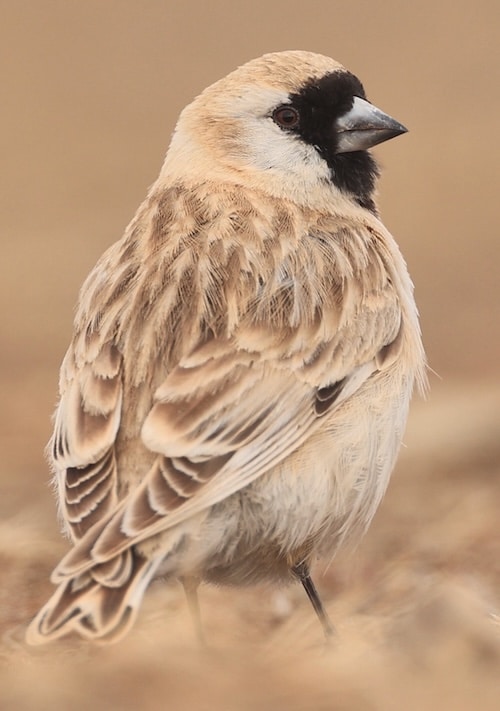
Père David’s Snowfinch Pyrgilauda davidiana – ©Bird-Photo-Tours ASIA
In the Gobi Desert, there are wonderful species such as the Lamergeier (Bearded Vulture); the Henderson’s Ground Jay (like a Roadrunner in the US – running around sand dunes); the Saxaul Sparrow (like a brightly coloured House sparrow but living in the unique Saxaul forests in the deserts) and all kinds of other species.
Just west of the capital city of Ulaanbaatar, near the airport, are the gravel ponds. This is an area of extensive ponds, wetlands and grassland where one can easily see many of the common species found in Mongolia, and even some rare ones. It is great for a half-day outing and a picnic out of UB. There is an informal and loosely knit group of birders here who go out on Sundays to the gravel ponds when the water is open. Just last weekend (mid-April); the Citrine Wagtails arrived in force. Brilliant yellow birds, but they won’t stay long. They’ll be off to the tundra soon.
This page is sponsored by Bird-Photo-Tours ASIA
-
Number of bird species: 534
(As at April 2024)National Bird: Saker Falcon Falco cherrug
-
Avibase
PDF ChecklistThis checklist includes all bird species found in Mongolia , based on the best information available at this time. It is based on a wide variety of sources that I collated over many years. I am pleased to offer these checklists as a service to birdwatchers -
Wikipedia
Annotated ListThis is a list of the bird species recorded in Mongolia. The avifauna of Mongolia include a total of 534 species.

-
A Field Guide to the Birds of Mongolia
| By Dorj Ganbold & Chris Smith | John Beaufoy Books | 2019 | Paperback | 304 pages, 154 plates with colour illustrations; 12 colour photos, colour distribution maps, 4 colour maps | ISBN: 9781912081042 Buy this book from NHBS.com -
Birds of Mongolia
| By Sundev Gombobaatar & Christopher Leahy | Christopher Helm | 2019 | Paperback | 224 pages, 83 plates with colour illustrations; colour distribution maps | ISBN: 9780713687040 Buy this book from NHBS.com -
Directory of Important Bird Areas in Mongolia
| (Key Sites for Conservation) | Edited by Batbayar Nyambayar & Natsagdorj Tseveenmyadag | Wildlife Science and Conservation Center of Mongolia | 2009 | Paperback | 103 pages, Colour photos, maps, tabs | ISBN: 9789992907528 Buy this book from NHBS.com
-
Mongolian Ornithological Society
Facebook PageThe MOS is the only national bird research and conservation organization with public-service status, the oldest and largest memberships (more than 250 official members) in Mongolia. Our vision is “Conserving wild birds for people”. Postal address: P.O.Box 537, Ulaanbaatar 210646A, Ikh surguuliin gudamj-1, MONGOLIA - Phone Number: +976-99180148 - Email: info@mos.mn; mongolianbirds@gmail.com
-
BR Mongol Daguur
InformationSatellite ViewMongol Daguur's steppe and wetlands territory mainly consists of low mountainous landscapes that support a variety of fauna and flora. The biosphere reserve provides nesting and breeding grounds for globally endangered species such as the white-naped crane, while also serving as a migratory stopover site for many rare and endangered species. -
BR Uvs Lake Basin
InformationSatellite ViewUvs Lake Basin is an endorheic basin located on the territorial border of Mongolia and Tuva, a republic of the Russian Federation. The basin is part of a combination of raised lands and hollows located throughout the Tannu-Ola and Altai mountainous regions. Here, the world's most northern desert meets the Northern Hemisphere's most southern tundra zone. Animal species that inhabit both mountains and tundra, such as the Siberian roe deer, and Altai snowcock, flourish here. The endangered snow leopard is also present, as well as taiga dwellers such as the Caspian red deer, lynx and wolverine. Steppe dwellers include the Mongolian lark, demoiselle crane and long-tailed Siberian squirrel. Desert inhabitants include the bustard and midday gerbil. The bird species alone number some 359. -
NP Altai Tavan Bogd
InformationSatellite ViewAltai Tavan Bogd National Park covers 6362 square kilometres and is located south of Tavan Bogd, the highest mountain of Mongolia. It includes the lakes Khoton, Khurgan, and Dayan. The protected area is inhabited by species such as the Argali sheep, Ibex, Red deer, Beech marten, Moose, Snow cock, and Golden eagle. -
NP Gobi Gurvansaikhan
InformationSatellite ViewThe park, at nearly 27,000 square kilometers, is the largest national park in Mongolia, stretching 380 km from east to west and 80 km from north to south. The park is a haven for some endangered species like the argali sheep, snow leopard and Siberian ibex. The eponymous mountains of the park are inhabited by the magnificent lammergeier, or bearded vulture. -
NP Gorkhi-Terelj
InformationSatellite ViewPark wildlife includes brown bears and over 250 species of birds. The Tuul River flows through the park. -
NP Khan Khentii
InformationSatellite ViewThe Khan Khentii Strictly Protected Area is a 12,270 km2 (4,740 sq mi) government administered Strictly Protected Area in the Khentii aimag (province) in Eastern Mongolia. Strictly Protected Areas are regions of land designated by the Mongolian government as wildlife preservation areas. -
NP Khustain Nuruu
InformationSatellite ViewThe Mongolian Government declared Hustai National Park as a Specially Protected Area in 1993, one year after the initiation of the reintroduction project of the Takhi[1] (Przewalski's horse) to the Hustain Nuruu. The HNP extends through the Khentii Mountains and includes the western edge of the Mongolian steppe at the boundaries of Altanbulag, Argalant and Bayankhangai Soums of Töv Province. The park is about 100 km from the capital city of Ulaanbaatar to the west. The 217 species of birds include golden eagle, lammergeier, great bustard, whooper swan, black stork, Daurian partridge and little owl. -
NP Tsambagarav Uul
InformationSatellite ViewIt covers more than 1,110 square kilometres (430 sq mi) in a glacial region which includes Tsambagarav mountain of Mongolia. It has a notable population of snow leopards, amongst other species. -
NP WII Khar-Us Lake
InformationSatellite ViewKhar-Us Lake - "black water lake") is a lake in western Mongolia in the Great Lakes Depression. It is the upper one in a system of the interconnected lakes: Khar-Us, Khar, Dörgön, Airag and Khyargas. -
NR Gun-Galuut
InformationSatellite ViewAlthough limited research has been carried out on the reserve's fauna, 63 mammal species, 81 bird species, three amphibian species and 38 fish species have been recorded, including a number of nationally and globally threatened species. Among the more common mammal species are the gray wolf, Tarbagan marmot, souslik (ground squirrel), pika, vole, fox, corsac and jerboa. Globally threatened species include the argali (mountain sheep), Siberian crane, white-naped crane, hooded crane, black vulture and swan goose. Among the nationally threatened species found in the park are the whooper swan, black stork, great white egret, bar-headed goose, bearded vulture and Eurasian penduline tit. -
NR Mankhan
InformationSatellite ViewMankhan Nature Reserve is a reserve in the western part of Mongolia. It is located south of Khar Us Nuur National Park in Khovd Province on the main road between Hovd City and Ulaanbaatar. Most of the area lies in the Mankhan sum. The reserve stretches over 3,000 square kilometres (1,200 sq mi) and has been created in 1993 together with Sharga Nature Reserve to protect the endangered Mongolian saiga. In addition to these antelopes, there are also goitered gazelles. -
Wetlands
WebpageSatellite ViewMongolia currently has 11 sites designated as Wetlands of International Importance.
-
Bird Mongolia
Tour OperatorBird Mongolia, is a specialized Birding branch of Ayan Travel LLC, the Mongolian adventure and photo tour operator company, with 16 successful years of tourism industry in Mongolia. -
Bird Photo Tours ASIA
Tour OperatorThis Bird-Photo-Tours Asia trip focusses on enjoying close photographic encounters with three special Mongolian birds: Black-billed Capercaillie, Altai Snowcock and MacQueen's Bustard. These three species are difficult birds to photograph in East Asia, however, with the right tactics, timing and expertise, close photographic encounters can be enjoyed. -
Birding Ecotours
Tour OperatorThe very name Mongolia conjures up images of a vast, remote and distant land — the land of Genghis Khan (Chinggis Khaan) and the Mongol hordes. While Mongolia is certainly vast and much of it is remote, it is also home to an exciting array of poorly known and rarely observed birds that occur only here. As we traverse this vast land we will often be traveling on rarely used roads, and occasionally driving across steppe grasslands, using GPS to navigate our way to exciting wetlands where no roads venture. -
Rockjumper
Tour Operator
-
2017 [06 June] - James Eaton
PDF ReportOverall, we did very well, hitting most of our intended targets in the dry and windy conditions, highlighted by the superlative, 15 minute views of a nervously stationary male Black-billed Capercaillie, quickly followed by our first Chinese Grasshopper Warbler. Moving westwards, our first great saline lake was heaving with birds – Brown-cheeked Rail, Paddyfield and Pallas’s Grasshopper Warblers and ‘Mongolian’ Pallas’s Buntings before reaching the Khangai Mountains, a tour highlight, with singing Hodgson’s Bushchats, proper Pallas’s Buntings, ‘Khangai’ Rosy Finches, Altai Accentor, a surprise Black-throated Accentor and a splendid encounter with eight vocal Altai Snowcocks. Heading south into the fringes of the Gobi Desert, Pallas’s Sandgrouse were common and conspicuous, truly wild Mute Swan, Saxual Sparrow, Henderson’s Ground-jay, Oriental Plover, Wallcreeper and Mongolia’s single breeding endemic, Kozlov’s Accentor were all enjoyed. -
2017 [06 June] - Phil Gregory - Gobi Dessert & Taiga
Report...Later that day we had a great experience watching the Przewalksi's Wild Horses (Takhi) in the park, a remarkable creature that has come back from near extinction and looks just like the cave paintings of those horses with erect manes. Beautiful pale buffy and blonde colouration too, a striking creature that is reintroduced here and looks to be doing quite well. Other good mammals here were pikas, Red Deer, Mongolian Gazelle and the wild sheep called the Argali. Birds included Daurian Partridge, Cinereous Vulture, Golden Eagle, Upland Buzzard, Saker Falcon, Rock Petronia and Meadow and Little Bunting, and it was fun getting used to living in a ger, the large circular felt tents so common in Mongolia.... -
2018 [06 June] - János Oláh
PDF ReportMongolia is a very special country with amazing landscape, long and fascinating history and very special wildlife. There are several sought-after birds in Mongolia though participants often come along just as much for experiencing the atmosphere of this last wilderness of the World. -
2018 [06 June] - Phil Gregory
PDF Report...We went to Songino and some riparian habitat along the Tuul River on the first day, when it was atypically hot, albeit with a breeze, and we picked up the first Mongolian birds including Asian Azure-winged Magpie, White-cheeked Starling, a nice assortment of wildfowl and Demoiselle Crane... -
2022 [07 July] - Chris Lotz
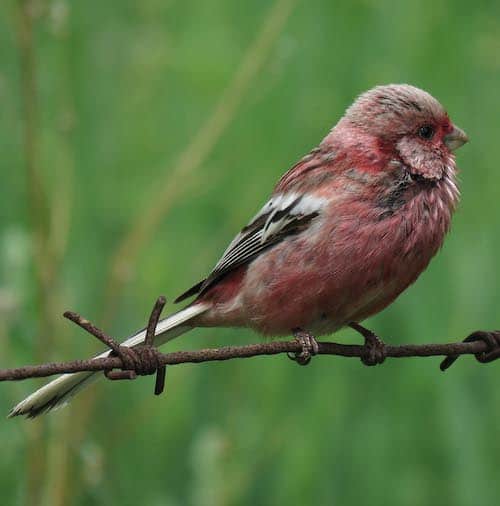
PDF ReportThe hotel grounds proved rewarding for birding, with good numbers of stunningly beautiful Long-tailed Rosefinch, a good number of Azure Tit, several Eurasian Hoopoe, nesting White-cheeked Starling, a flyover Cinereous Vulture, a huge number of Black Kite, and a couple of close-up Amur Falcon. Corvids were plentiful, with Red-billed Chough and Duarian Jackdaw sitting on the hotel building, our first of many Northern Raven, Azure-winged Magpie and an abundance of Eurasian Magpie. -
2022 [09 September] - Daan Drukker
PDF Report...These bushes, protected from hungry cattle by a fence, also provide breeding habitat for many Siberian goodies. The ringing team allowed us to bird these bushes, which resulted in highly wanted observations of Pallas’s grasshopper warblers, Yellow-breasted buntings and Siberian rubythroats. The head of the ringing station told us that we were probably too late for Siberian cranes, which was quite a deception as I thought that August would be a very suitable month, but she was right and during our birding of Above: Siberian Chipmunk, Terelj river © Daan Drukker. Below: the edge of the Taiga, Terelj © Jurriën van Deijk. 7 the surrounding lakes the next day, the enigmatic white cranes were nowhere to be found. Apparently June is much better. The birding was very enjoyable however, with two Hooded cranes, lots of White-naped cranes and a group of seven Little whimbrels as highlights... -
2023 [02 February] - Chris Townend
PDF Reportannoated & illustrated list -
2023 [03 March] - Purevsuren Tsolmonjav
PDF Report...mostly mammals -
2023 [06 June] - Henk hendriks
PDF Report...We observed several species of thrush like Naumann's Thrush, Dusky Thrush, Eye-browed Thrush, Red-throated Thrush, Black-throated Thrush and I was the only person briefly observing a skulking White's Thrush... -
2023 [06 June] - Micksture - Eastern Mongolia with Miksture
PDF ReportAnnotated list -
2023 [08 August] - Nigel Redman
PDF Report...Our second foray up the mountain still did not produce a Snow Leopard, although this time we only just missed one that had been found by our scouts. We had good views of Bearded and Himalayan Vultures, as well as several Güldenstädt’s Redstarts. Small mammals showed well, with good views of Tolai and Mountain Hares, Pallas’s Pika, Tarbagan Marmot and Long-tailed Ground Squirrel. In the evening several Siberian Jerboas showed well outside our gers... -
2023 [09 September] - Daniel López Velasco
PDF Report...an impressive list of birds on this tour, including many mouth-watering specialties such as Altai Snowcock, Mandarin Duck, Swan Goose, Relict Gull, Upland Buzzard, Steppe Eagle, Japanese Sparrowhawk, Saker Falcon, Eurasian Eagle Owl, Japanese Quail, Pale Martin, Azure Tit, Güldenstädt’s Redstart, White-crowned Penduline Tit, Chinese Bush Warbler, Mongolian Ground Jay, Azure-winged Magpie, Daurian Jackdaw, Pied Wheatear, Pere David’s Snowfinch, Mongolian Lark, Brown Accentor, Kozlov’s Accentor (Mongolia’s sole endemic!) Grey-necked and Godlewski’s Buntings, Mongolian Finch and an exciting array of Siberian migrants, including Baikal Teal, Pacific... -
2026 [05 May] - Andrew Walker
ReportWe recorded 185 bird species (three species were heard only), and 19 mammal species on this Mongolian birding tour. Bird and animal lists follow the report and you can also see our eBird trip report, with lots more photos...
-
Birds of Mongolia
WebsiteWhat's so great about a list of bird names? After all, the names that men give are just a pale reflection of the birds themselves. Well, bird-lovers may rejoice in biodiversity, but in matters linguistic they tend to use common or garden English as a lowest common denominator. So, in the interest of 'lingua-diversity', here it is: aa list of bird species of Mongolia, with names in Mongolian, Chinese, Japanese, Korean, Russian, Kazakh, and Turkish -
Mongolian Birds
WebsitePeter and I were both interested in birds, but Mike was a serious birdwatcher. He'd bought a good pair of binoculars but no field guide, however Chinzo luckily had a bird book that covered Mongolia -
Mongolian Birds Watch
WebsiteExcellent info and pictures plus sightings.