

Rajasthan
Rajasthan is a state in northwestern India. It covers 342,239 km2 (132,139 square mile) or more than 10% of India’s total geographical area. It is the largest Indian state by area and the seventh largest by population with almost 85 million people! It comprises most of the wide and inhospitable Thar Desert (also known as the Great Indian Desert) and shares a border with the Pakistani provinces of Punjab to the northwest and Sindh to the west, along the Sutlej-Indus River valley. It is bordered by five other Indian states: Punjab to the north; Haryana and Uttar Pradesh to the northeast; Madhya Pradesh to the southeast; and Gujarat to the southwest. Its geographical location means it has the Tropic of Cancer passing through its southernmost tip.
At independence from the British, the State of Rajasthan was formed from states merged into the new Indian Union. Its capital and largest city, with 4.5 million inhabitants, is Jaipur. Other important cities are Jodhpur, Kota, Bikaner, Ajmer, Bhilwara, Sawai Madhopur, Bharatpur and Udaipur. The economy of Rajasthan is the seventh-largest state economy in India but ranks 22nd among Indian states in human development index. Its major sites include the ruins of the Indus Valley civilisation at Kalibangan and Balathal, the Dilwara Temples, a Jain pilgrimage site at Rajasthan’s only hill station and Mount Abu, in the ancient Aravalli mountain range.
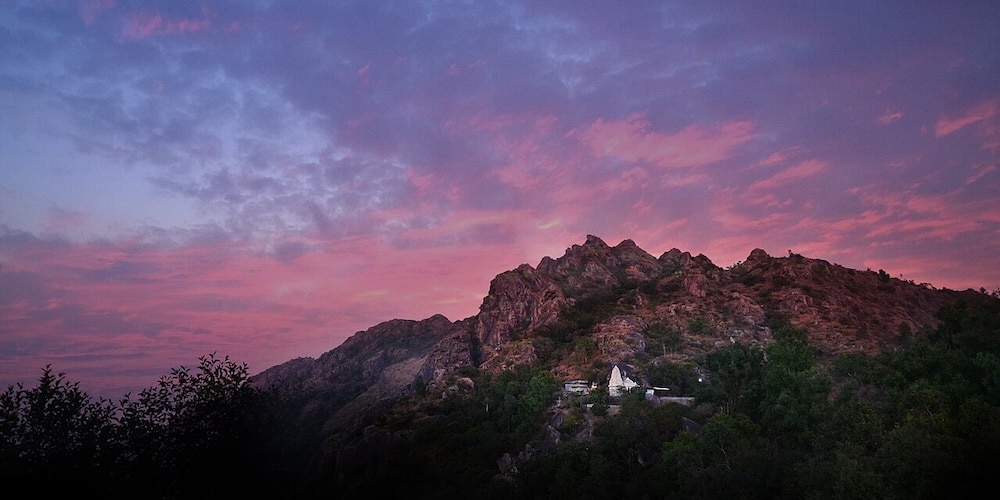
Mount Abu – ©Karan Dhawan India CC BY-SA 4.0 via Wikimedia Commons
The geographic features of Rajasthan are the Thar Desert and the Aravalli Range, which runs through the state from southwest to northeast, almost from one end to the other, for more than 850 kilometres (530 miles). Mount Abu lies at the southwestern end of the range, separated from the main ranges by the West Banas River. About 60% of Rajasthan lies northwest of the Aravallis, leaving two-fifths on the east and south direction. The northwest tract is sandy and unproductive with little water, but improves gradually from desert land in the far west and northwest to comparatively fertile and habitable land towards the east. The south-eastern area, higher in elevation and more fertile, has a very diversified topography. In the south lies the hilly tract of Mewar. In the southeast, a large area within the districts of Kota and Bundi forms a tableland. To the northeast of these districts is a rugged region (badlands) following the line of the Chambal River. Farther north the country levels out; the flat plains of the northeastern Bharatpur district are part of an alluvial basin. Merta City lies in the geographical centre of Rajasthan.
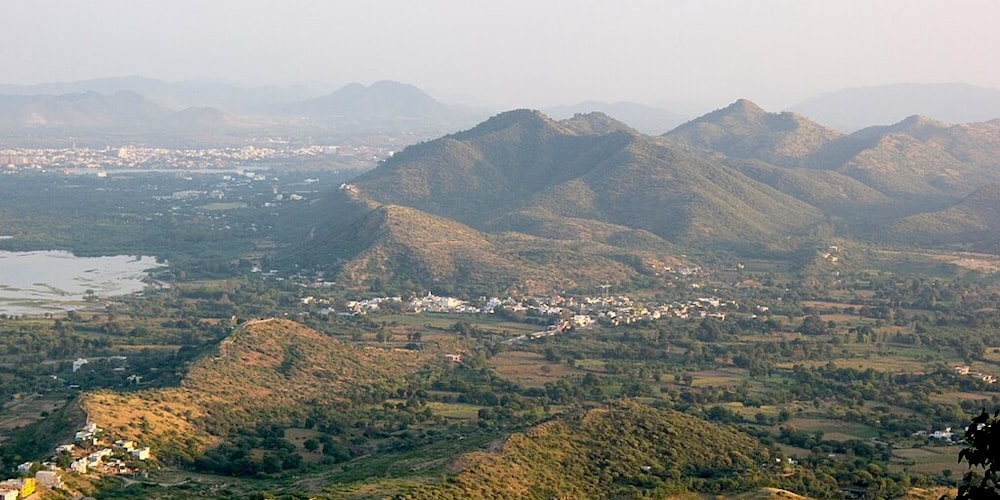
Aravali Hills – ©Nagarjun Kandukuru CC BY 2.0 via Wikimedia Commons
The Aravalli Range and the lands to the east and southeast of the range are generally more fertile and better watered. This region is home to the Khathiar-Gir dry deciduous forests eco-region, with tropical dry broadleaf forests that include teak, Acacia, and other trees. The hilly Vagad region lies in southernmost Rajasthan, on the border with Gujarat and Madhya Pradesh. With the exception of Mount Abu, Vagad is the wettest region in Rajasthan, and the most heavily forested. Eastern and southeastern Rajasthan is drained by the Banas and Chambal rivers, tributaries of the Ganges.
The Aravalli Range does not intercept the moisture-giving southwest monsoon winds off the Arabian Sea, as it lies in a direction parallel to that of the coming monsoon winds, leaving the northwestern region in a rain shadow. The Thar Desert is thinly populated; the City of Jodhpur is the largest city in the desert and a major metropolitan area of India which is known as the gateway of the Thar desert. The Northwestern thorn scrub forests lie in a band around the Thar Desert, between the desert and the Aravallis. This region receives less than 16 inches of rain annually. Temperatures can sometimes exceed 45 °C in the summer months and drop below freezing point in the winter. The Luni River and its tributaries are the major river system of Godwar and Marwar regions, draining the western slopes of the Aravallis and emptying southwest into the great Rann of Kutch wetland in neighbouring Gujarat. This river is saline in the lower reaches and remains potable only up to Balotara in Barmer district. The Ghaggar River, which originates in Haryana, is an intermittent stream that disappears into the sands of the Thar Desert in the northern corner of the state and is seen as a remnant of the primitive Sarasvati river.
Birding Rajasthan
Its ecosystems face several problems; desertification, deforestation, land degradation, and ravine formation etc. Increasing numbers of people and cattle means increasing pressure on natural resources, often causing conflict between local communities and protection agencies. In eastern Rajasthan lies the Keoladeo National Park of Bharatpur, a World Heritage Site known for its birds and other wildlife. The state is also home to three national tiger reserves, the Ranthambore National Park in Sawai Madhopur, Sariska Tiger Reserve in Alwar and the Mukundra Hills Tiger Reserve in Kota. The three National Parks cover 919 km2, 22 Sanctuaries total 8,389 km2, while the Closed Areas (where hunting is prohibited) have an area of 14,865 km2. The physiography of Rajasthan is the product of long years of erosion and depositional processes. Three major ecosystems can be identified here.
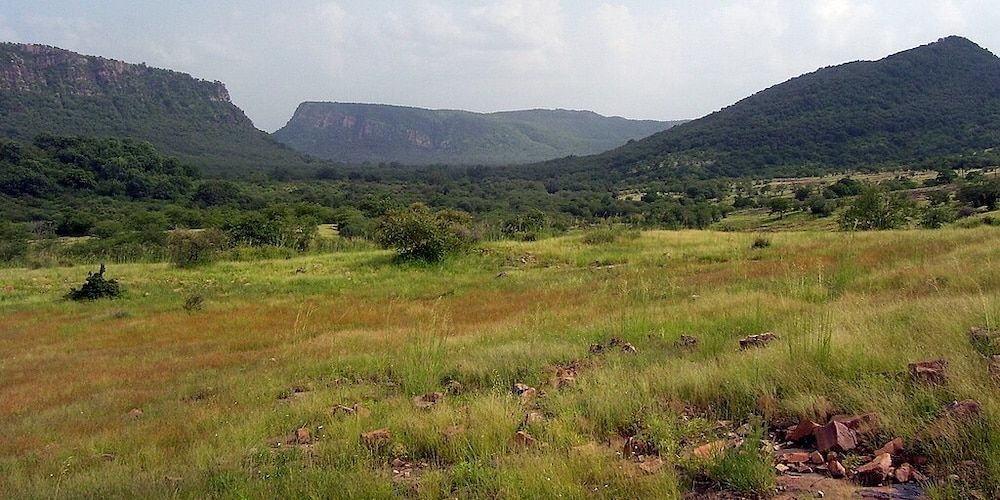
Ranthambore National Park – ©THerrington CC BY-SA 3.0 via Wikimedia Commons
The Western Desert Region – The western desert region is characterised by arid landscape, barren hills, level rocky structural plains, and other sandy plains with alluvial layers underneath. It also has sandy hummocks and low sand dunes of various kinds and inter-dunal plains. This terrain hosts xerophytes wherein are found a variety of mammals, reptiles, birds etc (black buck, gazelle, desert fox, gerbils, rodents, spiny tailed lizard, snakes and nearly 100 species of resident and migratory birds; the Great Indian Bustard finds its home in this region). The Desert National Park in Jaisalmer, spread over an area of 3,162 km2, is an excellent example of the ecosystem of the Thar Desert and its diverse fauna. It is particularly rich in raptors such as Short-toed Snake Eagles Circaetus gallicus, Tawny Eagles Aquila rapax, Spotted Eagles Aquila clanga and Laggar falcons Falco jugger.
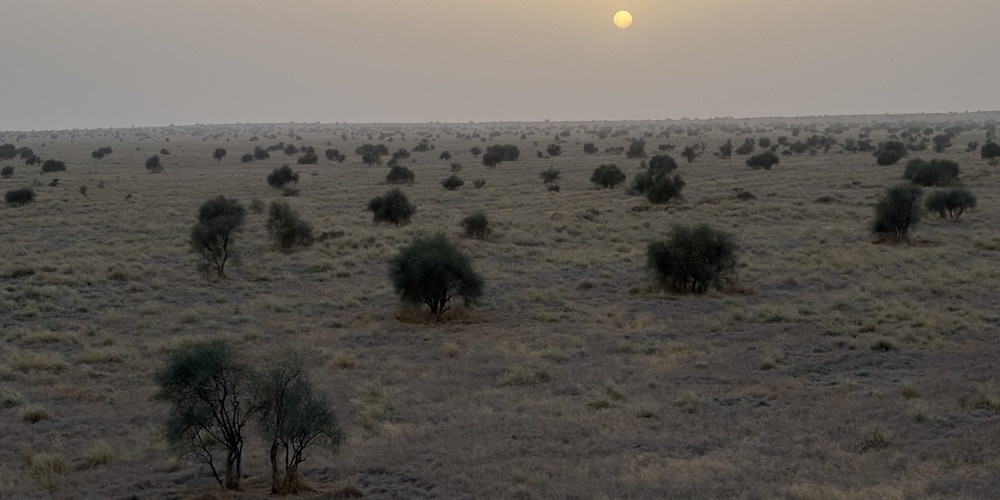
Desert National Park – ©Chris Lotz
The Indira Gandhi Canal now passes through Sri Ganganagar, Bikaner, and Jaisalmer, and will soon extend to Barmer district. It has given rise to a new aquatic ecosystem in an area that never received irrigation or moisture before. Bird species that had never been reported in the region have now appeared.
The Aravalli Hills – The Aravalli hills dominate Rajasthan. This range runs diagonally across the state from Kotra in the southwest to Khetri in the northeast covering a distance of about 550 kilometres. This belt is home to some of the most magnificent species of mammals, reptiles, birds etc. (tigers, leopards, sloth bear, spotted deer, sambar deer, wild boar, hyena, jackal, jungle cat, python, snakes, with nearly 450 species of terrestrial, arboreal and other birds).
The Eastern Plains – This is the most fertile region of Rajasthan and covers nearly one third of the state. It comprises vast agricultural fields, grasslands, hills, valleys, and seasonal river systems where the population is denser than in the western desert areas. The Chambal River and the Mahi River are the only perennial rivers and offer many aquatic benefits.
Avifauna
Rajasthan state has a vast diversity of bird life. Nearly 630 species have been recorded in the state. The national parks/sanctuaries, water bodies, grasslands and river beds offer wonderful bird watching. There are 28 national parks/sanctuaries that are administered by the Department of Forests. The Keoladeo National Park, located near the city of Bharatpur, has the most potential for bird watching. One can log 100 species in a day visit to this 29 km2 park, of which about 6 km2 is aquatic. It is celebrated for resident breeding species of birds such as Open-billed Storks, Painted Storks, Herons, Egrets, Spoonbill, Ibis, Kingfishers, Jacanas, Cotton Teal, Comb Duck, and Whistling Duck etc. During winter, its shallow lakes teem with thousands of migratory ducks and geese besides waders, warblers and numerous other forest/land birds. The park is also noted for raptor species such as harriers, eagles, buzzards, falcons, kites, & Shikra etc. Keoladeo National Park is one of the two Ramsar Sites in Rajasthan.
Sambhar lake, another Ramsar Site is located west of Jaipur. About 80 species of birds can be sighted here during winter season. It is a haven for waders, flamingos and some ducks. Ranthambhor Tiger Reserve, and Sariska Tiger Reserve, are the other two national parks in Rajasthan. Each has nearly 250 species of birds besides some spectacular mammals in their wilderness, Ranthambhor being noted as a nursery for tigers.
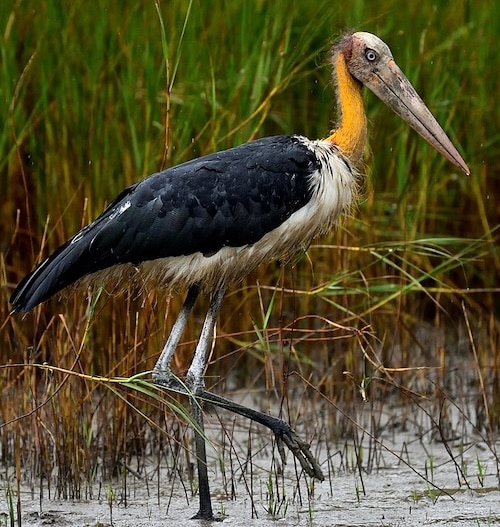
Rare Species – Rajasthan has some of the rarest of Indian species such as Lesser Adjutant Stork, Great Indian Bustard; Lesser Florican, Stoliczka’s Bushchat, Vultures etc. The Bustard presents a rare example, having been saved from the brink of extinction through public agitation against illegal hunting during the late seventies (led by this contributor – Harsh Vardhan).
Common Birds – ‘Every day’ species in Rajasthan include Peacock, Pigeons, Doves, Mynas, Sparrows, Crows, Koels, Partridges, Parrots, Babblers, Tailor Birds, Sunbirds, Green Bee-eater, Red-vented Bulbul, Kite, Hoopoe, Drongos etc.
This page is sponsored by Bird-Photo-Tours ASIA

-
Keoladeo Ghana National Park
InformationSatellite ViewThe Keoladeo Ghana National Park is one of the best sites in the world for observing large poulations of migratory waterfowl. Migratory waders also arrive in large numbers and the shanks, sandpipers and stints are not hard to find. Three species of cranes (including the endangered Siberian Crane) visit the India wetlands in the winter months, as do several types of stork, herons, egrets and plovers. The two species of jacana - the Bronzewinged and Pheasant-tailed are common residents. [When the monsoon fails there is very little wetland but efforts are made to keep the birds by pumping out groundwater; which was the case during my visit in Spring 2003 - Fatbirder] -
Main Birding Areas
The main birding areas are: Keoladeo National Park, Ranthambhor National Park, Sariska Tiger Reserve, Desert National Park, Bund Baretha (Bharatpur); Talab-i-Shahi (Dholpur); Talchhapar Sanctuary (Churu); Sambhar lake and adjoining water bodies (Jaipur); Man Sagar lake (Jaipur); Raj Samand (Rajnagar); Fateh Sagar and Pichhola (Udaipur); Sardar Samand (Jodhpur/Pali); Mt. Abu (Sirohi); Kumbhalgarh (Rajnagar); and numerous grassland habitats, water bodies and river banks. Some of these birding spots are quite close to prominent cities like Jhalana, Arboratem, and Man Sagar (Jaipur); Ana Sagar (Ajmer); Fateh Sagar (Udaipur) etc. It is common to come across 25-35 species within an hour at any place in the state. The desert offers remarkable sights for birds of prey which dot the telephone wires along the road.
-
Number of bird species: 639
(As at March 2025)State Bird: Great Indian Bustard Ardeotis nigriceps
-
Avibase
PDF ChecklistThis checklist includes all bird species found in Rajasthan , based on the best information available at this time. It is based on a wide variety of sources that I collated over many years. I am pleased to offer these checklists as a service to birdwatchers. If you find any error, please do not hesitate to report them. -
E-Bird
PDF ChecklistThis checklist is generated with data from eBird (ebird.org), a global database of bird sightings from birders like you. If you enjoy this checklist, please consider contributing your sightings to eBird. It is 100% free to take part, and your observations will help support birders, researchers, and conservationists worldwide. -
Rajasthan Biodiversity
Annotated ListA comprehensive compiled list of birds from various checklist

-
Birds of Rajasthan
| By Rakesh Vyas | Oxford University Press | 2015 | Hardback | 319 Pages | 500 Colour Photographs | 473 Species Described | ISBN: 9780198098591 Buy this book from NHBS.com
-
Indian Bird Fair
Bird Fairhe Indian Bird Fair (IBF) is held every year in the city of Jaipur (Rajasthan). It is the only event of its kind in India. Conducted on the shores of Man Sagar Lake (Jal Mahal), in the city of Jaipur, during winter when the migratory species are present, the Fair presents an opportunity for education and awareness activities that benefit the bird resource in India…
-
*Protected areas of Rajasthan
InformationSatellite ViewIntereacvtive list of wildlife sanctuaries, national parks etc. -
*Wildlife sanctuaries in Rajasthan
InformationSatellite ViewIntereacvtive list of wildlife sanctuaries -
BS Tal Chhapar Sanctuary
InformationSatellite ViewTal Chhapar Sanctuary is a sanctuary located in the Churu district of Northwestern Rajasthan in the Shekhawati region of India. It is known for blackbucks and is also home to a variety of birds. The sanctuary is 210 km from Jaipur on the fringe of the Great Indian Desert and situated on road from Ratangarh to Sujangarh. It lies on the passageway of many migratory birds such as harriers. These birds pass through this area during September. Birds commonly seen in the sanctuary are harriers, eastern imperial eagle, tawny eagle, short-toed eagle, sparrow, and little green bee-eaters, black ibis and demoiselle cranes, which stay till March. Skylarks, crested larks, ring doves, and brown doves are seen throughout the year.[3] Desert fox and desert cat can also be spotted along with typical avifauna such as partridge and sand grouse. Tal Chappar Sanctuary comes alive with the chirping of various migratory birds including Montagur's, marsh harrier, pale harrier, imperial eagle, tawny eagle, short toed eagle, sparrow hawk, skylark, crested lark, ring drove, brown dove, blue jay, southern grey shrike, Indian spotted creeper, green bee eaters, black ibis and demoiselle cranes. -
NP Darrah
InformationSatellite ViewDarrah National Park in Rajasthan, India is a national park established in 2004 consisting of three wildlife sanctuaries: Darrah Wildlife Sanctuary, Chambal Wildlife Sanctuary, and Jawahar Sagar Wildlife Sanctuary. It is located within the Kathiawar-Gir dry deciduous forests' ecoregion. -
NP Desert
InformationSatellite ViewThe Desert National Park is situated in the west Indian state of Rajasthan near Jaisalmer. This is one of the largest national parks, covering an area of 3,100sq. km. The desert sanctuary being a fragile ecosystem has its own flora and fauna. Birdlife in this sandy habitat is vivid & spectacular. The great Indian bustard is another magnificent bird found in relatively fair numbers. It migrates locally in different seasons. The region is a haven for migratory and resident birds of the desert. One can see many eagles, harriers, falcons, buzzards, kestrel and vultures. Short- toed eagles, tawny eagles, spotted eagles, lagger falcons and kestrels are the commonest of these. Sandgrouse are spotted near small ponds or lakes. Sea shells and massive fossilized tree trunks in this park record the geological history of the desert. -
NP Keoladeo (was Bharatpur Bird Sanctuary)
InformationSatellite ViewKeoladeo National Park or Keoladeo Ghana National Park formerly known as the Bharatpur Bird Sanctuary in Bharatpur, Rajasthan, India is a famous avifauna sanctuary that hosts thousands of birds, especially during the winter season. Over 230 species of birds are known to be resident. It is also a major tourist centre with scores of ornithologists arriving here in the hibernal season. It was declared a protected sanctuary in 1971. It is also a World Heritage Site. -
NP TR Sariska
InformationSatellite ViewSariska is located in the sharp cliffs of hills and narrow valleys of the Aravallis some 200km from Delhi. The forests are dry and deciduous. Within the sanctuary there are the ruins of medieval buildings. There is a 17th century castle on a sharp hilltop at Kankwari, which provides a panoramic view of flying Egyptian vultures and eagles… -
NP TR WS Ranthambhor
InformationSatellite ViewRanthambhore wildlife sanctuary is known for its Bengal tigers and is a popular place in India to see these animals in their natural jungle habitat. -
WS Bassi
InformationSatellite ViewBassi Wildlife Sanctuary is a wildlife sanctuary near Bassi in Chittorgarh district. It covers an area of 15,290 hectares. The sanctuary is located on the western border of the Vindhyachal Ranges and includes the Bassi and Orai dams are part of the sanctuary. Antelope, wild boar, panther, mongoose and migratory birds inhabit the sanctuary. -
WS Gajner
InformationSatellite ViewGajner Wildlife Sanctuary is located at a distance of about 32.0 km (19.9 mi) from Bikaner. The lake in this wildlife sanctuary draws a variety of bird species. The residential species include wildfowl, deer, antelope, nilgai, chinkara, black buck, desert fox and wild boar. -
WS IBA National Chambal Sanctuary
InformationSatellite ViewNational Chambal Sanctuary, also called the National Chambal Gharial Wildlife Sanctuary, is a 5,400 km2 (2,100 sq mi) tri-state protected area in northern India for the protection of the Critically Endangered gharial, the red-crowned roof turtle and the Endangered Ganges river dolphin. Located on the Chambal River near the tripoint of Rajasthan, Madhya Pradesh and Uttar Pradesh. At least 320 species of resident and migratory birds inhabit the sanctuary. Migratory birds from Siberia form part of its rich avian fauna.[3] Vulnerable bird species here include the Indian skimmer,[8] sarus crane, Pallas's fish eagle and Indian courser. The pallid harrier and lesser flamingo are near threatened. Winter visitors include black-bellied terns, red-crested pochard, ferruginous pochard and bar-headed goose. Other species include great thick-knee, greater flamingos, darters, and brown hawk owl. -
WS IBA WII Sambhar Lake
InformationSatellite ViewSambhar Lake is the biggest saline lake of India, 190 sq-KMS in size at complete capability and set about 60 KMS western side of Jaipur, merely exterior prosaically called as Salt Lake City. This huge area of hostile salty is on standard only 0.6 cm deep and in no way over 3 m yet the monsoon is just finished. Sambhar Lake extends in length approximately 22.5 KMS, the width of the Sambar defers somewhere 3 to 11 KMS. Numerous seasonal streams of the freshwater, 02 of the main are Mendha River and Rupangarh River which feed Sambar Lake… -
WS Jaisamand
InformationSatellite ViewA trip to Jaisamand Wildlife Sanctuary allows a close encounter with the rich wildlife in their natural habitat. The fauna include the panther, wild boar, deer, four-horned antelope, mongoose and various species of migratory birds. The sanctuary's ecoregion is that of Kathiawar-Gir dry deciduous forests. -
WS Khodeswar Ran Shelter
InformationSatellite ViewThe Khodeswar Ran Shelter is a wildlife sanctuary and nature reserve in Jawiya, Jaswantpura, Rajasthan, India. -
WS Kumbhalgarh
InformationSatellite ViewKumbhalgarh Wildlife Sanctuary is located in the Rajsamand District of Rajasthan State in western India. The sanctuary is home to a variety of wildlife, some of which are endangered species. The wildlife includes the Indian wolf, Indian leopard, sloth bear, striped hyena, Golden jackal, jungle cat, sambhar, nilgai, chausingha (the four horned antelope), chinkara and Indian hare. The leopard is the apex predator in the sanctuary. The birds at Kumbhalgarh includes the normally shy and untrusting grey junglefowl. Peacocks and doves can be sighted feeding on grains scattered by the jungle guards. Birds like the red spurfowl, parakeet, golden oriole, grey pigeon, bulbul, dove and white breasted kingfisher can also be seen near the water holes. -
WS Mount Abu
InformationSatellite ViewMount Abu Wildlife Sanctuary is located in one of the oldest mountain ranges of India, the Aravalli range. It is unique in the sense that more than 250 species of birds are found here, but the speciality of the Abu sanctuary is the grey jungle fowl. The rare Green Avadavat is commonly found here. -
WS Phulwari ki Nal
InformationSatellite ViewThe area of the Phulwari ki Nal Wildlife Sanctuary is 511.41 km2 of which 365.92 km2 is Reserved Forest and 145.49 km2 is Protected Forests. -
WS Sita Mata
InformationSatellite ViewIt is a dense forest, with an area of 422.95 square kilometers, which is about 40% of the total land area of the district. The land is undulating because of the confluence of three different formations — Malwa Plateau, the Vindhyachal Hills and Aravali mountain ranges. large number of residential and migratory birds are found in this region, nearly 130 varieties. -
WS Todgarh-Raoli Sanctuary
InformationSatellite ViewThe sanctuary is located pretty much in the middle of the Aravalli hill ranges, being based on the village of Todgarh, 25 km from Jassa Khera on NH-8 Delhi-Udaipur Highway.
-
Birding Fair Group
Conservation GroupIts on-field organ is known as Indian Birding Fair Group. It is responsible for field level conservation initiatives. Its founder President was Jaipur’s princess, Gayatri Devi. The previous President is Mr. Samar Singh. The present President is Mr. Anand Mishra, Mr. Harsh Vardhan is its Honorary Secretary. -
Birds Of Rajasthan and Gujarat
Facebook Discussion Group -
Northern India Bird Network
Mailing List & ForumWe are an interactive egroup which exists to share information about birds in Northern India and the issues that affect them. We seek to help and encourage newcomers to the study of birds and enable birdwatching visitors and short-term residents to meet fellow enthusiasts who live in India. -
eBird
SightingseBirding This Month
-
Asian Adventures
Tour OperatorTaj Mahal, Birds And The Leopards of Rajasthan -
Bird-Photo-Tours ASIA
Local Tour OperatorBird-Photo-Tours ASIA is the specialists in bird photography tours on the Asian continent with a portfolio of 50 bird photography tours across 26 countries and a particular specialism in bird photography in India including the State of Rajastan. -
BirdQuest
Tour OperatorNORTHWEST INDIA – Specialities of Punjab, Rajasthan, Gujarat, Maharashtra & Kashmir -
Birding Ecotours
Tour OperatorBirding Tour India: Rajasthan – Monsoon Specialties -
Bluetail Birding
Tour OperatorIndia: West Rajasthan and Gujarat A 16-day, small group birding tour through India's arid western region, exploring the rich bird and mammal diversity of desert, savannah grassland and vast seasonal wetlands. -
Bubo Birding
Tour OperatorGreat Indian Bustard and other Rajasthan Birding Highlights -
Colors India Tours
Tour OperatorOur Rajasthan birding tour is an experience complete in itself. -
India BirdWatching
Tour OperatorRajasthan & Gujarat -
India Birding Tours
Tour OperatorAre you a bird lover and planning a birding tour with your family or friends? Then you are on the ideal page! -
India Wildlife Resorts
Tour Operator -
Jungle Lore
Local Tour OperatorOur tours will appeal to the serious birder as well as to the beginner or intermediate bird watcher and some are suitable for the non-birding spouse. A spectacular variety of Himalayan birds and wildlife is spotted in some of these most exotic locales. The itinerary focuses on the Central Himalayas at Binsar, Nainital, Betalghat and Corbett National Park. -
Kalypso Adventures
Tour OperatorExplore the rich diversity of bird species in arid Northwest India -
Nature Safari India
Tour OperatorBirding in Gujarat and Rajasthan -
Ranthambhor Jeep Safari
Local Tour Operator Operator...specialises in packaged and customised wildlife holidays across India with a focus on wildlife and photography tours. -
Rockjumper
Tour OperatorWestern India, including the states of Punjab, Rajasthan, and Gujarat, is home to a staggering selection of rare and endangered birds... -
Wild Dweller
Local Tour OperatorRanthambore National Park is one of those rare attractions where history meets wildlife.
-
2015 [01 January] - Frank Lambert - Rajasthan, Gujarat and Maharashtra
PDF Report...West India also supports huge numbers of wintering birds, in particular raptorsand waterbirds, of which we saw plenty, and rarer species such as Hypocolius and Macqueen’s Bustard, both ofwhich gave us outstanding views. Although we recorded just 298 species this included many memorablespecies such as White-bellied Minivet, White-naped Tit, Indian Spotted Creeper, Green Avadavat, PaintedSandgrouse, Indian Courser, Yellow-eyed Pigeon, five species of vulture, Pallid Scops Owl, Mottled Wood Owl, Sykes’s Nightjar and to finish off, the Critically Endangered Forest Owlet... -
2015 [08 August] - Aseem Kothiala - Birding in Sonkhaliya
ReportThis is home to one of the worlds most endangered species of bird, the "Lesser Florican". Optimistic estimates suggest that only 1200 of them are left in the wild. More recently, declines have been caused by rapid reductions in the area of grassland owing to conversion into agriculture and overgrazing. -
2015 [08 August] - Simon Colenutt - Rajasthan & Kashmir
Report...We birded the first 300-400m of the track which led through thorn scrub, wet grassland and a Water Hyacinth choked lagoon. Birds here included Greater Coucal, Indian Spot-billed Duck, Asian Openbill Stork, Red-naped Ibis, smart Pheasant-tailed Jacana, Purple Gallinule and Grey Francolin. -
2016 [03 March] - Aseem Kothiala - Bera, The Leopard's Atelier
ReportThe leopard is definitely the most elusive and secretive in the cat family. They are extremely difficult to trace and locate in the wild unless you are in Bera, in south-west Rajasthan, India. -
2018 [01 January] - Mike Nelson
PDF ReportWe began in the north around some huge areas of wetlands forlarge numbers of wintering ducks and geese. The reeds here also gave us Rufous-vented Babbler playing amongst the towering reeds. Heading south we entered the vast swath of arid scrub and thornbush where Indian Spottedcreeper gave us a fine show. A stop at the Bikaner carcass dump gave us a massive array of vultures and eagles along with wintering Yellow-eyed Doves, more importantly. -
2018 [02 February] - Rob Hutchinson
PDF ReportThis very special custom tour of West India, with a focus not only on seeing the most special birds of the area butalso the most spectacular mammals such as Tiger, Asiatic Lion and Leopard, and although these took center stageamong the mammals, we also enjoyed amazing encounters with Jungle Cat, Rusty-spotted Cat, ‘Desert’ Wild Cat,and the beautiful Blackbuck. We also spent much time to enhance photographic potential with great success, andalmost every day of the tour gave us fine opportunities. Among the birds, highlights included Painted Spurfowl duringour Tiger searches at Ranthambhore, Indian Spotted-creeper at Chhapar, Yellow-eyed Dove and a raptor spectacularat Bikaner, the amazing Demoiselle Crane show at Khichan, Great Indian Bustard and Stoliczka’s Bushchat in DesertNational Park, White-bellied Minivet at Siyana, then Green Avadavat at Mount Abu. Moving on to the Little Rann ofKutch we found Greater Hoopoe Lark, Macqueen’s Bustard, and watched Sykes’s Nightjar under a spectacular BloodMoon. Gir was all about the mammals but we back into the birds again as we finished in the Great Rann of Kutchwith Marshall’s Iora, White-naped Tit, Sykes’s Lark, Hypocolius and the fantastic Crab-plover. -
2020 [02 February] - Mike Nelson - Punjab, Rajasthan, Gujarat and Maharashtra
PDF ReportWith a list of highly endangered and regionally localized birds, western India is a priority tour for birders. From the marshlands of the Punjab down through arid scrubland into the rolling dunes of Desert National Park, the vast expanses of the Kutch and then across to the dry deciduous forests of Maharashtra, this year’s tour covered all of the desired species of the region. The wetlands and reed beds around Harike attract migrants along with our main target the Rufous-vented Grass-babbler, and Jerdon’s Babbler and we had great views of these range- restricted skulkers. Sind Sparrow, wintering Mountain and Siberian Chiffchaffs, and loads of waterfowl were added. Heading south into Rajasthan we entered into the dry thorn scrub landscape dotted with Acacias and rocky outcrops where we found White-bellied Minivet, Painted Sandgrouse, Indian Spotted-creeper and stunning Black Francolin. A stop at the infamous Bikaner cattle dump gave us huge numbers of vultures that included Eurasian Griffon, White-rumped, Egyptian and Monk Vulture. There were a few Tawny Eagles and Eastern Imperial Eagles mingling with loads of Steppe Eagles. -
2022 [08 August] - Ann Gifford
PDF ReportANN AND ROLAND GO BIRDING IN KASHMIR, LADAKH AND RAJASTHAN -
2022 [11 November] - Jerry Armstrong
PDF ReportBirding in Keoladeo Gana park is either on foot or by bicycle rickshaw and we had two bicycle rickshaws waiting outside the hotel to take us the few hundred metres to the park. Once in the park we found that our rickshaw drivers were both good birders, picking out birds and recognising calls. We quickly caught up with some of the common birds in the initial, scrubby, area of the park including Black-winged Kite, Long-tailed Shrike, Rose-ringed Parakeet, Yellow-footed Pigeon, Jungle Babbler and House Crow. -
2023 [01 January] - Peregrine Rowse - Rajasthan&Gujarat
PDF ReportThe outlook for the magnificent Great Indian Bustard is ever more critical withnumbers now possibly falling below what is a viable population. I decided thereforetomake the long drive out West to the Desert National Park beyond Jaisalmer, the focus of the trip... -
2023 [02 February] - Hannu Jännes
PDF ReportA very successful Birdquest tour to various parts of western India traced an epic route through the states of Punjab, Rajasthan and Gujara... -
2023 [12 December] - Stu Elsom
PDF Report...With light fading we rather frustratingly called it a day. Heading back along the main approach road we were suddenly alerted to a commotion on the left of the track, then within a few seconds it was there, a huge female Tiger walking along a stream and pausing to drink, allowing our group fabulous views before disappearing into the forest - we were ecstatic!.. -
2023 [12 December] - Ravi Kailas
PDF ReportDesert National Park... -
2024 [02 February] - Janne Thomsen & Carsten Fog
PDF ReportGujarat and Rajasthan -
2024 [08 August] - Chris Heard
ReportTrip Reports Rajasthan Monsoon Birding Delight: A Must-Read Trip Report August 21st Bliss: Exploring Ranthambore to Tal Chhapar with Chris HeardWe began our exploration amidst the lush forests of Ranthambore, which welcomed us with some amazing sightings, from Painted Spurfowl to an elusive Indian Pitta. -
2025 [03 March] - Andrew Walker
PDF ReportThis custom tour in Rajasthan, India took place between the 27th April and 2nd May 2025. The tour focused on finding Indian Spotted Creeper. In late 2024, the two spotted creepers (African Spotted Creeper and Indian Spotted Creeper) were separated from Treecreepers, Certhiidae and elevated to family status, Spotted Creepers, Salpornithidae. This tour for a family lister birder from the United States of America, visited the Tal Chhapar area where we thought we had a good chance of connecting with this hard to find species and hence new family. -
2025 [03 March] - Chris Lotz
PDF ReportThis was a custom four day extension to our Northwest India and Forest Owlet tours. The main purpose of the trip was to see Great Indian Bustard, a Critically Endangered (BirdLife International / IUCN) species that is becoming rarer and more difficult to see...
-
Birders Inn
AccommodationLocated a mere stones throw from the entrance to the Keoladeo National Park, The Birder`s Inn is a quiet, peaceful haven for visitors to the area. Offering gracious hospitality and comfortable lodgings, the Inn is run by an avid birder and naturalist of considerabe repute, who grew up in the area and still makes his home there. The beautiful little lodge is the ideal place for the keen bird-watcher, offering the very best services in terms of naturalists and guides to share their experience and insight to make visits to the Park truly worthwhile. The Inn hosts ten well-appointed rooms with all the modern comforts one would expect, including air-conditioning and hot and cold running water. birders_inn@hotmail.com -
Laxmi Vilas Palace - Keoladeo Ghana National Park
AccommodationAt the Laxmi Vilas Palace, heritage hospitality goes beyond the narrow parameters of well appointed rooms, period décor, antique furniture and the best of creature comforts. Our style is equally distinguished by homely warmth, personnel involvement and unfailing attention to various intangibles that define the rich and varied heritage of Rajasthan in general and Bharatpur in particular. -
Udai Bilas Palace - Dungarpur
AccommodationNearly 200 specices of birds have been sighted in Durgarpur. See listing on the website. Nestled in idyllic splendour, with the blue waters of Gaibsagar lake on one side and a cove of private reserve forest on the other, Udai Bilas Palace is the embodiment of the old world charm of princely India. It offers a scenic location for rest and recreation. This is an ideal paradise of unhurried hospitality from where to explore birdlife and tribal life.