

Shaanxi Province
Shaanxi is a province in north Northwestern China. It borders Inner Mongolia to the north; Shanxi and Henan to the east; Hubei, Chongqing, and Sichuan to the south; and Gansu and Ningxia to the west. Shaanxi covers an area of over 205,000 km2 (79,000 square miles) with a population of around 39.5 million people. Xi’an – which includes the sites of the former capitals Fenghao and Chang’an – is the provincial capital and largest city in Northwest China and also one of the oldest cities in China. It has a population of c. 9.25 million. Other large cities include: Baoji, Hanzhong, Lintong, Tongchuan, Xianyang, Yan’an and Ankang. The fossil fuel and high technology sectors compose the two largest industries in Shaanxi Province.
The province is geographically divided into three parts, namely Northern (or Shaanbei), Central (Shaanzhong) and Southern Shaanxi (or Shaannan). Northern Shaanxi makes up the southeastern portion of the Ordos Basin and mainly comprises the two cities of Yulin and Yan’an on the northern Loess Plateau, demarcated from the Ordos Desert and the grasslands of Inner Mongolia’s Ordos City by the Ming Great Wall. Central Shaanxi is also known as the Guanzhong region, and comprises the drainage basin of lower Wei River east of Mount Liupan and north of the Qinling Mountains, where the majority of Shaanxi’s population reside. Southern Shaanxi is on the edge of the historical Bashu region south of the Qinling Mountains and includes the three mountainous cities of Hanzhong, Ankang and Shangluo.
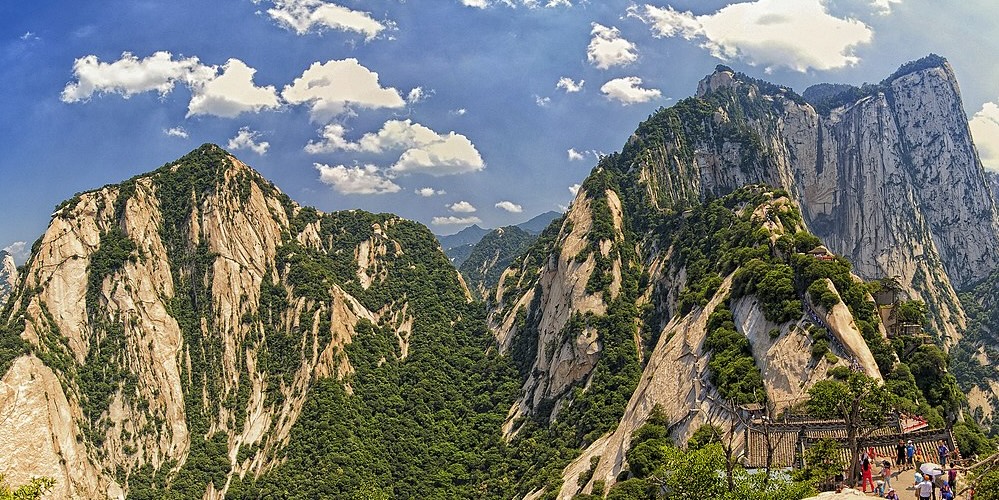
Hua Shan – ©chensiyuan CC BY-SA 4.0 via Wikimedia Commons
Due to its wide latitudinal span, Shaanxi has a variety of climates. The northern parts, including the Loess Plateau, have either a cold arid or cold semi-arid climate, with cold and very dry winters, dry springs and autumns, and hot, humid summers. The area known as Guanzhong is mostly semi-arid, though there are a few areas with a humid subtropical climate, with cool to cold winters, and hot, humid summers that often see early-season heatwaves. The southern portion is much more humid and lies in the humid subtropical zone, with more temperate winters and long, hot, humid summers. Annual mean temperature for the province is roughly between 8 and 16 °C with January temperatures ranging from −11 to 3.5 °C and July temperatures ranging from 21 to 28 °C.
Birding Shaanxi
Over 550 bird species have been recorded in Shaanxi. The most numerous bird species are Turdidae (43 species), Anatidae (28 species), Scolopacidae (22 species) and Ardeidae (18 species). Most bird species in Shaanxi are from Palaearctic realm. Around 35 Chinese endemic bird species recorded in the province, taking up 30% of China’s total.
Covering 35,000 hectares, Foping Nature Reserve is located on the south slope of Qinling Mountains in northwest Foping County with four protection stations. The major types of habitats are temperate deciduous broadleaf, mixed broadleaf and conifer, evergreen and scrub with less than 10% farmlands. Around 200 species are seen annually. Some of the most sought-after include: Temminck’s Tragopan, Golden Pheasant, Speckled Wood-Pigeon, Large Hawk-Cuckoo, Mountain Hawk-Eagle, Chinese Sparrowhawk, Tawny Fish-Owl, Black-capped & Crested Kingfishers, Crimson-breasted Woodpecker, Fire-capped, Pere David’s, Sooty & Yellow-cheeked Tits, Brown Bush, Chinese Leaf, Yellow-streaked, Grey-crowned, Bianchi’s & Martens’s Warblers, Golden-breasted Fulvetta, Great, Spectacled & Fulvous Parrotbills, Barred Laughingthrush, Chinese Babax, Indian Blue Robin, Blackthroat and Slaty Bunting.
Yangxian Crested Ibis Reserve is located in the southwest of Hanzhong. So far Yangxian County has recorded at least 210 bird species, including some rare birds such as Great Bustard, Black Stork, Golden Eagle, Mandarin Duck, Whooper Swan, etc. The breeding area for Crested Ibis is located in a medium and low elevation mountainous area, where the ibis come in January to breed.
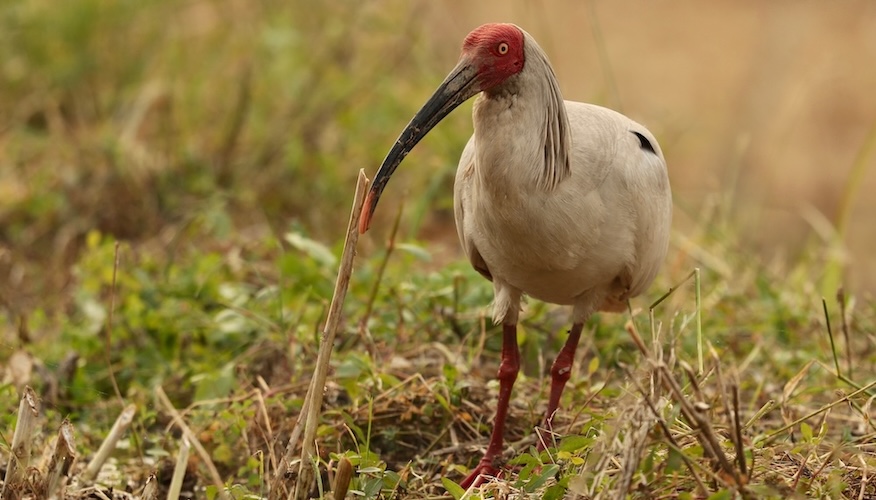
Crested Ibis Nipponia nippon – ©Bird-Photo-Tours ASIA
Located in northwest Shenmu County, Hongjian Nur Lake is the largest desert lake in Shaanxi and is an inland alpine freshwater lake. Being a remote and sparsely-populated area, this lake attracted lots of water birds that over-winter or breed including Relict Gulls – around 80% of the world total population! About 150 species have been recorded including: Red-crested Pochard, Black-necked Grebe, Black-winged Stilt, Far Eastern Curlew, Oriental Plover, Kentish Plover, Relict Gull, Black Kite, Pied Harrier, Amur Falcon and Red-throated Thrush, etc.
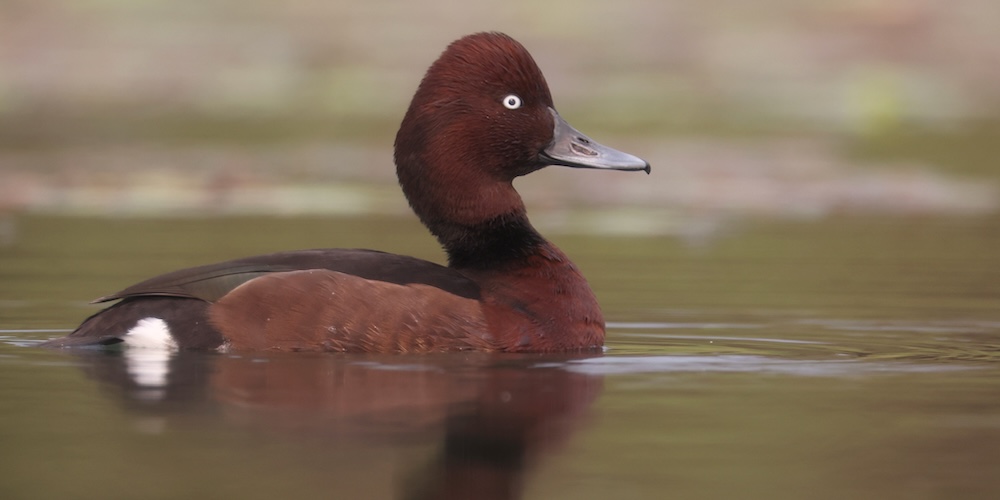
Ferruginous Duck Aythya nyroca – ©Bird-Photo-Tours ASIA
Changqing Nature Reserve is located south slope of Qinling Mountains. Within the reserve, there is some virgin forest as well as second growth forest and logged areas. Though heavily logged, there is still considerable biodiversity there. The major task of the reserve is to protect giant panda and its habitats. As a hot spot for protecting birds, the reserve has recorded well-over 200 species. Inside the reserve, there are some simple roadways going into different habitats. They serve as excellent birding routes.
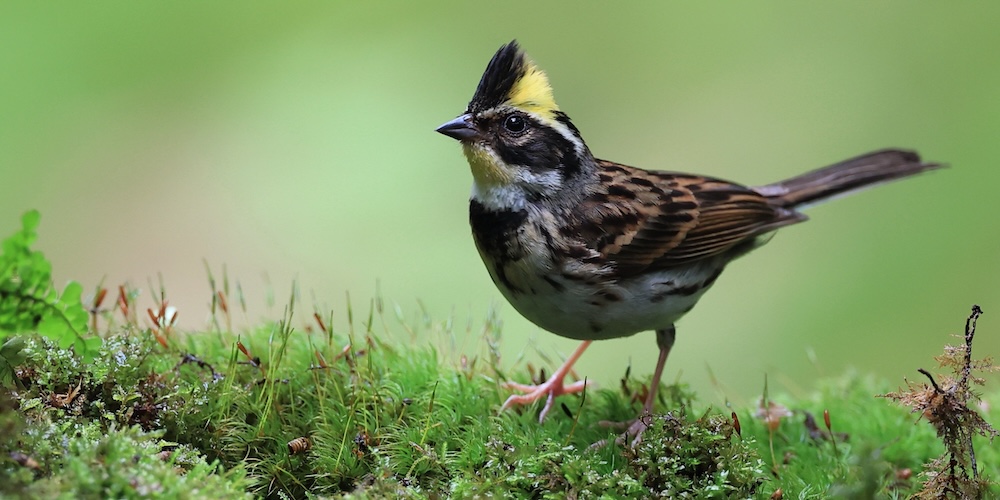
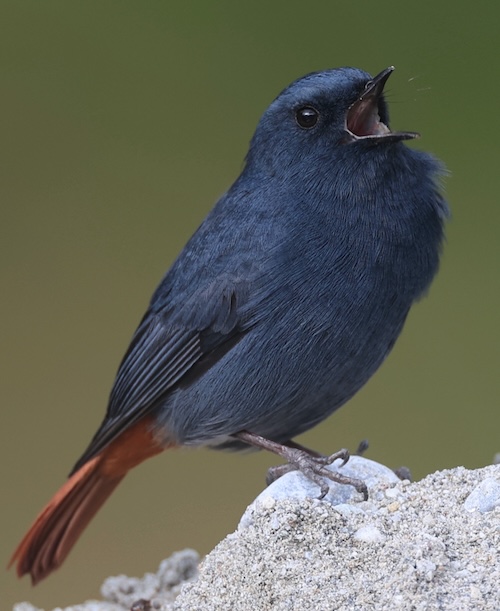
Yellow-throated Bunting Emberiza elegans – ©Bird-Photo-Tours ASIA
Special birds include Chinese Bamboo-Partridge, Temminck’s Tragopan, Golden Pheasant, Crested Ibis, Chinese Sparrowhawk, Tawny Fish-Owl, Crested Kingfisher, Crimson-breasted Woodpecker, Silver-throated, Sooty, Yellow-bellied, Grey-crested & Black-bibbed Tits, Pygmy Cupwing, Mountain & Light-vented Bulbuls, Chinese Leaf, Grey-crowned & Chestnut-crowned Warblers, Vinous-throated Parrotbill, Streak-breasted Scimitar-Babbler, Barred & White-throated Laughingthrushes, Red-billed Leiothrix, Chestnut Thrush, Yellow-rumped Flycatcher, Russet Sparrow, Vinaceous Rosefinch, Slaty and Yellow-throated Buntings, etc.
This page is sponsored by Alpine Birding

This page is sponsored by Bird-Photo-Tours ASIA

-
Hongjiannao - Yulin Prefecture
InformationSatellite ViewHongjiannao can be found in the Yulin Prefecture, in the northwest of the Shaanxi Province. It is considered to one of China’s largest desert lakes and is a haven for aquatic birds. It is home to at least 26 species of bird that currently have second class state protection. -
NNR Changqing, Yangxian County, Hanzhong Prefecture
InformationSatellite ViewMany areas of the Qinling Mountains are now designated National Nature Reserves, often made so in an effort to converse giant panda habitat and other endangered species. With this protection many other plants and animals have benefited, including the crested ibis Nipponia Nippon, one of the most endangered bird species in the world. Due to captive breeding and release programs at Louguan Tai and Yangxian, this species has been brought back from the brink of extinction and can now be seen in the wild in Changqing National Nature Reserve. This reserve is one of the best places to view wildlife, and birdlife, in the Shaanxi Province.Changqing National Nature Reserve is located on the southern slopes of the Qinling Mountains, in south-west Shaanxi about 300 km south of Xi’An city. The Reserve is almost 30,000 hectares in size and its highest peak reaches 3100m. It is one of the most important ecological areas and broadleaf temperate forests in China, providing one of the best and last remaining places where giant panda, golden takin, golden monkey and crested ibis can be found in the wild. It is also home to 39 other threatened animals and 31 threatened plants.Changqing Reserve is one of the best places for birding in the Shaanxi Province, and it has 154 species of birds living within its boundaries, 17 of which are endangered. A further 176 species, 13 endangered, are found in the rural area just outside the Reserve. Some species that can be seen in the reserve and surrounding rural landscape include the golden eagle Aquila chrysaetos, golden pheasant Chrysolophus pictus, blood pheasant Ithaginis cruentus, Temminck's tragopan Tragopan temminckii, Chinese bamboo partridge Bambusicola thoracica, sooty tit Aegithalos fuliginosus, vinaceous rosefinch Carpodacus vinaceus, laughing thrushes, parrotbills, collared finchbill Spizixos semitorques, and the crested ibis Nipponia nippon, which can be seen both in the wild at Changqing and at a captive breeding centre in Yangxian County. -
NP Qiachuan, Heyang County, Weinan Prefecture
Satellite ViewQiachuan National Park is located in the Weinan Prefecture and has been listed as a provincial scenic and historic spot since 1995. This lake area contains remnants of ancient cultures that thrived along the Yellow river and its tributaries, and covers a total area of 110km2. It has abundant water birdlife, particularly noted for its aquatic migratory bird watching. -
NR Huanglong, Yanan Prefecture
InformationSatellite ViewHuanglongshan Nature Reserve is located in north-central Shaanxi in the Yanan Prefecture, and ranges in elevation from 620m to 1783m. It was established in 2003 in an effort to protect a population of Brown Eared Pheasant Crossoptilon mantchuricum, a species endemic to northern China, which was discovered there in 1998. The distribution of this species relates to a band of temperate broadleaf-conifer forest that extends through Shanxi, Beijing, northern Hebei, and westwards into central Shaanxi. -
Taibaishan - Taibai County, Baoji Prefecture
WikiSatellite ViewTaibaishan reserve is located on the northern slopes of the Qinling Mountains, and shares borders with Taibai, Mei, and Zhouzhi Counties. It was declared a National Reserve in 1986, and covers an area of 56,325 hectares, with its highest peak (Taibai Mountain) reaching an elevation of 3,767m.The reserve is mostly mountain forest and grassland, and provides habitat for 1,550 species of wild plants, 192 wild birds, and 62 species of animals. It is home to endangered and vulnerable bird species, including the rufous-headed robin (Luscinia ruficeps) and the black-throated blue robin (Luscinia obscura). Other species which can be located at Taibaishan include Temminck's tragopan, blood pheasant, golden pheasant, Fujian Niltava, Sichuan treecreeper and orange-flanked and golden bush-robins.
-
Wikipedia
https://en.wikipedia.org/wiki/Shaanxi -
Christine Watts
Changqing Reserve, Shaanxi | watts_christine@hotmail.com
-
Number of bird species: 559
(As at June 2025)Provincial Bird: Crested Ibis Nipponia nippon
-
Avibase
PDF ChecklistThis checklist includes all bird species found in Shaanxi , based on the best information available at this time. It is based on a wide variety of sources that I collated over many years. I am pleased to offer these checklists as a service to birdwatchers. If you find any error, please do not hesitate to report them. -
E-Bird
PDF ChecklistThis checklist is generated with data from eBird (ebird.org), a global database of bird sightings from birders like you. If you enjoy this checklist, please consider contributing your sightings to eBird. It is 100% free to take part, and your observations will help support birders, researchers, and conservationists worldwide.

-
Birds of China
| By Liu Yang & Chen Shuihua | Princeton University Press | 2023 | Flexibound | 672 pages, plates with 4000 colour illustrations, colour distribution maps | ISBN: 9780691237527 Buy this book from NHBS.com -
Guide to the Birds of China
| By John MacKinnon | OUP | 2022 | Edition 2 | Paperback | 513 pages, 164 plates with colour illustrations; colour distribution maps | ISBN: 9780192893673 Buy this book from NHBS.com
-
IBA Hongjiannao Lake
InformationSatellite ViewHongjiannao Lake is China's largest "desert freshwater lake" which is located on the border of Shaanxi Province's Yulin City and Inner Mongolia's Ordos City . The lake is the largest inner land fresh lake of Shaanxi and honored as 'Shining Pearl in Sand Sea'. Up to 5,000 pairs of the endangered Relic Gulls breed there. -
NNR Changqing
InformationSatellite ViewThis mountainous reserve is most famous for its Crested ibis Nipponia nippon and mammals such as Giant panda, Golden monkey & Golden takin. -
NNR Foping
InformationSatellite ViewThe Foping Reserve covers 29,240 hectares (72,300 acres) of rugged mountain terrain and is home to a stable panda population. Elevations range from 1,080 to 2,094 m with warm summers and cold winters. 950–1,200 mm of rain falls mostly from July to September, with snow at higher elevations. Forested lands dominate the reserve with a mix of conifers and broadleaf deciduous trees. Mammals found in the reserve include the giant panda, golden monkey, mainland serow, Chinese goral, dwarf musk deer, Asiatic black bear, and North-Chinese leopard. Also red and white giant flying squirrel lives in the reserve. -
NNR Taibai Mountain
InformationSatellite ViewLocated at the juncture of Taibai, Mei and Zhouzhi counties of Shaanxi Province, Taibai Mountain Nature Reserve was established in 1986 with an area of 56,325 hectares. The flora and fauna of Taibai are quite diverse, with species from both northern and southern Chinese environments uniquely coexisting in the region. -
NP Qiachuan
WebpageSatellite ViewIt has abundant water birdlife, particularly noted for its aquatic migratory bird watching. -
NR Huanglong
InformationSatellite ViewThe total length of the travertine in Huanglong Valley is 3.6 km and it is thought to look like a huge golden dragon wheeling through the snow-capped mountains of the valley.
-
eBird
SightingseBirding This Month
-
Alpine Birding
Local Tour OperatorBirding trips here are made for avid birders including yearly-run trips and new China birding trips developed by AlpineBirding team and guided by our bird experts in the best -
Bird-Photo-Tours ASIA
Tour OperatorBird-Photo-Tours ASIA is the specialists in bird photography tours on the Asian continent with a portfolio of 50 bird photography tours across 26 countries and a particular specialism in bird photography in China including Shaanxi Province. -
Summer Wong China Bird Tours
Local Tour OperatorBirding tours throughout China... -
Tibet Tours
Local Tour OperatorBird Watching and Wildlife Travel in South Shaanxi and West Sichuan Bird Watching and Wildlife Travel in South Shaanxi and West Sichuan...
-
2016 [12 December] - Philip He
PDF Report3 Days Birding Excursion in Shaanxi... -
2018 [04 April] - Mark Smiles - Beijing, Shaanxi & Sichuan
PDF ReportThis was a trip with my wife aimed at visiting the main Chinese cultural sites and a return to Sichuan, a province I’d had a taste of in May 2015 when I visited with t wo birding friends from the UAE. Although a little early for most of the returning migrants (most of which I’d previously seen in 2015 ), the timing of this trip proved very successful for certain species (esp ecially pheasants & tit - warblers) which become trickier late on.