
Free State
The Free State formerly known as the Orange Free State, is a province of South Africa covering an area of about 130,000 km². It borders Lesotho in the southeast, and the province of KwaZulu Natal in the east, Eastern Cape to the south, Northern Cape to the west, North West to the northwest, Gauteng to the north and Mpumalanga to the northeast. Its capital is Bloemfontein, which is also South Africa’s judicial capital. It is situated on a succession of flat grassy plains sprinkled with pastureland, resting on a general elevation of 3,800 feet only broken by the occasional hill or kopje. The rich soil and pleasant climate allow for a thriving agricultural industry. The province is high-lying, with almost all land being 1,000 metres above sea level. The Drakensberg and Maloti Mountains foothills raise the terrain to over 2,000m in the east.
The Free State lies in the heart of the Karoo Sequence of rocks, containing shales, mudstones, sandstones and the Drakensberg Basalt forming the youngest capping rocks. Mineral deposits are plentiful, with gold and diamonds being of particular importance, mostly found in the north and west of the province. The Free State is rich in mineral wealth, gold representing 20% of the world’s total gold production. Mining is the province’s major employer. The province has 12 gold mines, producing 30% of South Africa’s output and making it the fifth-largest producer of gold in the world. Gold mines also supply a substantial portion of the total silver produced in the country, while considerable concentrations of uranium occurring in the gold-bearing conglomerates of the goldfields are extracted as a by-product.
Agriculture dominates the Free State landscape, with cultivated land covering 32,000 square kilometres, and natural veld and grazing a further 87,000 square kilometres of the province. Field crops yield almost two-thirds of the gross agricultural income of the province. Animal products contribute a further 30%, with the balance generated by horticulture.
The Free State experiences a continental climate, characterised by warm to hot summers and cool to cold winters. Areas in the east experience frequent snowfalls, especially on the higher ranges, whilst the west can be extremely hot in summer. Almost all precipitation falls in the summer months as brief afternoon thunderstorms, with aridity increasing towards the west. Areas in the east around Harrismith, Bethlehem and Ficksburg are well watered. The capital, Bloemfontein, experiences hot, moist summers and cold, dry winters frequented by severe frost.
The flats in the south provide ideal conditions for large herds of plain game such as black wildebeest and springbok. The ridges, koppies and plains typical of the northern section are home to kudu, red hartebeest, southern white rhinoceros and buffalo. The Southern African wildcat, black wildebeest, zebra, eland, white rhinoceros and wild dog can be seen at the Soetdoring Nature Reserve near Bloemfontein. South African cheetahs were reintroduced in 2013 after a hundred years of regional extinction, at Laohu Valley Reserve near Philippolis.
Birding Free State
Although a large part of the province is rural, the majority of the population is concentrated around the major urban centres of Bloemfontein (the provincial capital)/Thaba Nchu, Welkom, Kroonstad, Sasolburg and Harrismith. Agriculture is an important source of revenue and comprises mainly crops, livestock and game farming in areas unsuitable for crops. Extensive stretches of permanent water resulting from mining activities produce ideal habitat for considerable diversity and numbers of water-birds, especially Greater & Lesser Flamingos.
Much of the Free State has generally flat to slightly rolling topography, broken only by drainage lines and the occasional flat-topped hills or mesas.
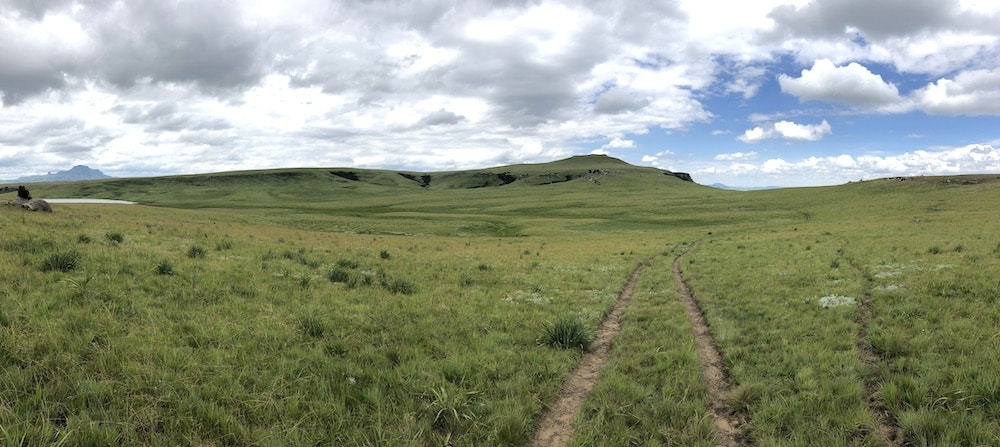
Ingula ©Dylan Vasapolli
Characteristic of the western & north-western Free are natural pan systems, comprising shallow hollows with internal drainage from all sides; these represent important ephemeral sources of salty to fresh water during and after the rainy season in otherwise largely waterless, semi-arid areas.
Apart from the Vaal River which flows southwards along the western boundary of the province, all of the major rivers rise in the higher-lying eastern parts of the Free State (or in neighbouring Lesotho) and flow north, west or south-west, with the densest drainage systems present in the moist northeast. Rivers generally flow during the summer rainy season only, but most retain at least some water throughout the year, providing water for birds in otherwise dry areas. A number of large man-made reservoirs also supplement the meagre natural water supply in a number of areas; state-owned and managed conservation areas usually surround them. Moist marsh areas found in the northeast of the Free State, especially in the Vrede-Memel-Harrismith districts, support a great diversity of bird species. Much of the western parts of the province have no natural water sources during the dry season, and birds in these areas rely heavily on water provided through farming activities.
Most rivers and their tributaries support dense riparian bush and thickets, representing important corridors of woody vegetation in otherwise open, grassland habitats. A number of interesting range extensions of certain bird species (e.g. Crested Barbet, Steel-blue Widowfinch & Red-billed Firefinch) into the more open, grassy interior of the Free State are largely to be attributed to these corridors.
About 80% of the Free State is covered by grassland or mixed karoo shrub/grassland; within this and in the remaining 20%, a diverse number of vegetation types and habitats exist. Closely associated with climatic conditions in the province, ranging from the dry west to the moister east, main vegetation types in the province have a north-south orientation. Four types are recognised: – the semi-arid Kalahari Thornveld/Shrub Bushveld/Pan Turfveld of the west; – the semi-arid False Upper Karoo and False Arid Karoo of the south-west; – the broad band of grassveld in the central parts of the Free State, ranging from dry grassland in the western interior to more moist areas in the east (this area is largely devoid of natural woody vegetation, although extensive thickets of Acacia thornveld occur in places, providing habitat for a number of bird species not usually found in grassveld); – the moist highland grasslands and Afro-alpine vegetation in the far east and north-east. Exotic trees and shrubs in urban areas and around farmsteads also provide important habitats for species that would otherwise not occur in these historically open grassland areas.
The higher-lying, mountainous areas of the far east (Vrede-Memel-Harrismith-Van Reenen-Qwa Qwa-Golden Gate) with higher rainfall, vlei areas and forested valleys provide habitats for a number of bird species found nowhere else in the province (e.g. Olive Woodpecker, Rudd’s Lark, Buff-streaked Chat, Bush Blackcap, Chorister Robin, Barratt’s Warbler, Gurney’s Sugarbird, Lesser Double-collared Sunbird, Blue-billed Firefinch, & Drakensberg Siskin).
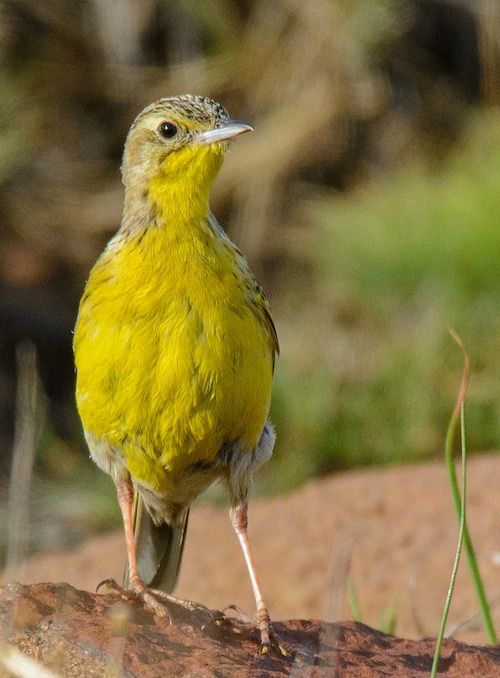
A total of about 430 bird species are regularly recorded in the Free State, including 105 southern African endemics and near-endemics. The province incorporates some of the most important areas in the southern Africa for certain endangered, restricted-range species such as Southern Bald Ibis, Rudd’s Lark, Botha’s Lark and Yellow-breasted Pipit.
This page is sponsored by Birding Ecotours

-
Ficksburg / Gumtree Area
Satellite ViewA predominantly agricultural area in the south eastern Freestate. During October, November and December the elusive and secretive Rudd's Lark frequents the damp and longrassed habitat. Other larks of note include Eastern Long-billed Lark, Pink-billed Lark, Eastern Clapper Lark, Melodious Lark and Spike-heeled Lark. Blue Korhaan, Barrow's Korhaan, South African Cliff-swallow and Buff-streaked Chat. -
Free State Goldfields
Large pans, vleis, Acacia and grasslands supports Threestreaked Brown-crowned Tchagra, Karoo- and Kalahari Robin, Long-tailed Widowbird, Village Indigobird and Orange-breasted Waxbill. -
Golden Gate Highlands & Qwa Qwa National Parks
Satellite ViewBordering one another and in the process of merging into one large conservation area, these two national parks are open all year and offer spectacular mountain scenery. Hotel, self-catering chalet and camping accommodation as well as other facilities are available in Golden Gate Highlands National Park, and a fee is payable when staying in the Park. A number of good, all-weather roads, as well as hiking trails traverse various areas of the two parks. For further information contact tel./fax. 27 58 255 0012. Access is via the tarred R712, either from nearby Clarens (west) or Harrismith (east). Habitats include montane grassland, rocky cliffs and deeply incised valleys with sparse woody vegetation. Areas of protea woodland provide habitat for endemic Gurney's Sugarbird and various sunbird species in summer. A stay of a few days should produce a list of over 100 bird species, although this is dependent on the season, with fewer species present in winter. Montane grassland and associated mountain habitats host Bearded & Cape Vulture and White-necked Raven, while a number of Black/Verreaux's Eagle pairs breed in the area. Coveys of endemic Grey-winged Francolin are common in the grasslands, and Red-winged Francolin and Wailing Cisticola may also be encountered. Pied & Red-winged Starling, Yellow-rumped Widow and Malachite Sunbird are present in the hotel gardens, and Ground Woodpecker may be seen on large roadside boulders within Golden Gate NP. Cape Rock Thrush is often present in Glen Reenen camp. A patch of ouhout (Leucosidea) shrub just across the stream from the main camping site is a good area for Bush Blackcap, Grassbird and Drakensberg Prinia; the shy and elusive Barratt's Warbler may also be found here. Along the R712 in the west of Golden Gate NP, a small hide overlooks a dam where various waterfowl, including African Black Duck as well as various egrets may be present, the latter breeding in partially-submerged trees in summer. Further east on the R712 to Harrismith, but still in the Qwa Qwa National Park section, is the Basutho Cultural Village. Apart from the obvious cultural experience this working village offers, this is the only accessible place in the area where Buff-streaked Chat and Mocking Chat may be found. Gurney's Sugarbird also occurs occasionally at this slightly lower altitude. The strikingly-patterned endemic Bokmakierie should be found throughout the two parks, wherever there is woody vegetation. Blue Korhaan is present in the lower-lying grasslands adjacent to the road in the Qwa Qwa section of the park, and Grey Crowned Crane and Southern Bald Ibis may also be seen close to and in the moister wetland areas. Cloud & Ayres' Cisticola can be heard displaying over these grasslands in summer while the less common Pale-crowned Cisticola occurs in the moister areas only. Although access to the higher-lying grassland areas is somewhat limited, Mountain Pipit (a rare summer migrant to altitudes above 2000m) and Yellow-breasted Pipit do occur. The endemic Orange-breasted Rockjumper, common in the high mountains of neighbouring Lesotho, sometimes moves to lower altitudes in the park, particularly during winter, when snow covers the highest peaks. -
Kroonpark - Kroonstad
InformationSatellite ViewA narrow green belt along the False River with Red Bishop and Giant Kingfisher. -
Memel district
Satellite ViewSituated in the vicinity of the small town of Memel, north-eastern Free State (on the tarred R34 between Vrede and Newcastle); this area offers magnificent scenery and exceptional birding in wetland, mountain, forest and high-altitude grassland habitats. Most habitats are accessible by vehicle, but conditions of unsurfaced roads, particularly after summer thunderstorms, need to be checked beforehand. Various forms of accommodation, from luxury guest house to camping, are available. Contact Memel Getaways 27 58 9240400 or Mahem Guest House 27 58 924 0034 e-mail de_kock@xsinet.co.za for details. This area incorporates the Seekoeivlei Nature Reserve, which includes the internationally important RAMSAR-designated Seekoeivlei wetland. A small entrance fee is payable to enter the reserve, which offers good wetland and grassland birding. Wattled (rare); Grey Crowned & Blue Crane may all be seen here or in the surrounding areas. South African Shelduck, Cape Shoveller as well as a number of other waterfowl, egrets and herons occur here, and the surrounding grasslands support Grey-winged & Red-winged Francolin, Blue Korhaan, Southern Bald Ibis and Pink-billed Lark. Flocks of Long-tailed Widows are particularly conspicuous during summer, when Eastern Long-billed Lark may also be heard calling from the rocky hillsides. Pale-crowned Cisticolas display in moist grassland close to the wetland. Extensive grass-topped plateaus and higher-lying mountain areas (1800m - 2100m) to the south and south-west of Memel represent some of the most important habitat for South Africa's restricted range grassland endemic bird species. This is the stronghold of species such as Southern Bald Ibis, Rudd's & Botha's Lark and Yellow-breasted Pipit. Other bird species found here include Black Harrier, Burchell's Courser, Denham's/Stanley's Bustard, Blue Korhaan and Blue Crane. Cape Vultures often roost on large electricity transmission structures in this area. Sentinel Rock Thrush favours rocky outcrops in otherwise open plateau grassland, while Southern Ant-eating Chat is common along the roadside. African Rock Pipit and Mountain Chat may be heard and seen in rocky areas in the valleys, where Ground Woodpeckers and Pied Starlings nest in roadside embankments and erosion gulleys. Buff-streaked Chat is usually also found here and Jackal Buzzard may be seen in flight overhead. Further south, along the Drakensberg escarpment, small patches of indigenous high-altitude mistbelt forest are home to a number of endemic species, including Chorister Robin, Southern Boubou, Olive Bush Shrike, Cape Batis, Barratt's Warbler, Bush Blackcap, Lesser Double-collared Sunbird and Forest Canary. The scenery in this area is spectacular. -
National Botanical Gardens - Bloemfontein
InformationSatellite ViewAn indigenous tree and shrub garden with an abundance of birds. -
Sandveld Nature Reserve
InformationSatellite ViewOpen throughout the year, this reserve has a good network of unsurfaced roads. A small entrance fee is payable. Self-catering chalet accommodation and camping sites are available; for bookings and further information, call 27 534 331702. Alternative accommodation is available at the nearby Bloemhof Guest House tel./fax. 27 534 332249). Arrangements may be made to walk in the reserve (contact Chief Conservation Officer on 27 534 331703). Habitats include open water, shoreline, marshy areas, grassland, karoo scrub, Kalahari Thornveld savanna and sweet-thorn savanna. The area boasts a checklist of approximately 295 bird species. Lists of 70-80 bird species are usual, with up to 150 species to be seen over a two- to three-day period in late summer. This is a great area for waterbirds (including South African Shelduck and Cape Shoveller) and shorebirds, large concentrations of which may be present, particularly when the water level of the Bloemhof Dam within the reserve is low enough to expose shoreline and mudbanks. A number of interesting bird species are to be found in the grassland (Northern Black Korhaan, Orange River Francolin, Eastern Clapper Lark, Southern Ant-eating Chat, Desert Cisticola) and savanna habitats (Pygmy Falcon (rare); Acacia Pied Barbet, Southern Yellow-billed Hornbill, White-backed Mousebird, Crimson-breasted Shrike, Pririt Batis, Marico & Fiscal Flycatchers, Kalahari Robin, Cape Penduline & Ashy Tits, African Red-eyed Bulbul, Black-chested Prinia and African Barred Warbler). The dainty Fairy Flycatcher is a winter visitor. Among some of the seedeaters that frequent this habitat are Scaly-feathered Finch, Sociable Weaver, Violet-eared, Blue & Black-cheeked Waxbills, Melba & Red-headed Finch, Shaft-tailed, & Eastern Paradise Whydah, Yellow Canary and occasionally, Lark-like Bunting. African White-backed Vultures breed in certain of the camelthorn trees. A small area of karoo scrub hosts species such as Double-banded Courser and Rufous-eared Warbler. Large numbers of South African Cliff Swallows and Little Swifts breed beneath the bridge (accessible via the tarred R34 between Hoopstad (Free State) and Bloemhof (North West Province)) over the Vaal River section of the dam during summer. Larger mammals include White Rhino, Buffalo, Giraffe, Eland, Roan and Sable Antelope, Gemsbok, Kudu, Red Hartebeest, Black and Blue Wildebeest, Burchell's Zebra, Impala, Springbok, Grey Duiker, Steenbok and Black-backed Jackal. Aardwolf is occasionally seen and Yellow Mongoose, Slender Mongoose and Springhare are common. -
Soetdoring Nature Reserve
InformationSatellite ViewSituated about 40 km north-west of Bloemfontein, this reserve incorporates a section of the Modder River, which feeds the Krugersdrift Dam, a large impoundment also included in the reserve, used mainly for irrigation of farmland downstream. Access to best birding areas in the reserve is from the tarred Bloemfontein-Bultfontein road (R700). A small fee is payable at the entrance gate, where a map is available. A large, fenced Predator Park lions and other predators may be viewed is also present. Limited self-catering accommodation is available; for details contact the reserve at 27 51 4339002. Over 270 bird species have been recorded in the reserve and up to 140 species can be expected in a single day during summer. Habitats include open water and exposed shoreline, grasslands, karoo-scrub, wooded hillsides and acacia-dominated riparian thickets associated with the Modder River. Large numbers of Spur-winged & Egyptian Goose, together with South African Shelduck may be seen on the open waters of Krugersdrift Dam, while sheltered bays with exposed muddy shorelines attract various other waterfowl and shorebirds, including Goliath Heron, Yellow-billed Stork, Greater & Lesser Flamingo and Black-winged Stilt. This reserve, situated at the confluence of the Caledon and Orange Rivers at the eastern end of the Gariep Dam near Bethulie in the southern Free State, is closed during the winter months. Little known as a birding destination, this accessible area boasts a bird list of over 200 species, many of which are characteristic of South Africa's dry Karoo interior. Accommodation facilities include camping and self-catering chalets; for booking and further information contact 27 51 763 1114 or 27 51 762 and ask for 2803/8. Three overnight hiking trails have also been laid out in the reserve. Habitats include rivers, exposed sandbanks, riparian bush, a mix of grass/scrub areas and bushy hillsides. -
Tussen-die-Riviere Game Reserve
InformationSatellite ViewThis reserve, situated at the confluence of the Caledon and Orange Rivers at the eastern end of the Gariep Dam near Bethulie in the southern Free State, is closed during the winter months. Little known as a birding destination, this accessible area boasts a bird list of over 200 species, many of which are characteristic of South Africa's dry Karoo interior. Accommodation facilities include camping and self-catering chalets; for booking and further information contact 27 51 763 1114 or 27 51 762 and ask for 2803/8. Three overnight hiking trails have also been laid out in the reserve. Habitats include rivers, exposed sandbanks, riparian bush, a mix of grass/scrub areas and bushy hillsides. Birds associated with the rivers and their confluence include South African Shelduck, Yellow-billed & African Black Duck, Pied Avocet, Caspian Tern, Grey-headed Gull, Kittlitz's & Three-banded Plover, Pied & Giant Kingfisher and African Pied Wagtail. Phragmites reedbeds along the river are host to Namaqua Warbler (with its distinctive call); African Marsh & Cape Reed Warbler. Grassland areas with karoo scrub boast species such as Eastern Clapper, Spike-heeled, Red-capped & Thick-billed Lark, Double-banded Courser, Sickle-winged & Karoo Chat, Yellow-bellied Eremomela and the striking little Rufous-eared Warbler. Look out too for Pale Chanting Goshawk, Grey-winged & Orange River Francolin, Ludwig's Bustard, Karoo Prinia, Buffy & Longbilled Pipit, the latter especially in rocky areas. Vegetated, rocky hillsides are host to a number of interesting species, including Karoo Robin, Layard's Titbabbler, Grey-backed Cisticola, African Rock Pipit, Southern Grey Tit, Short-toed Rock Thrush (often perched on telephone poles along the roads in the reserve); White-throated Canary and Lark-like Bunting. -
Willem Pretorius Game Reserve
InformationSatellite ViewThis provincial reserve surrounding the Allemanskraal Dam situated in the central Free State is open all year. Access is via the N1 motorway, about 30km south of Ventersburg and 150km north of Bloemfontein. An entrance fee is payable and self-catering chalet, camping and rustic bush camp accommodation is available in the reserve (Tel. 27 57 651 4003 or 27 57 651 4168); while self-catering chalet and camping accommodation is also provided at the Aventura Aldam resort overlooking the dam (Tel. 27 57 652 2200; Fax. 27 57 652 0014). There is a good network of unsurfaced roads. The reserve checklist totals about 250 species, of which about 200 are common or regularly seen. Habitats include open water, shoreline, reedbeds, acacia savanna, grassland, wooded valleys and rocky hills with bush-covered slopes. Open grassland habitats in the southern section of the reserve provide habitat for Northern Black & Blue Korhaan, Double-banded Courser, Melodious, Pink-billed, Spike-heeled and Red-capped Lark and various cisticolas. Other birds to look out for here include Secretarybird, Black Harrier and Orange River Francolin. In acacia savanna Scimitar-billed Wood-hoopoe, Acacia Pied Barbet, White-backed Mousebird, Cape & Kalahari Robin, Ashy Tit, Yellow-bellied Eremomela, Black-chested Prinia, Pririt Batis and Three-streaked Tchagra occur. A number of small seedeaters, including Scaly-feathered & Melba Finch, Blue, Violet-eared & Black-cheeked Waxbill, whydahs, Yellow & Black-throated Canary may also be present. From one of the hilltop viewpoints, various swifts (Alpine, African Black Swift, Little & White-rumped Swift) and swallows may be seen. Red-billed Wood-hoopoe and Red-throated Wryneck occur in the poplar trees in the picnic site just before entering the section of the reserve to the north of the dam. In the more lush vegetation of the wooded valleys, Plum-coloured Starling, Martial Eagle and Gabar Goshawk can be found. Allemanskraal Dam provides a haven for waterfowl and shorebirds, including South African Shelduck, Cape Shoveller and Southern Pochard, as well as various herons, egrets, ibises, cormorants and African Darter. African Fish Eagle may also be seen. Larger mammals include White Rhino, Buffalo, Giraffe, Eland, Black Wildebeest (one of the largest populations in South Africa); Red Hartebeest, Common Reedbuck and Burchell's Zebra.
-
Rick Nuttall
Ornithology Department - National Museum - Bloemfontein | ornito@nasmus.co.za
https://nasmus.co.za/ornithology/ -
Supplementary Information - Johan van Tonder
-
Number of bird species: 583
(As at March 2024)
- But around 105 of the southern African endemics can be seen in the state
-
Avibase - Bird Checklists of the World
PDF ChecklistThis checklist includes all bird species found in Free State , based on the best information available at this time. It is based on a wide variety of sources that I collated over many years. I am pleased to offer these checklists as a service to birdwatchers.
-
BirdLife Eastern Free State / Oos Vrystaat
Information -
BirdLife Free State
Facebook PageBirdLife Free State tries to enhance our knowledge of all Birds, their behaviours and their habitat and to introduce the public to the conservation and science of our avian heritage through enjoyable participation by club members. -
Witwatersrand Bird Club
WebsiteThe Witwatersrand Bird Club is the oldest club in the BirdLife South Africa (BLSA) family and is based in Johannesburg, Gauteng. The club is also represented by satellite branches in the East Rand, the West Rand and in Henley-on-Klip…
-
*Parks in the Free State
InformationSatellite View -
GR Willem Pretorius
InformationSatellite ViewThis Reserve is the largest game reserve in the Lejweleputswa District Municipality of South Africa, encircling the Allemanskraal Dam. The Sand River flows from east to west through the reserve. -
NP Golden Gate Highlands
InformationSatellite ViewThis 11,600 hectares of unique environment is true highland habitat, providing home to a variety of mammals – black wildebeest, eland, blesbok, oribi, springbok and Burchell's zebra - and birds, including the rare Bearded Vulture (Lammergeier) and the equally rare Southern Bald Ibis, which breed on the ledges in the sandstone cliffs… -
NP QwaQwa
InformationSatellite ViewThere is a large variety of mammals found in the reserve, namely Springbok, Burchell's zebra, Eland, Black Wildebeest, Blesbok, and Red Hartebeest. The bird life is equally diverse, and the park is a breeding ground to the endangered Cape Vulture. In addition, there are numerous species of reptiles and insects. -
NR Caledon
InformationSatellite ViewIn addition to the wide variety of birds (over 200 species, most of which are waterfowl) it is home to the Black wildebeest, Gemsbok, Impala, Blesbok, Red hartebeest, Springbok and Zebra. -
NR Koppies Dam
InformationSatellite ViewThere are 250 species of bird recorded in the reserve -
NR Laohu Valley Reserve
InformationSatellite ViewIt has been created with the aims of nurturing captive-born South China tigers (Panthera tigris amoyensis) in South Africa and eventually releasing them into the wild in China. It is also aimed to restore South African biodiversity in the parts of the reserve not populated by tigers. It is also home to birds such as crested guineafowl (Guttera pucherani), Egyptian geese (Alopochen aegyptiaca) and South African ostriches (Struthio camelus australis). -
NR Maria Moroka
InformationSatellite ViewThe animals found in the reserve include several species of mammals such as Burchell's zebra, black wildebeest, eland, springbok, blesbok, red hartebeest, jackals, vultures and white rhinos. There are also more than 100 different bird species including many water fowl species which frequent the Montloatse Setlogelo Dam. The blue crane also frequents the reserve. -
NR Sandveld
InformationSatellite ViewSandveld Nature Reserve, situated on the Free State side of the Bloemhof Dam (at the confluence of the Vaal and Vet Rivers), is potentially the province's top birding spot. It comprises a range of habitats (particularly kalahari Thornveld), and boasts a checklist of approximately 295 bird species. A two to three day stay in the pleasant surroundings is recommended. Most habitats are easily accessible. Lists of 70-80 bird species are usual, while up to 150 species may be seen over a weekend in late summer… -
NR Seekoeivlei
InformationSatellite ViewJust north of Memel, the Pampoenspruit meets the Klip River, a tributary of the Tugela River, in a 25-km2 swamp with consisting of a myriad of marshes, pools, floodplains, lakes, and grasslands that often flood during the rainy season. It is the largest inland wetland in the Highveld -
NR Soetdoring
InformationSatellite ViewThe best birding is in the area accessed from the reserve offices which are just off the R700 from Bloemfontein to Bultfontein. After entering the reserve's main gate, a drive through the grassland areas to the southwestern part of the reserve is recommended. Regular grassland species include Small Buttonquail, Northern Black Korhaan, Ant-eating Chat, Long-tailed Widowbird, Rufous-naped Lark, Eastern Clapper Lark, Red-capped Lark, Spike-heeled Lark, Large-billed Lark, and Melodious Lark. Other likely species include Orange River Francolin, Desert Cisticola and both Greater Striped Swallow and Red-breasted Swallow and Black Harrier in summer. If you are lucky, a solitary Kori Bustard or a pair of Secretarybirds may be encountered. -
NR Sterkfontein Dam
InformationSatellite ViewSterkfontein Dam Nature Reserve is an 18,000 ha reserve situated to the south west of Harrismith, Free State, South Africa. The reserve is close to the Drakensberg Mountain nature reserve. The reserve offers campsites and hiking trails and a large variety of fauna and flora. -
NR Tussen-die-Riviere Game Reserve
InformationSatellite View…Along the open sandy shores of the rivers Kittlitz's Plover and Threebanded Plover are characteristic species, together with African Pied Wagtail, African Black Duck, Pied Kingfisher and Giant Kingfisher. The typical trilling call of the Namaqua Warbler can be heard from the reedbed clumps along the river and smaller streams, as well as those of African Marsh Warbler and Cape Reed Warbler…
-
Birding Africa
Tour OperatorBirding Africa is run by three Capetonian birders and naturalists, Callan Cohen, Claire Spottiswoode and Peter Ryan, all based at the University of Cape Town's Percy FitzPatrick Institute of African Ornithology. Callan and Claire are postgraduate research students, and have recently published an new birding site guide to Cape Town and beyond: Essential Birding - Western South Africa. Peter is a lecturer and researcher, and the author of numerous publications, most recently a new field guide to the birds of Afrotropics.
-
Amohela ho Spitskop
AccommodationAmohela ho Spitskop is a 310 hectare Country Retreat in the magnificent Eastern Free State Highlands, on the Clocolan/Ficksburg border
-
Bird ringing in the Free State National Botanical Gardens
ArticlePrevious studies on birds in the greater Bloemfontein area include checklists andsurveys such as those carried out at theKing’s Park and Zoological Gardens, theBloemspruit area, the sewage dams atOoseinde and Bloemspruit and also atthe Franklin Nature Reserve in the cen-tral parts of the city (Kopij 1997, 1999,2002; Kopij & de Swardt 1998)...