
Union of the Comoros
The Comoros is an archipelagic country made up of three islands in Southeastern Africa, located at the northern end of the Mozambique Channel in the Indian Ocean. Its capital and largest city is Moroni. The religion of the majority of the population, and the official state religion, is Sunni Islam. The Comoros is the only country of the Arab League which is entirely in the Southern Hemisphere. It is a member state of the African Union, the Organisation internationale de la Francophonie, the Organisation of Islamic Co-operation, and the Indian Ocean Commission. The country has three official languages: Shikomori, French and Arabic.
Covering just 1,659 km2 (641 square miles), the Comoros is the third-smallest African country by area. Its population is about 883,000 people. The sovereign state consists of three major islands and numerous smaller islands, all of the volcanic Comoro Islands with the exception of Mayotte. Mayotte voted against independence from France, and continues to be administered by France as an overseas department. The Comoros is formed by Ngazidja (Grande Comore), Mwali (Mohéli) and Ndzwani (Anjouan), three major islands in the Comoros Archipelago, as well as many minor islets. The islands are officially known by their Comorian language names, though international sources still use their French names (given in parentheses above). The capital and largest city, Moroni, is located on Ngazidja and the most densely populated city is Anjouan. The archipelago is situated in the Indian Ocean, in the Mozambique Channel, between the African coast (nearest to Mozambique and Tanzania) and Madagascar, with no land borders.
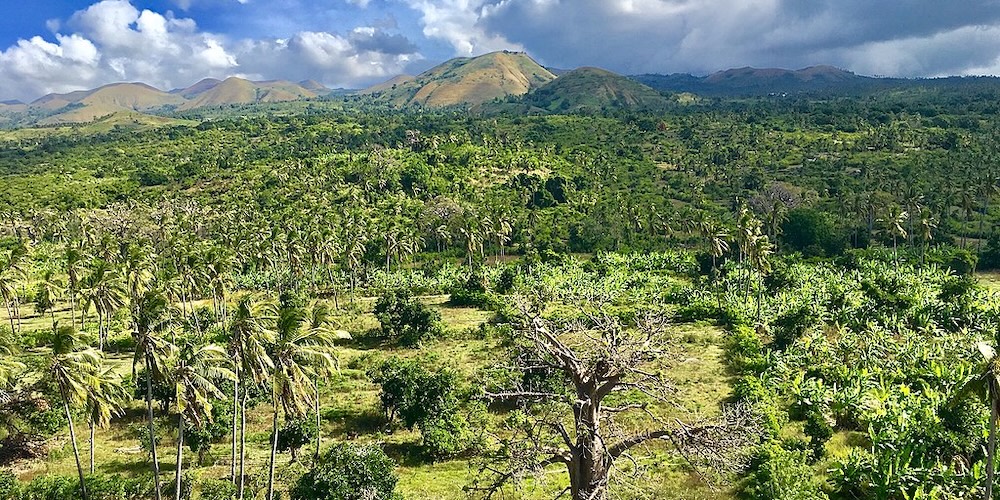
Ngazidia Landscape – ©John Crane CC BY 2.0 via Wikimedia Common
The interiors of the islands vary from steep mountains to low hills. Ngazidja is the largest of the Comoros Archipelago, with an area of 1,024 km2. It is also the most recent island, and therefore has rocky soil. The island’s two volcanoes, Karthala (very active 7,746 feet)) and La Grille (dormant), and the lack of good harbours are distinctive characteristics of its terrain. Mwali, with its capital at Fomboni, is the smallest of the four major islands. Ndzwani, whose capital is Mutsamudu, has a distinctive triangular shape caused by three mountain chains – Shisiwani, Nioumakele and Jimilime – emanating from a central peak, Mount Ntingui 5,167 feet. The Comoros constitute an ecoregion in their own right, Comoros forests.
The climate is generally tropical and mild, and the two major seasons are distinguishable by their rain. The temperature reaches an average of 29–30 °C in March, the hottest month in the rainy season (called kashkazi/kaskazi meaning north monsoon, which runs from November to April), and an average low of 19 °C in the cool, dry season (kusi (meaning south monsoon), which runs from May to October).
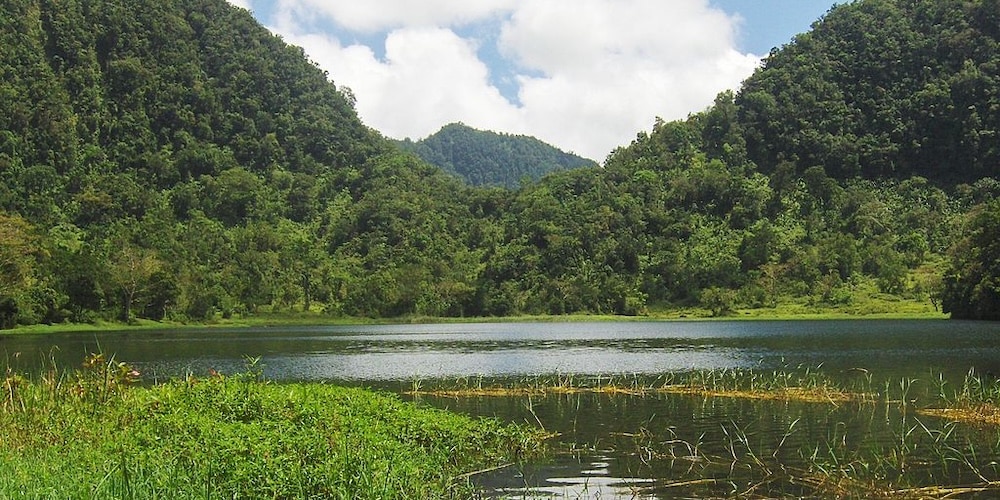
Mount Ntringui National Park – ©Peioma, Public domain, via Wikimedia Commons
There are six national parks in the Comoros – Karthala, Coelacanth, and Mitsamiouli Ndroudi on Grande Comore, Mount Ntringui and Shisiwani on Anjouan, and Mohéli National Park on Mohéli. Karthala and Mount Ntrigui national parks cover the highest peaks on the respective islands, and Coelacanth, Mitsamiouli Ndroudi, and Shisiwani are marine national parks that protect the island’s coastal waters and fringing reefs. Mohéli National Park includes both terrestrial and marine areas.
Birding the Comoros
The Comoros are a superb archipelago of four volcanic and (largely) forested islands between East Africa and Madagascar. As a birding destination, they have much to offer, including more than 20 endemics – including such desirable species as Comoro Blue Vanga and the monotypic Humblot’s Flycatcher – set in rugged volcanic landscapes fringed by idyllic tropical beaches, and linked by good air and road infrastructure.
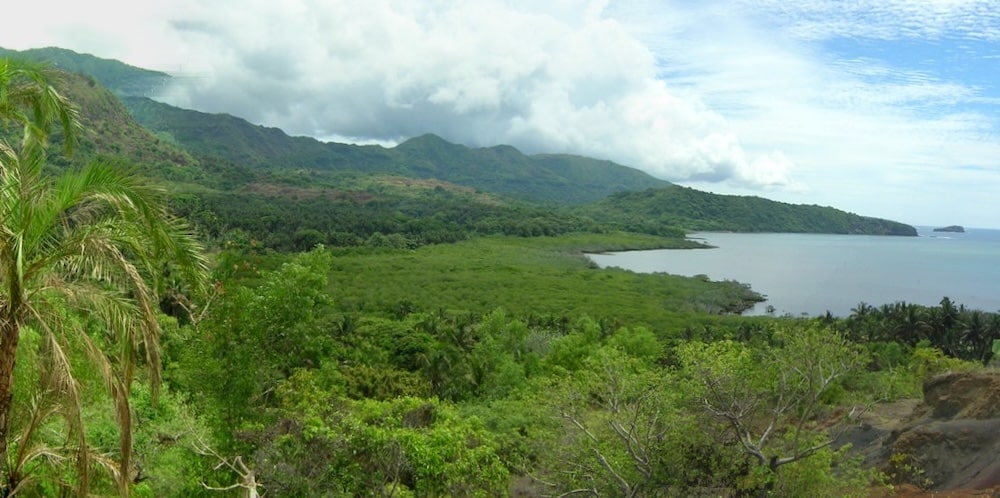
Mohéli Mangroves – ©Daryl Wallace CC BY-SA 2.0 via Wikimedia Commons
Grand Comore, the largest and arguably most accessible island, is dominated by the 2361m-high bulk of the Karthala volcano, cloaked at higher altitudes in lush forest and capped by alpine heathland that surrounds its crater (the world’s largest). Here and on the lesser (and inactive) volcanoes at La Grille, as well as at various localities at lower altitude, no less than five Grande Comore endemics (as well as a further six endemic to the archipelago) are on offer: in order of ease of finding, these are Grande Comoro Drongo, Grande Comoro Brush-Warbler, Humblot’s Flycatcher, Karthala White-eye and Karthala Scops Owl. Endemics that are largely common and accessible on most of the islands are Comoro Thrush, Comoro Pigeon, Humblot’s Sunbird, Comoro Bulbul, Comoro Fody and the magnificent Ninga or Comoro Blue Pigeon.
Mohéli, the smallest and most laid-back island of the archipelago, also possesses a considerable area of untouched forest spanning its 790m ridge. Here, a day’s hike is almost certain to produce the superb Comoro Blue Vanga, as well as two further species restricted to this tiny island: Benson’s Brush Warbler and Comoro Green Pigeon. A fourth endemic, Mohéli Scops Owl, is predictably harder to find. Mohéli also offers excellent opportunities for seeing nesting Green Turtles, and the endangered and spectacular Livingstone’s Flying Fox – a giant black bat with the wingspan of a small eagle.
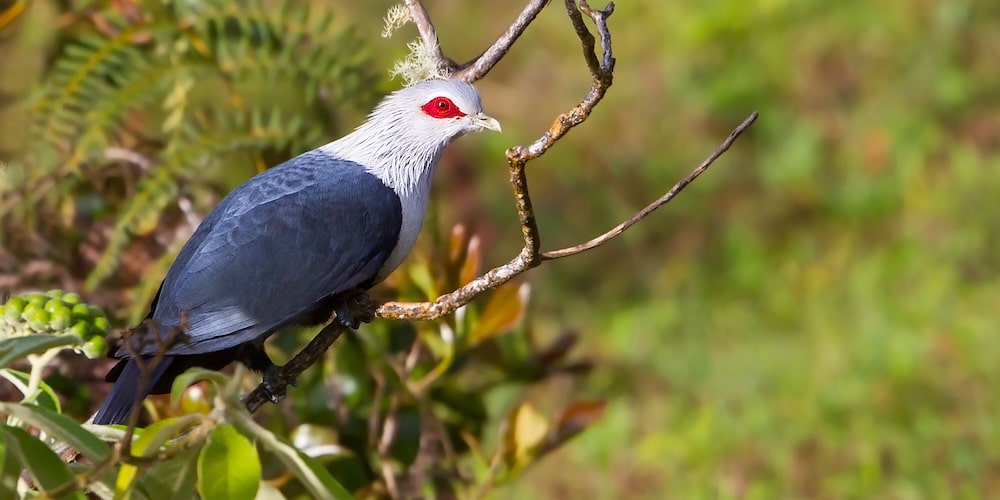
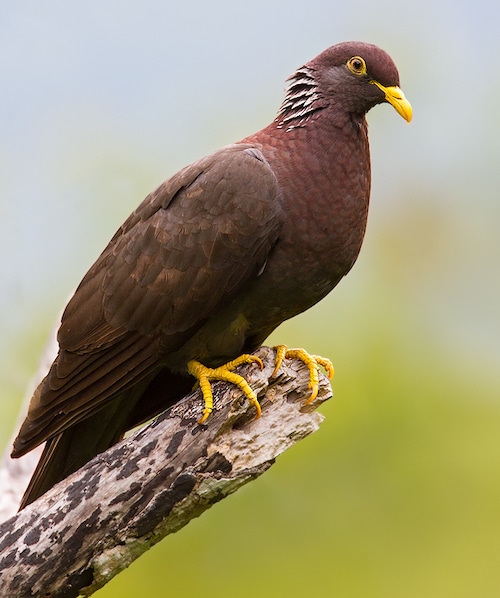
Comoro Blue Pigeon Alectroenas sganzini – ©Dubi Shapiro
Anjouan offers two further endemics – Anjouan Sunbird and Anjouan Scops Owl – or even three if it’s very distinctive thrush is given species rank. The Sunbird is common even within the grounds of the airport area, and the second very difficult indeed to see. Anjouan has suffered considerably from human pressure, although patches of forest still cling to its spectacularly rugged mountains.
October to December are the best months to visit – before the rains set in in earnest, but when bird activity is still reasonably high. Regular international flights via Kenya, Tanzania, Yemen and Madagascar service Dzaoudzi, Mayotte and Moroni, Grande Comore, and small planes make inexpensive daily flights between the four islands. There are adequate hotels and the possibility of taxi hire on all the islands.
Mayotte is part of the island group although, it is by choice a French-administered territory. It has an excellent infrastructure geared to well-heeled French tourists and is easy to get around. As the oldest island of the archipelago, its topography is also the gentlest and dominated by drier, open woodland and forest. The endemics there are Mayotte Drongo, Mayotte White-eye and Mayotte Sunbird. Again, all are reasonably easy to find, the last two even common at sea level. (see its own pages)
-
Claire Spottiswoode
| claire@birding-africa.com
https://birdingafrica.com
-
Number of bird species: 166
(As at February 2025)
Number of endemics: 23
Comoro Green Pigeon Treron griveaudi
Anjouan Scops Owl Otus capnodes
Grand Comoro Scops-Owl Otus pauliani
Moheli Scops Owl Otus moheliensis
Comoros Black Parrot Coracopsis sibilans
Comoro Cuckooshrike Ceblepyris cucullatus
Comoro Blue Vanga Cyanolanius comerensis
Comoros Thrush Turdus bewsheri
Grand Comoro Flycatcher Humblotia flavirostris
Grand Comoro Bulbul Hypsipetes parvirostris
Moheli Bulbul Hypsipetes moheliensis
Mount Karthala White-eye Zosterops mouroniensis
Kirk's White-eye Zosterops kirki
Anjouan White-eye Zosterops anjuanensisa
Moheli White-eye Zosterops comorensis
Grand Comoro Brush-Warbler Nesillas brevicaudata
Anjouan Brush-Warbler Nesillas longicaudata
Mohelli Brush-Warbler Nesillas mariae
Humblot`s Sunbird Nectarinia humbloti
Anjouan Sunbird Cinnyris comorensis
Moheli Sunbird Cinnyris voeltzkowi
Comoro Drongo Dicrurus fuscipennis
Grand Comoro Fody Foudia consobrinaNumber of endemics: 1 Breeding Endemic
Moheli Shearwater Puffinus temptator
-
Avibase
PDF ChecklistThis checklist includes all bird species found in Comoros , based on the best information available at this time. It is based on a wide variety of sources that I collated over many years. I am pleased to offer these checklists as a service to birdwatchers. If you find any error, please do not hesitate to report them. -
E-Bird
PDF ChecklistThis checklist is generated with data from eBird (ebird.org), a global database of bird sightings from birders like you. If you enjoy this checklist, please consider contributing your sightings to eBird. It is 100% free to take part, and your observations will help support birders, researchers, and conservationists worldwide. -
Wikipedia
Annotated ListThis is a list of the bird species recorded in the Comoros. The avifauna of the Comoros include a total of 166 species, of which 17 are endemic, and 12 have been introduced by humans.

-
Birds of the Indian Ocean Islands
| By Sinclair, Ian & Langrand, Olivier | New Holland Publishers | 2013 | Paperback | 264 pages, 71 plates with 1160 colour illustrations; colour distribution maps | Out of Print | ISBN: 9781431700851 Buy this book from NHBS.com -
Les Oiseaux des Comores [Birds of the Comoros]
| By Michel Louette | Musée Royal de l'Afrique Centrale | 1998 | Paperback | 192 pages, 8 colour & 27 b/w photos, b/w illustrations, b/w distribution maps, 5 tables | ISBN: #25237 Buy this book from NHBS.com -
Photographic Guide to the Birds of the Indian Ocean Islands
| (Madagascar, Mauritius, Seychelles, Reunion and the Comoros) | By Ian Sinclair, Olivier Langrand & Fanja Andriamialisoa | Random House Struik | 2006 | Paperback | 128 pages, 142 colour plates | Out of Print | ISBN: 9781770071759 Buy this book from NHBS.com
-
BirdLife
InformationComoros bird data
-
African Bird Club
WebsiteThe Comoro archipelago comprises four islands. Ngazidja (Grande Comore), Mwali (Mohéli) and Ndzuani (Anjouan) became independent in 1975 and today form the Union des Comores Republic (UDC), whereas Maore remained under French administration as Collectivité territoriale de Mayotte (now Collectivité départementale) but is claimed by the Union. From an ornithological perspective, the four islands represent an area of high endemism and it makes sense to cover them together. Although there has been little ornithological activity in recent years in UDC, an important atlas project has been ongoing since 2003 on Mayotte, contact Michel Louette… -
Dawin Initiative
WebpageA participatory conservation programme for the Comoro Islands -
UNDP
WebpageProtecting biodiversity in Comoros
-
*List of protected areas of the Comoros
Information Satellite ViewInteractive list of National Parks & Ramsar sites -
Important Bird Areas
WebsiteSatellite ViewThe Comoro archipelago is classed as a single Endemic Bird Area (EBA) with 19 restricted-range species. 9 Important Bird Areas (IBAs) have been identified in total of which 4 are in UDC, covering some 35,000 ha, and 5 are on Mayotte, covering some 7,000 ha or 19% of the land area. Most IBAs are unprotected by law -
NP Parc Marin de Mohéli
Facebook PageSatellite View
-
eBird
SightingseBirding This Month
-
BirdQuest
Tour OperatorCOMORO ISLANDS – An Indian Ocean endemics adventure -
Birding Africa
Tour OperatorBirding Africa organize regular tours of the Comores. -
Birding Direct
Tour OperatorThe 4 volcanic islands of the Comoros archipelago, situated off the central-east African coast, offer some fabulous birding opportunities... -
Birding Ecotours
Tour OperatorOur exciting Comoros birding tours to these endemic-rich islands take in an assortment of range-restricted Comoros endemics as well as many highly desirable seabird species. -
Ornis Birding Expeditions
Tour OperatorOver 40 specialties expected, including the monotypic Humblot's Flycatcher, Comoros Blue Pigeon, Comoros Blue Vanga, Mayotte Sunbird, Karthala White-eye, Moheli Scops Owl, Anjouan Scops Owl... -
Rockjumper
Tour OperatorComoros & Mayotte
-
2018 [01 January] - Budget Birders
Report...As we sat around playing tape and scanning, we started to find a few of the more common endemics such as Anjouan Thrush, Anjouan Sunbird, and Anjouan White-eye. We were pretty surprised when we heard a sparrowhawk start to call (after all this bird was considered extinct just a few years prior) and soon we had tracked down a pair of Anjouan Sparrowhawks in the valley below us... -
2018 [10 October] - János Oláh - Cormoros & North Madagascar
PDF ReportThis was our fourth tour to explore some of the more remote areas of Northern Madagascar and the Comoro Islands. We were pioneers in the area back in 2008 but even nowadays very few birders visit the Comoros, and even fewer birding companies offer such a comprehensive tour. A -
2018 [10 October] - Michael Mills
PDF ReportOur first tour to the fascinating islands of Comoros was a resounding success. With airlines behaving well we had no trouble finding all the endemic birds, which included four terrific scops owls. -
2022 [10 October] - Daniel Keith Danckwerts
PDF Report...with isolated patches of secondary growth and degraded forest. Here we quickly found, Comoros Blue Pigeon, Frances's Sparrowhawk (race griveaudi), Madagascar Green (race moebii) and Humblot's (race humbloti) Sunbirds, and Kirk's White-eye... -
2024 [10 October] - Hannu Jannes
ReportThe rest of the day was mostly spent birding along the paved mountain road above the Moya village, where we encountered nearly all the remaining target birds including Greater Vasa Parrot, Malagasy Paradise Flycatcher of the form vulpina, Anjouan White-eye, Anjouan Sunbird, Anjouan Brush Warbler and the Anjouan form anjuanensis of the Comoros Fody -
2024 [11 November] - Nigel Redman
PDF ReportOur tour this year was perhaps our most successful ever, with all 27 endemic species being seen, as well as no fewer than 31 endemic subspecies...