

Republic of Cameroon
The Republic of Cameroon is a country in western Central Africa. It is bordered by Nigeria to the west; Chad to the northeast; the Central African Republic to the east; and Equatorial Guinea, Gabon and the Republic of the Congo to the south. Cameroon’s coastline lies on the Bight of Biafra, part of the Gulf of Guinea and the Atlantic Ocean. Due to its strategic position at the crossroads between West Africa and Central Africa, it has been categorized as being in both camps. Cameroon’s population of nearly 31 million people speak 250 native languages, in addition to the national tongues of English and French, or both. Yaoundé is the capital with 4.7 million people, but the port of Douala is rivalling it as largest city, rapidly growing with over 4.2 million inhabitants.
At over 475,000 km2 (nearly 184,000 square miles), Cameroon is the world’s 53rd-largest country. It is slightly larger than the nation of Sweden and the state of California; Cameroon is comparable in size to Papua New Guinea. The country is located in Central and West Africa known as the hinge of Africa. Cameroon is ‘Africa in miniature’ because it exhibits all major climates and vegetation of the continent: coast, desert, mountains, rainforest, and savanna.
Cameroon is divided into five major geographic zones distinguished by dominant physical, climatic, and vegetative features. The coastal plain extends 15 to 150 kilometres inland from the Gulf of Guinea and has an average elevation of 90 metres (295 ft). Exceedingly hot and humid with a short dry season, this belt is densely forested and includes some of the wettest places on earth, part of the Cross-Sanaga-Bioko coastal forests. The South Cameroon Plateau rises from the coastal plain to an average elevation of 650 metres (2,133 ft). Equatorial rainforest dominates this region, although its alternation between wet and dry seasons makes it less humid than the coast. This area is part of the Atlantic Equatorial coastal forests ecoregion.
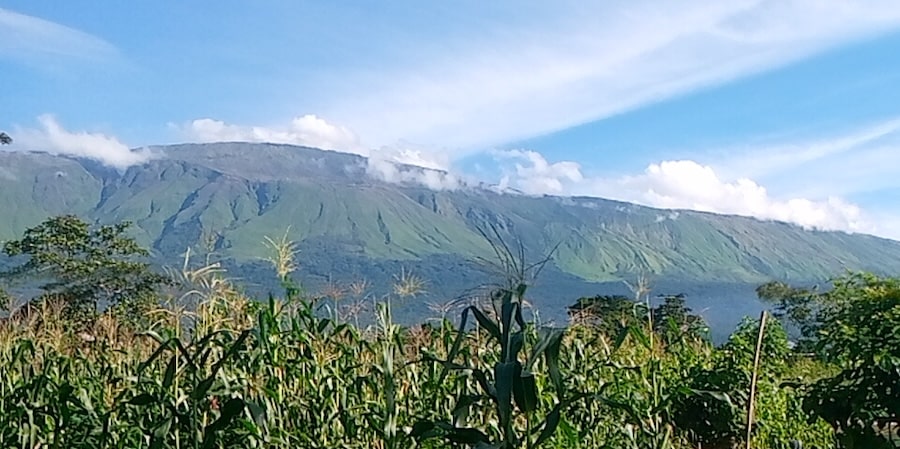
Mount Cameroon – Public Domain via Wikimedia Commons
An irregular chain of mountains, hills, and plateaus known as the Cameroon range extends from Mount Cameroon on the coast – Cameroon’s highest point at 4,095 metres (13,435 ft) – almost to Lake Chad at Cameroon’s northern border. This region has a mild climate, particularly on the Western High Plateau, although rainfall is high. Its soils are among Cameroon’s most fertile, especially around volcanic Mount Cameroon. Volcanism here has created crater lakes. On 21 August 1986, one of these, Lake Nyos, belched carbon dioxide and killed between 1,700 and 2,000 people. This area has been delineated by the World Wildlife Fund as the Cameroonian Highlands forests ecoregion.
The southern plateau rises northward to the grassy, rugged Adamawa Plateau. This feature stretches from the western mountain area and forms a barrier between the country’s north and south. Its average elevation is 1,100 metres (3,609 ft), and its average temperature ranges from 22 °C (71.6 °F) to 25 °C (77 °F) with high rainfall between April and October peaking in July and August The northern lowland region extends from the edge of the Adamawa to Lake Chad with an average elevation of 300 to 350 metres (984 to 1,148 ft). Its characteristic vegetation is savanna scrub and grass. This is an arid region with sparse rainfall and high median temperatures.
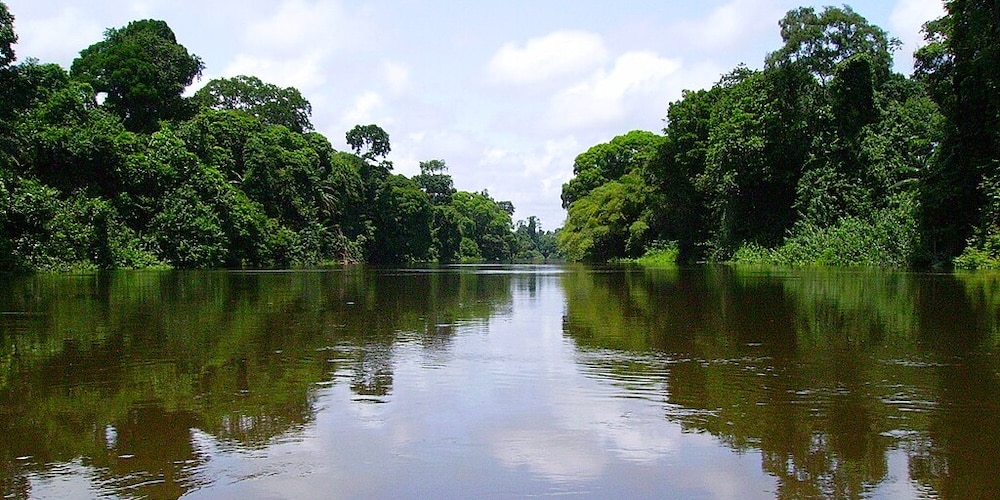
Nyong River – ©Mathieu lubrano CC BY-SA 4.0 via Wikimedia Commons
Cameroon has four patterns of drainage. In the south, the principal rivers are the Ntem, Nyong, Sanaga, and Wouri. These flow southwestward or westward directly into the Gulf of Guinea. The Dja and Kadéï drain southeastward into the Congo River. In northern Cameroon, the Bénoué River runs north and west and empties into the Niger. The Logone flows northward into Lake Chad, which Cameroon shares with three neighbouring countries.
Birding Cameroon
Cameroon is one of the wettest parts of Africa and records Africa’s second-highest concentration of biodiversity. Forest cover is around 43% of the total land area, equivalent to 20,340,480 hectares of forest in 2020, down from 22,500,000 hectares (ha) in 1990. In 2020, naturally regenerating forests covered 20,279,380 hectares (ha), and planted forests covered 61,100 hectares (ha). Around 15% of the forest area was found within protected areas, for the year 2015, 100% of the forest area was reported to be under public ownership. To preserve its wildlife, Cameroon has more than 20 protected reserves comprising national parks, forest reserves, and sanctuaries. The first two protected areas were created in the northern region under the colonial administration; Mozogo Gokoro Reserve and the Bénoué Reserve, which was soon followed by the Waza Reserve. The coverage of reserves was initially about 4 percent of the country’s area, rising to 12 percent; the current administration proposes to cover 30 percent of the land area.
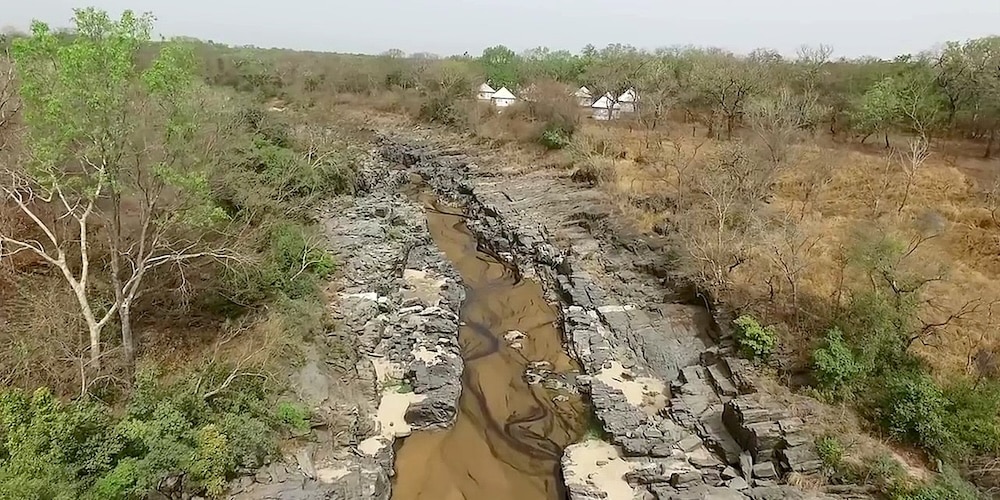
Benoue National Park – ©Ndijose CC BY-SA 4.0 via Wikimedia Commons
Its rich wildlife consists of 8,260 recorded plant species including 156 endemic species, 409 species of mammals of which 14 are endemic, 970 species of birds which includes 11 endemic species as well as numerous sub-species, 250 species of reptiles and 200 species of amphibians. The habitats of these species include the southern region comprising tropical lowland, coastline on the Gulf of Guinea. Mangrove forests, 270,000 hectares (670,000 acres) in size, are along the coast line. Montane forests and savannas are in the northern region of the country. Important protected areas for these species are the Mbam Djerem National Park, Benoue National Park, Korup National Park, Takamanda National Park, and the Kagwene Gorilla Sanctuary. Cameroon is an important breeding area for marine and freshwater species such as crustaceans, molluscs, fish, and water birds.
Despite being the richest country in West Africa for birds, Cameroon remains little known ornithologically. It is probably the most accessible country in West-Central Africa with many exceptionally exciting birds. Lying at the junction between West and Central Africa, Cameroon supports 970 bird species including the Golden Nightjar discovered in the last decade. Of these, 704 are resident, 218 are seasonal migrants (147 from the Palaearctic and 73 intra-African). Eleven species are endemic to geographical Cameroon. However, two vital Endemic Bird Areas form a major part of Cameroon, Cameroon and Gabon lowlands (EBA 085); which has six species found nowhere else in the world, all of these occur in Cameroon including the mythical Grey-necked Rockfowl. The other EBA, the Cameroon Mountains (EBA 086); holds some 29 restricted range endemics that are confined to Cameroon, and a small portion of Nigeria.
Access – Although occasionally frustrating, Cameroon is a well-connected country with a road an air network that can (and usually does) get one from A to B very effectively. Regular flights connect the two main birding zones in the north and south of the country and the roads in the north are good year-round. In the south, it is best to avoid the rainy season between May and August when the roads become muddy paths and places such as Korup are virtually inaccessible. For most of the year however, although the roads are poor, most sites can be visited.
Timing – March and early April are the optimal times to visit Cameroon. This is before the heavy rains come, but many birds in the south are actively setting up territories and many of the seasonal migrants are still present in the far north. Avoid going to the south in May to August when rain can severely impact your chances of making it to your preferred destinations, and even if you get there you may still be rained out.
Topography – Mount Cameroon, just to the southwest of Douala, is the tallest peak in West Africa at 4,095 metres. It dominates the southwestern portion of the country. It is connected to the Cameroon Highlands, which comprise the Rumpi Hills, Mt Kupé, & Bamenda Highlands, which penetrate into Nigeria (the Obodu Plateau). Geographically, these highlands are connected to offshore Bioko and are part of a continuous volcanic intrusion that extends inland as far as the Adamawa plateau and the Mandara Mountains in the northwest at 11° N. The remainder of the country comprises mostly flat lowlands undulating between 800 m and sea-level.
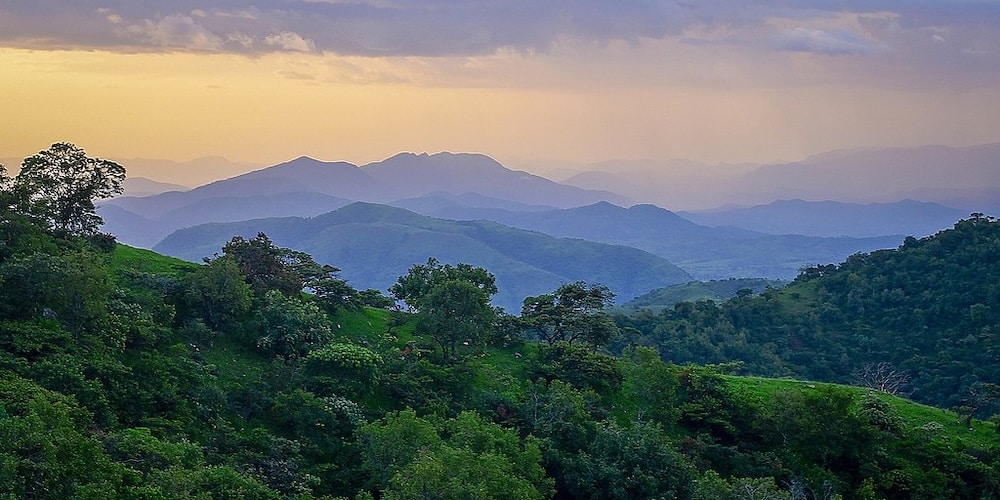
Gashaka-Gumti National Park, Cameroon Highlands – ©Dotun55 CC BY-SA 4.0 via Wikimedia Commons
Birding Habitats – The diversity of habitats is staggering and is replicated no-where else in West Africa. Far north Cameroon comprises the low sparse thorn-dominated woodlands and grasslands of the Sahel biome. This extends from just north of Benoue. There are many characteristic species of this dry woodland-grassland mosaic, although they are shared with many other West African nations. To the south, Cameroon is covered by Guinea savannah, which is a broad-leaved woodland. The third major habitat is Afro-montane Forest. Within Cameroon, this habitat is found on Mt Cameroon, Mt Kupé, the Bamenda-Banso highlands and supports 29 restricted range species in the Cameroon Mountains (EBA 086); which are confined to Cameroon, and a small portion of Nigeria.
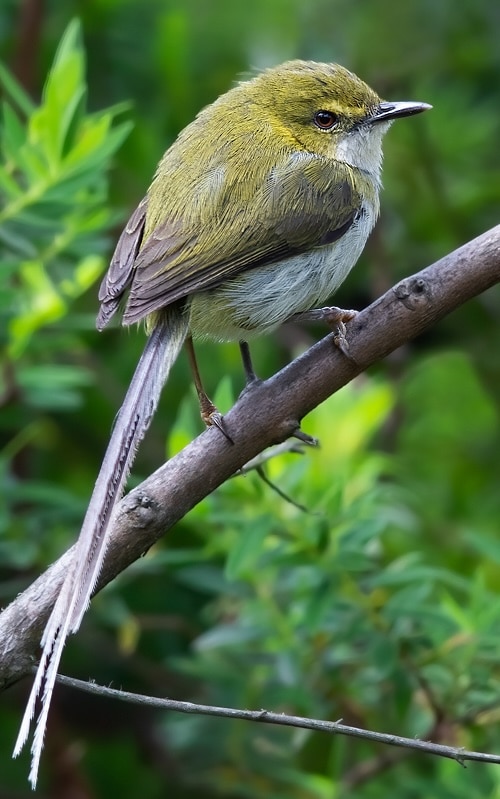
They include: Mount Cameroon Francolin, Cameroon Olive Pigeon, Bannerman’s Turaco, Mountain Saw-wing, Cameroon Greenbul, Grey-throated Greenbul, Cameroon Olive Greenbul, Grey-headed Greenbul, Yellow-breasted Boubou, Mount Kupé Bush Shrike, Green-breasted Bush Shrike, Monteiro’s Bush Shrike, Mountain Robin Chat, White-throated Mountain Babbler, Brown-backed Cisticola, Green Longtail, Bamenda Apalis, Bangwa Forest Warbler, White-tailed Warbler, Black-capped Woodland Warbler, Fernando Po Batis, Banded Wattle-eye, Cameroon Sunbird, Ursula’s Sunbird, Mount Cameroon Speriops, Fernando Po Speriops, Fernando Po Oliveback and Bannerman’s Weaver. Although only seven of these species are geographically endemic to Cameroon, all of them are most easily seen here.
The remainder of the country, particularly in the far south and west comprises lowland Guinea-Congo Forests. Another vital Endemic Bird Area forms this part of Cameroon, Cameroon and Gabon lowlands (EBA 085); which has six species found nowhere else in the world, all of these occur in Cameroon, Forest Swallow, Grey-necked Rockfowl, Dja River Warbler, Gabon Batis, Bates’s Weaver and Rachel’s Malimbe. Added to the plethora of endemics many non-endemic specials are found in Cameroon, not least of which are Egyptian Plover, Arabian Bustard, Quail Plover, Stone Partridge, Violet Turaco, Sudan Golden Sparrow and Scissor-tailed Kite in the northern savannas and Grey Pratincole, Bare-cheeked Trogon, Grey-sided and Red-sided Broadbills in the forested southwest.
-
Bakossi National Park
InformationSatellite ViewThe Bakossi National Park (BNP) is a protected area within the Bakossi Forest Reserve, created by a decree in early 2008. The park covers 29,320 hectares (72,500 acres), and was justified on the basis of preserving plant diversification. -
Bamenda Highlands: Bafut-Nguemba Forest Reserve
Satellite ViewThis area comprises remnant montane and riverine forest within the Cameroon Mountains EBA. Leaving Bamenda, it is worthwhile checking the grounds of the Bali Safari Lodge, where Bamenda Apalis has been recorded, particularly on the stretch of road towards Bamenda, check the first 500 m. To get to Bafut-Nguemba, turn east off the N6 18 km south of Bamenda, or 33 km north of Mbouda, drive a further three kilometres before reaching forested gullies amongst Eucalyptus plantation. Although all the specials have been seen here, if you can head straight up to Lake Awing, where most of the target birds are easy. Bannerman's Turaco, Banded Wattle-eye and Bannerman's Weaver are all seen here with relative ease. It is undoubtedly the best site to see two highly localised endemics: Bannerman's Turaco and Banded Wattle-eye and the near-endemic Bannerman's Weaver. The best area for these birds is right next to Lake Awing. Other specials that can be seen here include Yellow-breasted and Mountain Boubou Shrike, Brown-backed Cisticola, Bangwa Scrub Warbler, Mountain Robin Chat, Forest Swallow, Cameroon Mountain Greenbul, Green Longtail and Cameroon Sunbird. Little Grey Flycatcher, Grey-chested Illadopsis, Black-collared Apalis, Congo Serpent Eagle and a mystery nightjar were seen here in 2003. It is best to spend a night in Bamenda at the Skyline Hotel where both White-crowned Cliff Chat and Neumann's Starling can be seen in the garden! Leaving Bamenda, it is worthwhile checking the grounds of the Bali Safari Lodge, where Bamenda Apalis has been recorded, particularly on the stretch of road towards Bamenda, check the first 500 m. To get to Bafut-Nguemba, turn east off the N6 18 km south of Bamenda, or 33 km north of Mbouda, drive a further three kilometres before reaching forested gullies amongst Eucalyptus plantation. Although all the specials have been seen here, if you can head straight up to Lake Awing, where most of the target birds are easy. Bannerman's Turaco, Banded Wattle-eye and Bannerman's Weaver are all seen here with relative ease. Other excellent specials one might notch up in this seemingly unimpressive forest patch include Cassin's Hawk-Eagle, Yellow-breasted Boubou, Mountain Boubou, Mountain Robin-Chat, Forest Swallow, Petit's Sawwing, Cameroon Mountain Greenbul, Cameroon Olive-Greenbul, Cameroon Sunbird, Oriole Finch, Purple-throated Cuckoo-Shrike, Ruwenzori Hill-Babbler, Elliot's Woodpecker, Brown-capped Weaver and Johanna's Sunbird. The best areas also include Mt Oku. -
Benoue National Park
WebsiteSatellite ViewBenoue National Park is situated roughly halfway between Garoua and Ngaoundéré in the northern Guinea savannah belt in north Cameroon and the two national park entrances are at the small towns of Mayo Alim and Banda. Accommodation is available at Campement du Bufflé Noir which have chalets with private facilities. It is only possible to visit this reserve with a vehicle. It is possible with a saloon car, but one is restricted to driving on the main roads in the park, the other roads are too bad, especially at the small watercourses. The low rocky hills covered with orchard-like open forest support specials of this zone including Adamawa Turtle-Dove, White-throated Francolin, Emin's Shrike and Rufous-rumped Lark. Some of the best birding is in the Campement du Bufflé Noir's garden along the Benoue River. Prime specialities on the river are Egyptian Plover as well as Three-banded and White-headed Plover. At dusk check the terrace along the Benoue River for Bat Hawk and Standard-winged Nightjar. A walk along the river with a gard may be arranged in the morning, providing opportunities to see Grey Kestrel, White-crested and Violet Turaco, Giant Kingfisher, Bearded Barbet, Pearl-spotted Owlet, White-breasted Cuckoo-Shrike, Sulphur-breasted Bushshrike, Spotted Creeper, Yellow Penduline Tit, Swallow-tailed Bee-eater, Little and Black-headed Weaver and Cinnamon-breasted Bunting. Other Guinea savanna specials include Blue-bellied Roller, Grasshopper Buzzard, Stone Partridge, Four-banded Sandgrouse, Bruce's Green Pigeon, Senegal Parrot, White-crested and Violet Turaco, Abyssinian Roller, Abyssinian Ground-Hornbill, Heuglin's Wheatear, Yellow-billed Shrike, Senegal Batis, White-fronted Black-Chat, Senegal Eremomela, Bush Petronia, Black-faced and Black-bellied Firefinch, Red-winged Pytilia and Pygmy Sunbird. -
Dang Lake
Satellite ViewDang lake is a large shallow lake, just north of Ngaoundéré near the university alongside the road north to Garoua and is visible from the main road. Usually visited from Ngaoundaba Ranch. It is best to visit this lake in the early morning, so that the heat haze is greatly reduced. We explored the lake from three different places: from the road to Garoua and from two different places at the university. However it was impossible for us to identify the birds on the middle of the lake. Birds include Little Grebe, Long-tailed Cormorant, White-faced Whistling-Duck, African Pygmy-Goose, Yellow-billed Duck, Little Egret, Grey Heron, Great Egret, Squacco Heron, Black Kite, Hooded Vulture, Western Marsh-Harrier, Lesser Moorhen, African Jacana, Lesser Jacana, Wood and Common Sandpiper, Spur-winged Plover, Pied Kingfisher, Woodchat Shrike, Sedge Warbler, Crested Lark. -
Korup National Park
WikiSatellite ViewKorup National Park was proclaimed in 1986, covering 1259 km2 of unique lowland rainforest in southwest Cameroon and is situated on the Cameroon/Nigeria border in southwest Cameroon. There are two HQs for Korup, at most popular one is at Mundemba in the south, where one can stay at the Hotel Iyaz, and at Nguti in the north. Mundemba is six hours by rough road from Kumba. Potential visitors to the southern part of Korup during the heavy rains (late July-September) should bear in mind that, even with four-wheel drive vehicles reaching Mundemba can be extremely time-consuming. A forest refugium that survived more than 60 million years, this isolate of lower guinea rainforest supports a greater diversity of plant and animal species than comparable forests elsewhere in Africa. It supports more than 425 species of birds; there are also 174 species of reptiles and amphibians as well as 140 species of fish from the Korup area. Many, many lowland forest birds are found at Korup, but perhaps the greatest prize is the Grey-headed Rockfowl. Other delights include Black Guineafowl and Black-eared Ground-Thrush. The best areas include: Mundemba, Picathartes Knoll, the trails to and from Rengo Camp, & Nguti. -
Mount Cameroon
InformationSatellite ViewAn active volcano, the isolated Mount Cameroon is a huge mountain that rises from the ocean and is West Africa's largest free-standing mountain rising to over 4000 m a.s.l. Although a great deal of the mountain has been deforested, the remaining natural vegetation supports the Mount Cameroon Francolin and Cameroon Speriops, which are found no-where else in the world as well as Brown-backed Cisticola, Cameroon Pipit and Bates' Weaver which are Cameroon endemics. Other specials the mountain hosts are Cameroon Olive Pigeon, Western Green Tinkerbird, Yellow-breasted Boubou, Green-breasted Bush Shrike, Mountain Robin-Chat, Mountain Saw-wing, Cameroon Mountain and Grey-headed Greenbuls, Green Longtail, Cameroon Scrub Warbler, White-tailed Warbler, Yellow Longbill, Black-capped Woodland Warbler, Fernando Po Oliveback, Cameroon and Ursula's Sunbirds. It is possible to stay in the Miramar Beach Hotel in the Limbe Botanical Gardens on the shores of the Atlantic Ocean gardens or a hotel in Douala. The best areas include Buea [Approximately 70km west of Douala, the Mountain is accessible from the town of Buea. It is possible to walk up to 2000 m a.s.l., where one can search for Cameroon Pipit and the Cameroon Speriops. Visitors need a permit from the Tourism Office in Buea] and Limbe [The Botanical Gardens at Limbe can be very rewarding and interesting species to be seen here include Blue-headed Wood-Dove, African Blue-Flycatcher, Rufous-vented Paradise-Flycatcher, MacKinnon's Shrike, Brown-throated Wattle-eye, Cassin's Flycatcher, Grey-headed Negrofinch, Slender-billed Weaver, Vieillot's Black Weaver, Western Bluebill, Reichenbach's Sunbird, Green-headed Sunbird and Carmelite Sunbird. Tracks up the mountain can be reached from Mapanja, a villiage just above Limbe]. -
Ranch de Ngaoundaba
Facebook PageSatellite ViewRanch de Ngaoundaba is situated 40km south-east of Ngaoundéré. The ranch is a former hunting lodge situated in a superb setting alongside an ancient crater lake. The only place to stay is the Ngaoundaba Ranch, with chalets and private facilities. Surrounded by forest savannah mosaic, the lake and the remnant patches of gallery forest provide a perfect introduction to the birds of the Adamawa Plateau. Over 200 birds have been recorded at this ranch, amongst them a number of species difficult to see anywhere in Africa including Schlegel`s Francolin, Brown-chested Lapwing, Puvel`s Illadopsis, Thrush Babbler, White-collared Starling, Bamenda Apalis and Dybowski`s Twinspot. Some of the best birding is around the ranch buildings. The open woodland adjacent to the ranch supports White-collared Starling, Emin`s Shrike (occasionally); White-breasted Cuckoo-Shrike, Blue-bellied Roller, Brown Twinspot, Bamenda Apalis, Willcox`s Honeyguide, Marsh Tchagra, Gambaga Flycatcher, White-shouldered Black-Tit, Yellow Penduline-Tit, Sun Lark, Bar-breasted Firefinch. The gallery forest near the ranch entrance is home to Black-headed Batis, Leaf-love, Grey-winged Robin-Chat, Grey-headed Oliveback, Red-faced Pytinia, Thrush Babbler as well as two of Africa`s star turacos White-crested and Lady Ross`. Night drives offer chances of Plain, Black-shouldered, Pennant-winged, Standard-winged and Long-tailed Nightjars. The mammals are no less spectacular with Serval, Civet and many others. -
Sanaga River
Satellite ViewThis spot is near to the villiage of Edea and is an excellent place to see Grey Pratincole. It is possible to reach this site by either staying in Douala or at Edea. The forest about 50 km south of Douala is excellent and warrants a search. Driving in the direction of Yaouande from Douala, one finds excellent forest after about 50 km. Here Pied, Piping, White-thighed and Black-casqued Wattled Hornbills can be seen. Red-vented and Blue-billed Malimbe, Splendid Glossy Starling, Bristle-nosed and Yellow-spotted Barbets and Speckled Tinkerbird may also be found. Sabine's Spinetail and Bates' Swift can be seen overhead. The Sanaga River lies c. 60km east of Douala en route to Yaoundé (N3) near the city of Edea. Just before crossing the Sanaga River turn right on the dirt road to Dizangua for c. 10km until the road runs alongside the Sanaga River. From here follow the river and check the sandbanks in the river for Grey Pratincole and African Skimmer. The magical White-throated Blue Swallow can also occasionally be seen hawking up and down the river, check exposed rocks on the river as they sometimes perch on these. The sandbanks run for 5-6km depending on the water levels. It is possible to get fishermen to take you out onto the river, so that you can walk on the sandbanks. These also hold Senegal Thick-knee and White-crowned Lapwing. It is worthwhile checking the bridge across the Sanaga River on the N3 near Edea; check the telephone wires for Preuss' Swallows and the reeds along the river for Orange Weaver. -
Waza National Park
WikiSatellite ViewThis national park, some 1 700 km2 in extent, in far north Cameroon is situated on the edge of the Sahel, just south of Lake Chad. The reserve supports acacia savannah, vast areas of seasonal marshes and grassland. The landscape is mostly flat although around Waza itself some impressive hills dominate the countryside for kilometres. The main camp at Campement de Waza, comprises air-conditioned chalets with private facilities. The area holds the richest birdlife in the entire Sahelian band, where the recorded list seems endless. The many small waterholes teem with waterbirds and also attract many dry-country species desperate for water in this harsh environment. The best birds at Waza include the highly sought-after Arabian Bustard. Waterholes about 8-10 km south of the park entrance on the road to Mora support River Prinia and Sennar Penduline-Tit. About 30 km north of Mora there are flocks of Sudan Golden-Sparrow and anywhere where the feathery golden grass can be found is good for Quail Plover and is excellent habitat for the recently discovered Golden Nightjar. The entire district could yield Scissor-tailed Kite. Other range-restricted birds that are best looked for in the Waza-Mora area include Clapperton's Francolin, Black Crowned-Crane, Black Scimitar-Bill, Chestnut-bellied Starling and Black Scrub-Robin. The park is open from mid November to mid June only and it is only possible to enter with a vehicle and the company of a guide. In the dry season nearly all the roads are navigable in a 2WD, although birding by 4WD is much easier. There are three main areas to bird around Waza: Waza National Park, the pools along the main road south of Waza and the area around Waza village. Waza NP doubles as one of the best parks in West Africa for observing mammals.
-
Keith Barnes
South Africa | keith@tropicalbirding.com
https://www.tropicalbirding.com
-
Number of bird species: 970
Number of endemics: 11
Mount Cameroon Francolin Pternistis camerunensis
Bannerman's Turaco Tauraco bannermani
Lyre-tailed Honeyguide Melichneutes robustus
Mount Kupé (Serle's) Bushshrike Chlorophoneus kupeensis
Yellow-breasted Boubou Laniarius atroflavus
Banded Wattle-eye Platysteira laticincta
Bamenda Apalis Apalis bamendae
Mount Cameroon Speirops Speirops melanocephalus
Bates's Weaver Ploceus batesi
Bannerman's Weaver Ploceus bannermani
White-throated Mountain Babbler Kupeornis gilbertii
-
Avinase
PDF ChecklistThis checklist includes all bird species found in Cameroon , based on the best information available at this time. It is based on a wide variety of sources that I collated over many years. I am pleased to offer these checklists as a service to birdwatchers. If you find any error, please do not hesitate to report them. -
E-Bird
PDF ChecklistThis checklist is generated with data from eBird (ebird.org), a global database of bird sightings from birders like you. If you enjoy this checklist, please consider contributing your sightings to eBird. It is 100% free to take part, and your observations will help support birders, researchers, and conservationists worldwide. -
Wikipedia
Annotated ListThis is a list of the bird species recorded in Cameroon. The avifauna of Cameroon include a total of 970 species, of which 10 are endemic.

-
Birds of Western Africa
| By Nik Borrow & Ron Demey | Christopher Helm | 2014 | Paperback | 592 pages, 266 plates with colour illustrations; colour distribution maps | ISBN: 9781472905680 Buy this book from NHBS.com -
The Birds of Cameroon
| Their Status and Distribution | By Marc Languy | Musée Royal de l'Afrique Centrale | 2019 | Paperback | 567 pages, 500 colour photos, 954 colour distribution maps ISBN: 9789492669582 Buy this book from NHBS.com
-
Limbe Botanical & Zoological Gardens
InformationThe Limbe Botanical and Zoological Gardens (LBZG) are internationally recognised as one of the most active gardens in tropical West and Central Africa. It serves as a natural gateway to the Mount Cameroon region, one of the world's biodiversity hotspots….
-
African Bird Club
WebsiteWith a list of over 900 species and a host of endemic and near endemics, Cameroon is a key country for the enthusiastic birder. It is positioned strategically in both West and Central Africa with a wide range of habitats which includes forests, mountains, lakes and desert. As a result, it is a good place to see members of many bird families such as kingfishers, barbets, turacos, bee-eaters, hornbills, greenbuls, sunbirds, shrikes and weavers -
Cameroon Ornithological Club
WebsiteMembership in the Cameroon Ornithological Club is available through the African Bird Club (ABC). The ABC offers multiple membership options, including individual, family, student, and supporting membership. -
West African Ornithological Society
WebsiteThe West African Ornithological Society grew out of the Nigerian Ornithologists -
Wildlife Conservation Society
WebsiteWCS Cameroon has been the government's principle conservation partner in managing wildlife and its habitat in national parks, and reserves.
-
* List of protected areas of Cameroon
InformationSatellite ViewInteractive list... The protected areas of Cameroon include national parks, wildlife sanctuaries, faunal reserves, and one flora sanctuary. -
*IBAs
InformationSatellite View -
NP Bakossi
InformationSatellite ViewThe Bakossi National Park (BNP) is a protected area within the Bakossi Forest Reserve, created by a decree in early 2008. The park covers 29,320 hectares (72,500 acres), and was justified on the basis of preserving plant diversification -
NP Bénoué
InformationSatellite ViewBénoué National Park is a national park of Cameroon and a UNESCO designated Biosphere Reserve. It is 180,000 ha (440,000 acres) in size. The park has a wide frontage to the Bénoué River, which stretches for over 100 km (62 mi), forming the eastern boundary. Bénoué National Park is an Important Bird Area with recent surveys identifying 306 species. In the dry season, sandbars exposed by fluctuating levels of the sandy Bénoué River provide habitat for plover and other waterbirds. Common species include Adamawa turtle-dove, crocodile bird, red-throated bee-eater, red-winged grey warbler, stone partridge, and violet turaco. -
NP Korup
InformationSatellite ViewKorup National Park, along the western border of Cameroon, contains one of Africa's richest rainforests - an evergreen forest in a region of high, strongly seasonal rainfall… -
NP Waza
WebsiteSatellite ViewWaza National Park has an area of 1700 km2. It's flat and has variety of vegetation with quite a lot of water holes…
-
eBird
SightingseBirding This Month
-
Bipahet
Local GuidePioneering the provision of Eco tours, cultural tours, bird watching and handicrafts as avenues for social economic and cultural enrichment of both the various industries. -
BirdQuest
Tour OperatorCAMEROON – The ultimate West African destination for endemics and specialities -
Birding Ecotours
Tour OperatorPlease contact us for for info on Cameroon tours. Birding Ecotours aims to provide world-wide birding experiences of superb quality, while contributing to environmental conservation and disadvantaged communities. Please contact us for detailed information, queries and quotations as we are happy to help you in every aspect of planning your birding holiday. -
Discover Cameroon Tours
Local Tour OperatorDiscover Cameroon Tours is a ground tour operator based at the foot of Mt Cameroon. -
Rockjumper Birding Tours
Tour OperatorCameroon in Central Africa harbors a whole host of rare and highly sought-after species, including the fabulous Grey-necked Rockfowl, and we at Rockjumper pride ourselves in having operated numerous successful tours to this fantastic birding region.
-
2017 [04 April] - David Hoddinott & Heinz Ortmann
PDF ReportWe started off our epic Cameroon adventure with the Northern Extension. This covers the birding hotspots of the Guinea savanna and Sahelian zone in the arid, dry and hot north of the country. Our 10-day extension started off with a flight to Garoua. -
2018 [03 March] - Johannes Ferdinand
PDF ReportHaving participated in a Rockjumper Trip to Cameroon with a 3-week itinerary in April 2017 I knew that Cameroon is likely the number 1 birding destination in Western Africa with a big potential of seeing more but in a 3-week itinerary in a group of 11 participants. -
2024 [04 April] - : David Hoddinott
PDF ReportOur Cameroon tour started off with the Northern Extension. After arriving in Douala there was time for initial birding at a nearby site where we found some great birds. These included Carmelite, Greenheaded and Mangrove Sunbird, Blueheaded Coucal, Blue-spotted Wood Dove, a flock of Pink-backed Pelican, Bluebreasted Kingfisher, Peregrine Falcon at our hotel, 21 Grey Parrots flying over the mangroves, Brown-throated Wattle-eye, Ethiopian Swallow and Chattering Cisticola. Over a delicious dinner we discussed the plans for the days ahead.
-
Campemen Ranche de Ngaoundaba
Facebook PageLe ranch est situé à 70 kms des grandes chutes de Télo, à 65 kms du plus beau village du département de la vina et à 15 kms des chutes de la vina. Outre son lac, son environnement naturel, le ranch vous donne la possibilité de visiter tous ces sites touristiques.
-
The Grey-necked Rockfowl
WebpageTaxonomic position of genus subject to ongoing debate. Now generally considered to represent a monotypic family, related to